
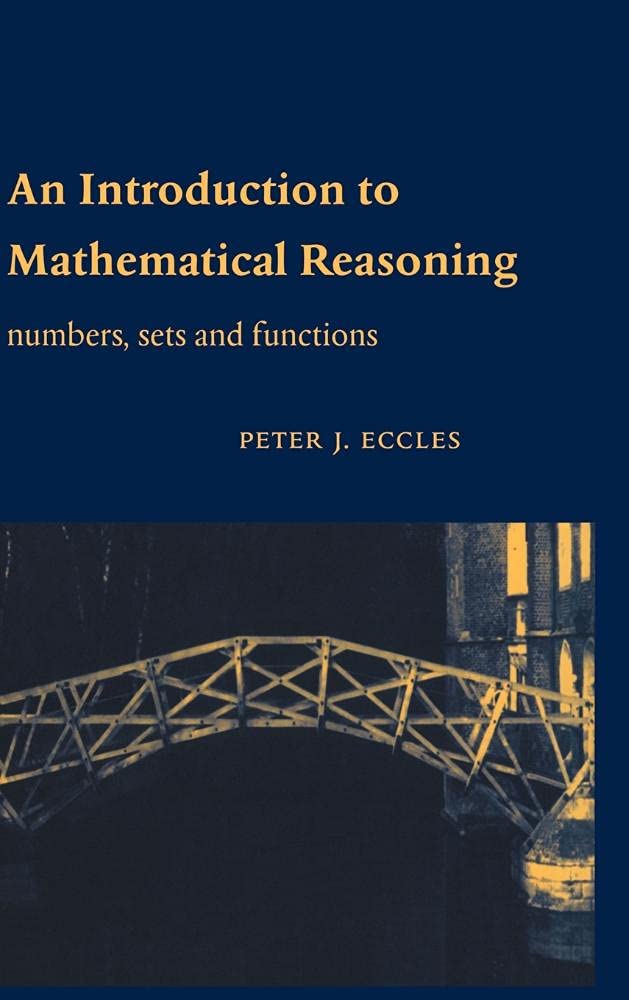
An Introduction to Mathematical Reasoning: Numbers, Sets and Functions by Peter Eccles – A Comprehensive Guide to Mathem
Inclusive of all applicable taxes. FREE shipping on all orders.
Available Offers
- 🚚Free Delivery — Free shipping on all orders
- 💵Cash on Delivery — Pay when your order arrives
- ↩️15-Day Easy Returns — Hassle-free return policy
- 🔒Cash on Delivery — Pay safely when your order arrives
Check Delivery
Product Description
Introduction
Embarking on a university-level mathematics course requires more than just computational skill—it demands a solid grasp of logical reasoning, proof techniques, and clear mathematical communication. An Introduction to Mathematical Reasoning: Numbers, Sets and Functions by Peter Eccles is a trusted companion for students making this critical transition. Published by Cambridge University Press, this hardcover edition is designed to build confidence in constructing and understanding proofs, using accessible yet rigorous examples from set theory, combinatorics, and number theory. Whether you are a first-year undergraduate or a self-learner aiming to strengthen your mathematical foundation, this book offers a structured path from intuitive thinking to formal reasoning.
Book Overview
This book is not a mere collection of formulas; it is a carefully crafted guide that teaches you how to think like a mathematician. Peter Eccles begins with the most basic concepts—numbers and sets—and gradually leads you to more abstract ideas like functions and infinite sets. Each chapter is built around the central theme of proof, with numerous examples that illustrate how to formulate arguments rigorously. The text is enriched with over 250 problems, ranging from routine exercises to challenging puzzles, ensuring that readers of all abilities find material suited to their level. The emphasis is on writing clear mathematics, a skill that is essential for success in higher studies and research.
Key Highlights
- Rigorous yet accessible introduction to mathematical proof and reasoning.
- Over 250 problems with a mix of routine and challenging questions to cater to diverse learning needs.
- Real-world mathematical examples from combinatorics, number theory, and set theory to illustrate abstract concepts.
- Focus on writing clear mathematics—a skill often overlooked but vital for academic success.
- Classic proofs included to show how fundamental ideas have evolved over time.
Inside the Book
The content is organized to build understanding step by step. Early chapters introduce the language of sets and functions, followed by the logic of quantifiers and proofs. Later chapters dive into number systems, induction, and cardinality. Each section includes worked examples that demonstrate how to approach a problem, construct a proof, and present the solution elegantly. The book also contains historical notes that show mathematics as a living, evolving discipline—an approach that inspires curiosity and deeper learning. The exercises at the end of each chapter are carefully graded, allowing you to practice basic techniques before tackling more complex ideas.
Key Topics
- Sets and elements – basics of set theory, subsets, unions, intersections, and power sets.
- Functions and relations – injective, surjective, bijective functions; equivalence relations.
- Proof techniques – direct proof, proof by contradiction, induction, and contrapositive.
- Number theory – divisibility, primes, the Euclidean algorithm, and modular arithmetic.
- Combinatorics – counting principles, permutations, combinations, and the pigeonhole principle.
- Infinite sets – countable and uncountable sets, Cantor’s diagonal argument.
Reader Benefits
By working through this book, you will develop the ability to read and write proofs with confidence. You will learn to identify logical structures, avoid common fallacies, and express your reasoning in a clear, concise manner. The problem sets are designed to reinforce learning and prepare you for examinations. Moreover, the book’s emphasis on foundational topics makes it an excellent reference for later courses in algebra, analysis, and topology. Indian students, in particular, will find that the rigorous approach aligns well with the demands of competitive exams like the IIT JAM, GATE, and university entrance tests.
Learning Outcomes
- Understand and construct rigorous mathematical proofs using a variety of techniques.
- Apply set theory and function concepts to solve problems in combinatorics and number theory.
- Write mathematics with clarity and precision, following standard notation and conventions.
- Recognize the structure of mathematical arguments and evaluate their validity.
- Appreciate the historical development of mathematical ideas and their interconnectedness.
Who Should Read
This book is ideal for undergraduate students beginning their mathematics or engineering studies, especially those who find proof-based mathematics challenging. It is also suitable for advanced high school students preparing for Olympiads or university admissions, as well as self-learners who want to build a solid foundation. Teachers and tutors will find it a valuable resource for designing courses or supplementing classroom instruction. Anyone who wishes to move beyond rote calculations and truly understand the logic behind mathematics will benefit from this book.
About the Author
Peter Eccles is a respected mathematician and educator with extensive experience in teaching undergraduate mathematics. He has a deep understanding of the challenges students face when transitioning from school-level mathematics to university-level reasoning. His writing style is clear, patient, and encouraging, making complex ideas accessible without sacrificing rigor. This book reflects his belief that mathematics is not just a subject to be learned but a skill to be practiced and enjoyed.
About the Publisher
Cambridge University Press is a world-renowned academic publisher with a long tradition of producing high-quality textbooks in mathematics and science. Their titles are known for their accuracy, pedagogical excellence, and global relevance. This hardcover edition is crafted to withstand years of study and reference, making it a worthwhile investment for any serious student.
Conclusion
An Introduction to Mathematical Reasoning: Numbers, Sets and Functions is more than a textbook—it is a gateway to mathematical maturity. By focusing on proofs, clear writing, and foundational concepts, it equips you with the tools needed to excel in advanced mathematics. Whether you are a student, teacher, or lifelong learner, this book will transform the way you think about numbers, sets, and functions. Order your copy today from Bookshops.in and begin your journey into the beautiful world of mathematical reasoning.
Quick Summary
An Introduction to Mathematical Reasoning: Numbers, Sets and Functions by Peter Eccles is a classic textbook designed for students embarking on university mathematics. The book focuses on the core skill of mathematical proof—understanding it, constructing it, and writing it clearly. It covers set theory, combinatorics, and number theory, providing a rich toolkit for any mathematician. Readers will learn to reason rigorously about natural numbers, functions, relations, and infinite sets through numerous examples and over 250 problems. The book is ideal for Indian students transitioning from school to university-level math, as well as for self-learners and competitive exam aspirants. Its clear explanations and gradual progression make complex concepts accessible. By purchasing from Bookshops.in, you receive a genuine, high-quality hardcover edition delivered across India, ensuring a reliable resource for years of study.
Book Highlights
Book Specifications
| ISBN-13 | 9780521592697 |
| ISBN-10 | 0521592690 |
| Publisher | Cambridge University Press |
| Language | English |
| Dimensions | 16.51 x 2.54 x 24.13 cm |
| Weight | 705 g |
| Country | India |
| Category | Mathematics › Statistics |
| Genre | Non-fiction |
| Reading Age | 18+ |
| Original Language | English |
Frequently Asked Questions
What is this book about?
Who is the author?
Is this book suitable for self-study?
Does it cover combinatorics?
What level of mathematics is required?
Are there solutions to the problems?
Is it useful for Indian competitive exams?
Is it a hardcover edition?
Does the book include real-world applications?
Can I use it for a course on mathematical logic?
Is the language easy to follow?
Does it cover infinite sets?
Where can I buy this book in India?
Readers Also Search For
Customers Also Bought
Mathematics
Stereotype Spaces and Algebras: 73 (De Gruyter Expositions in Mathematics, 73)
Mathematics
Semigroups in Algebra, Geometry and Analysis: 20 (De Gruyter Expositions in Mathematics, 20)
Mathematics
Geometry from the Pacific Rim: Proceedings of the Pacific Rim Geometry Conference held at National University of Singapore, Republic of Singapore, ... 1994 (De Gruyter Proceedings in Mathematics)
Mathematics
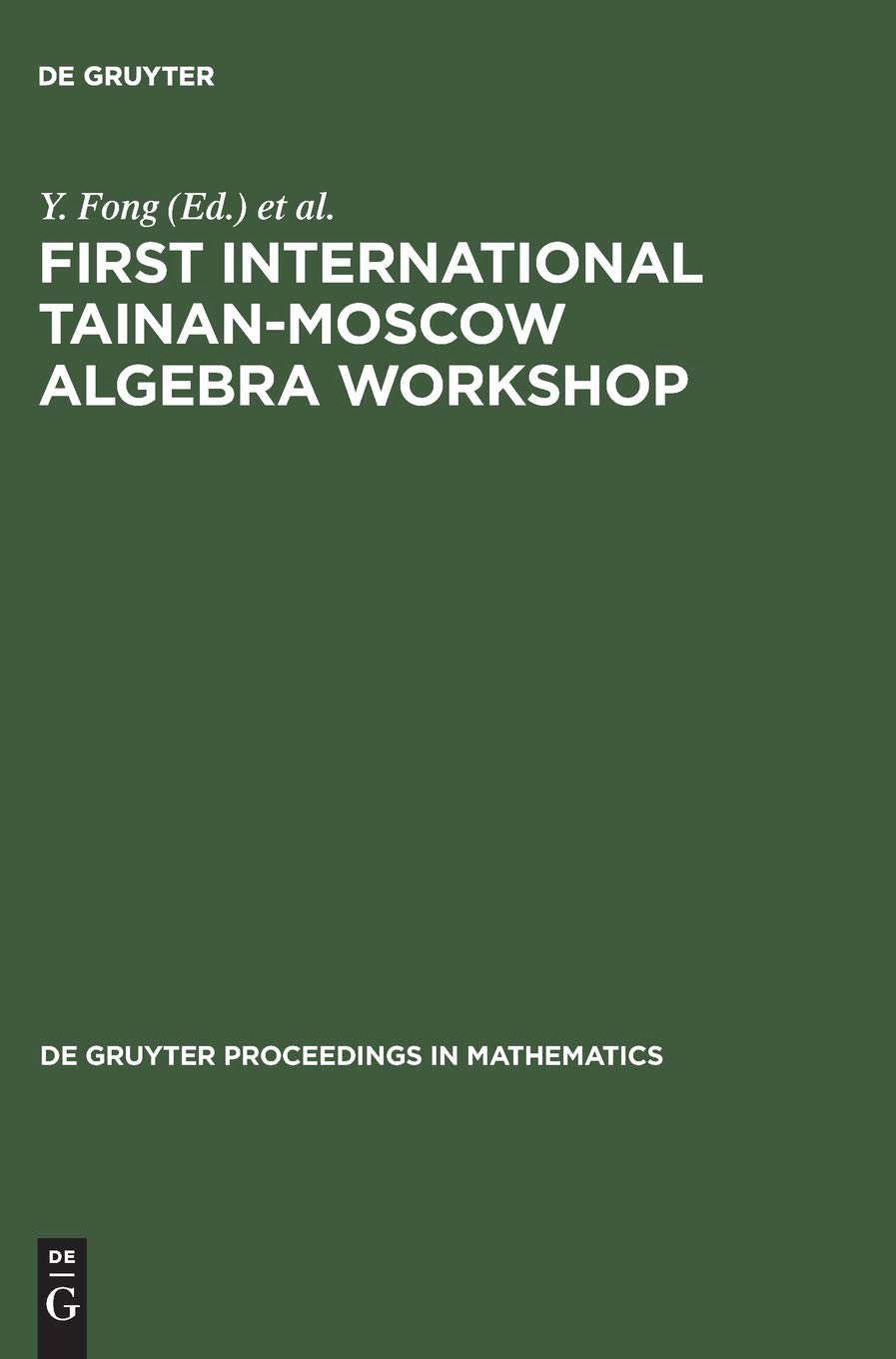
First International Tainan-Moscow Algebra Workshop: Proceedings of the International Conference held at National Cheng Kung University Tainan, Taiwan, ... 1994 (De Gruyter Proceedings in Mathematics)
Mathematics
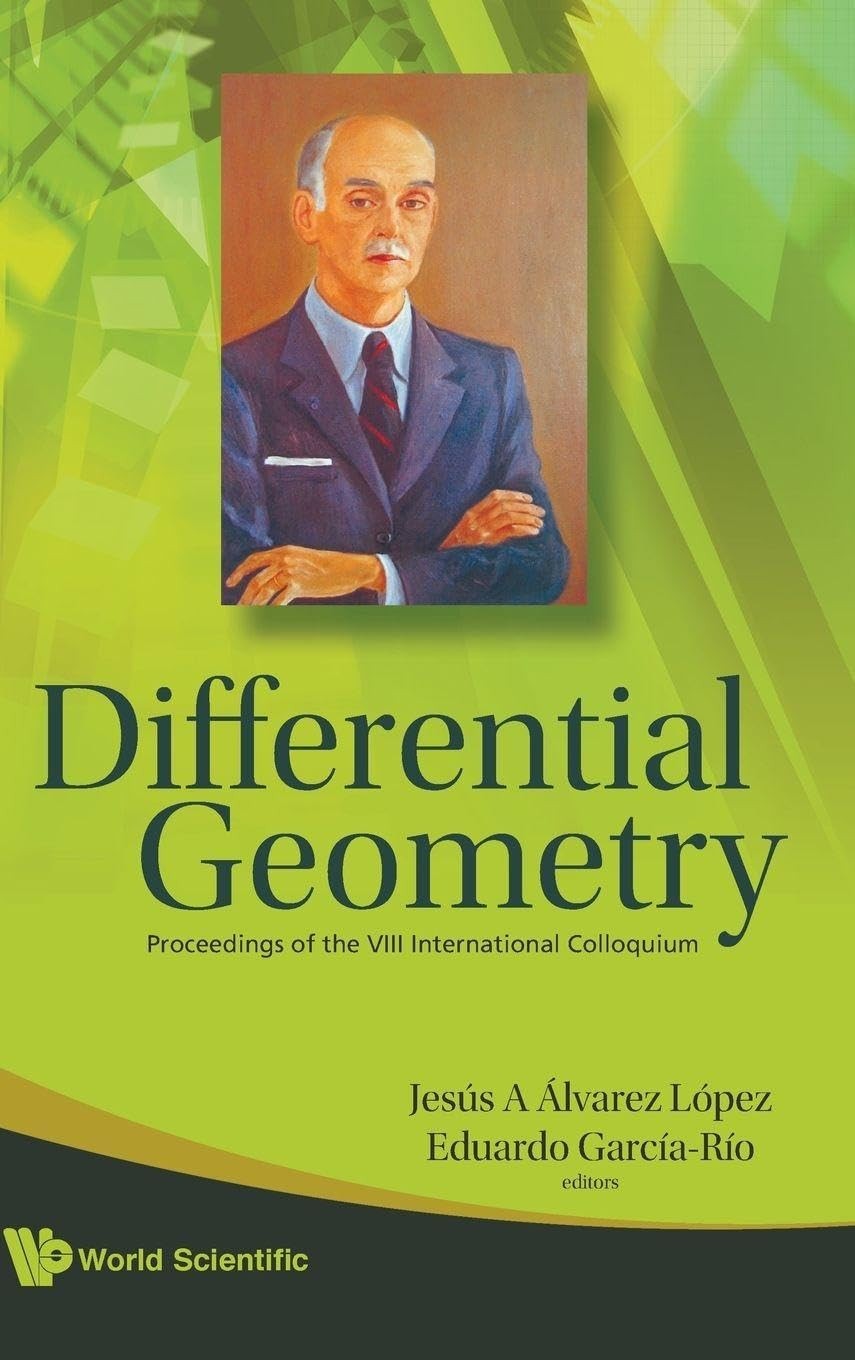
Differential Geometry - Proceedings of the VIII International Colloquium (English, Jesus A. Alvarez Lopez | Eduardo Garcia-Rio)
Mathematics
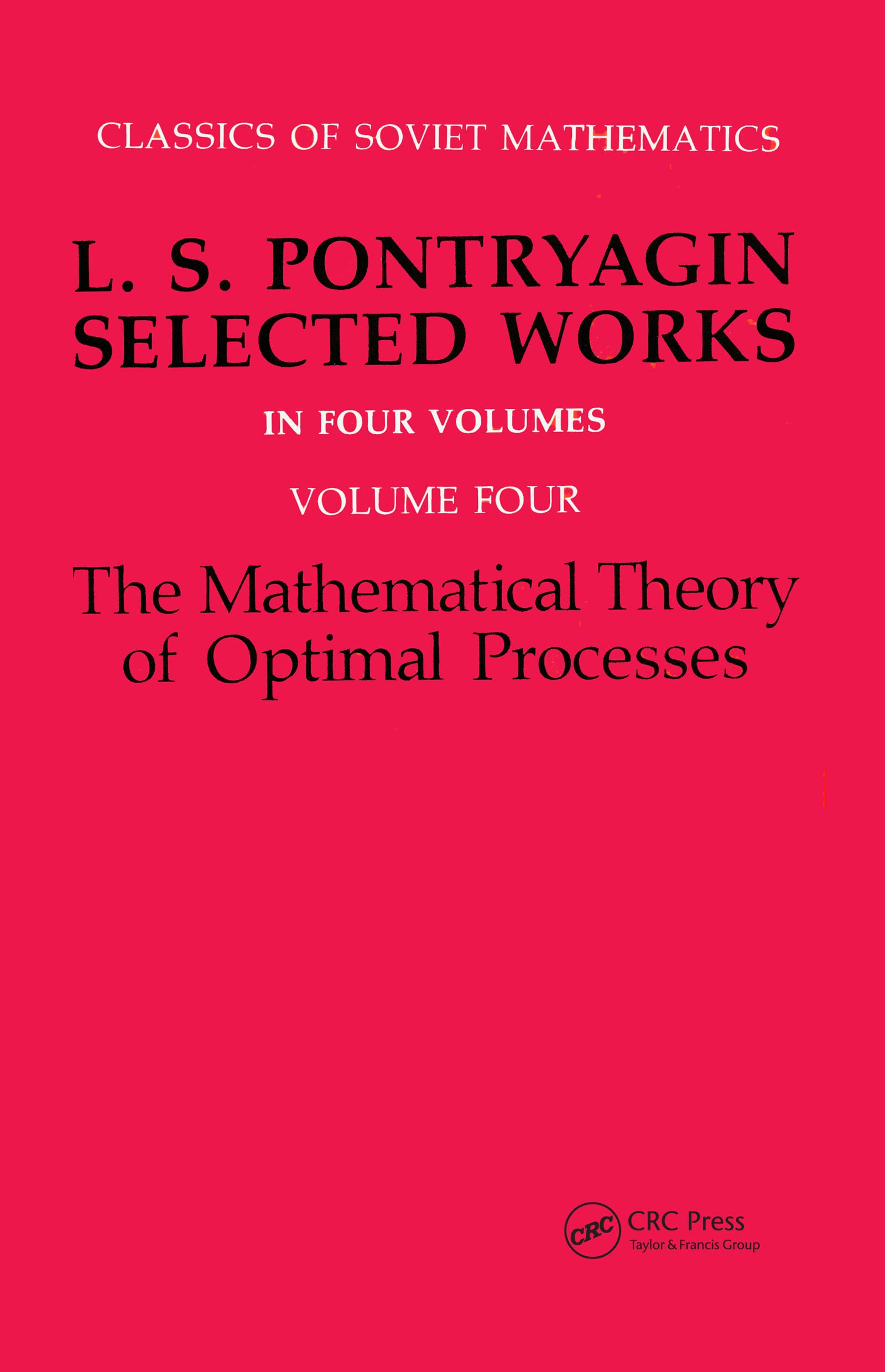
Mathematical Theory of Optimal Processes (Classics of Soviet Mathematics)
Related Products
View All
Statistics
Asymptotics in Statistics and Probability: Papers in Honor of George Gregory Roussas

Statistics
Inequalities in Analysis and Probability: 3rd Edition
Statistics
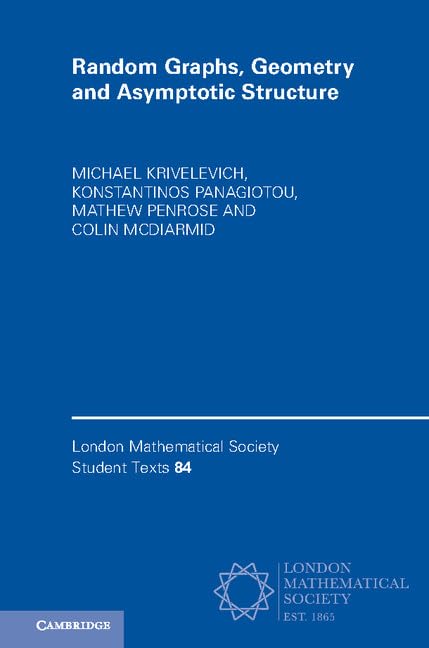
Random Graphs, Geometry and Asymptotic Structure
Statistics
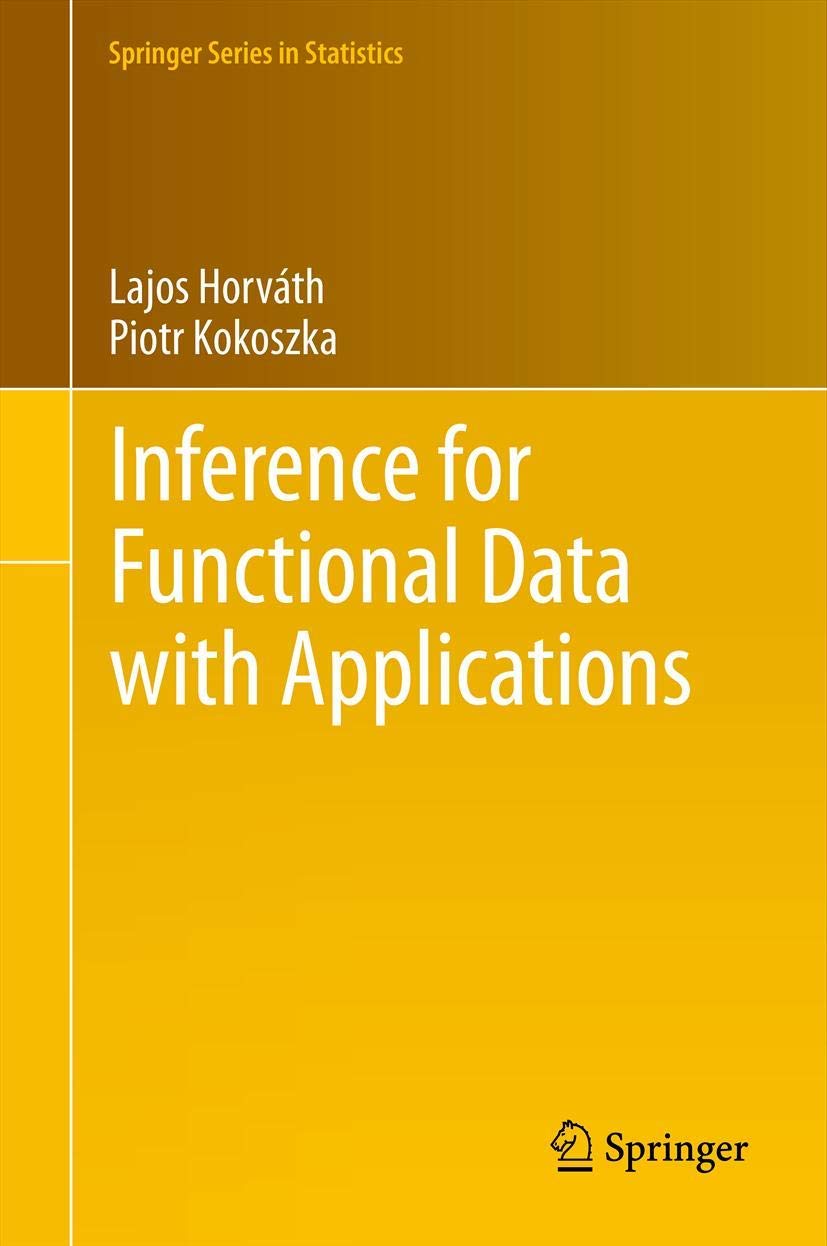
Inference for Functional Data With Applications: 200 (Springer Series in Statistics, 692)

Statistics
High-Dimensional Probability: An Introduction with Applications in Data Science (Cambridge Series in Statistical and Probabilistic Mathematics)

Statistics