
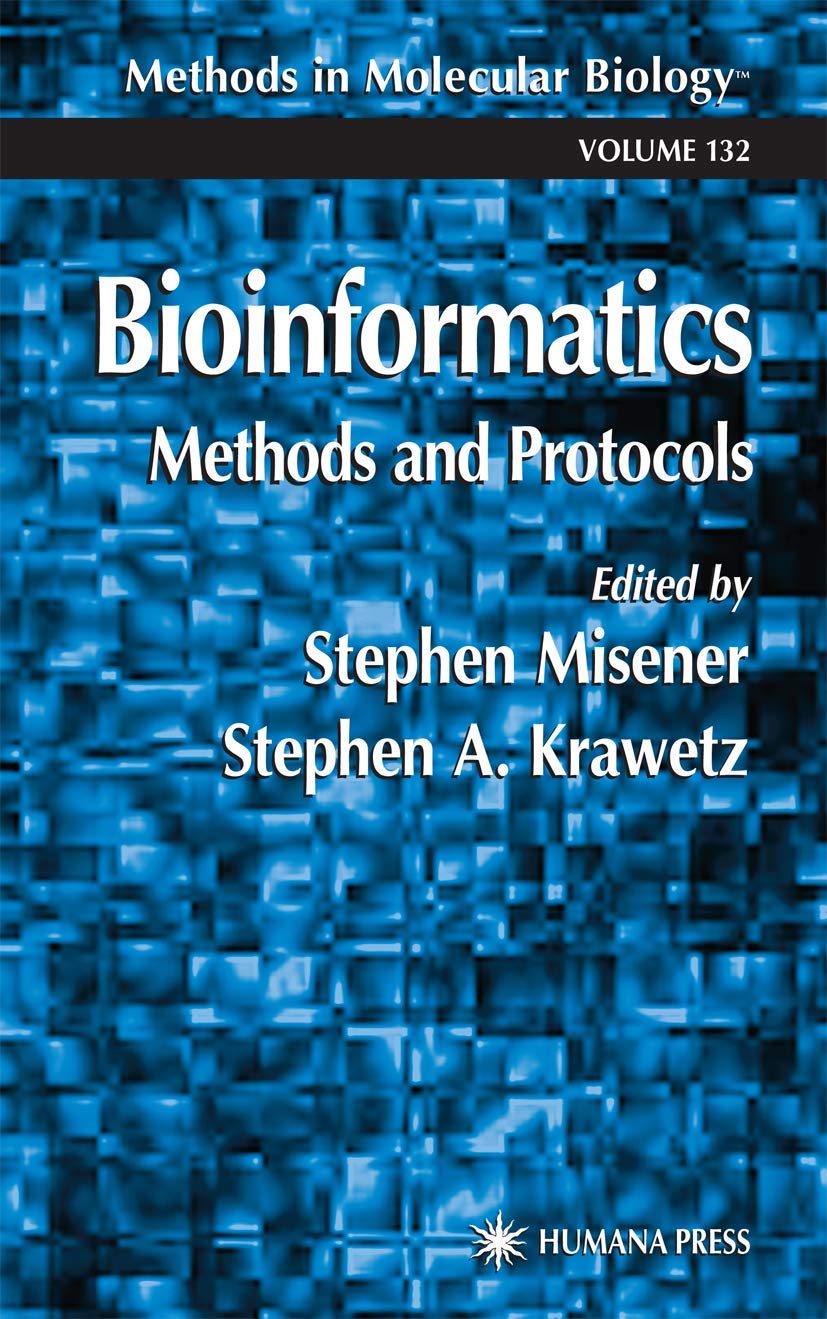
Bioinformatics Methods and Protocols: A Practical Laboratory Manual for Computational Biology by Stephen Misener
Inclusive of all applicable taxes. FREE shipping on all orders.
Available Offers
- 🚚Free Delivery — Free shipping on all orders
- 💵Cash on Delivery — Pay when your order arrives
- ↩️15-Day Easy Returns — Hassle-free return policy
- 🔒Cash on Delivery — Pay safely when your order arrives
Check Delivery
Product Description
Introduction
In the rapidly evolving landscape of modern biology, computational methods have become as fundamental as laboratory techniques. Bioinformatics Methods and Protocols, edited by Stephen Misener and published by Humana Press, serves as a comprehensive guide for scientists, researchers, and students who wish to harness the power of in silico analysis. This hardcover volume is an indispensable resource for anyone navigating the intersection of biology and computing, offering practical protocols that bridge theory and application.
Book Overview
This book is part of the renowned Methods in Molecular Biology series and builds upon earlier foundational works on computer analysis of sequence data. It is structured into five distinct parts, each focusing on a critical area of bioinformatics. From sequence alignment and database searching to phylogenetic analysis and genome annotation, the book provides step-by-step protocols that are both accessible to beginners and valuable for experienced practitioners. The content is designed to help readers manage the ever-increasing volume of biological data and uncover meaningful biological relationships through computational approaches.
Key Highlights
- Comprehensive Coverage: Includes detailed protocols for sequence analysis, structure prediction, and functional annotation.
- Practical Approach: Each chapter offers hands-on methods with clear instructions, making it easy to replicate in a lab or classroom setting.
- Expert Contributions: Written by leading bioinformaticians who share their insights and troubleshooting tips.
- Updated Content: Reflects the latest developments in software and algorithms used in bioinformatics research.
- Indian Context: Suitable for students and professionals in Indian universities and research institutes where bioinformatics is a growing field.
Inside the Book
The book is organized into five parts: (1) Basic Sequence Analysis Tools, (2) Database Searching and Pairwise Alignment, (3) Multiple Sequence Alignment and Phylogenetics, (4) Genome Analysis and Annotation, and (5) Advanced Topics such as protein structure prediction and microarray data analysis. Each chapter includes a concise introduction, a list of required software and hardware, a detailed protocol, and a notes section with practical advice. The volume also features numerous figures, tables, and references that enhance understanding.
Key Topics
- Sequence Alignment: Pairwise and multiple alignment algorithms using tools like BLAST, CLUSTALW, and FASTA.
- Phylogenetic Analysis: Methods for constructing evolutionary trees using parsimony, distance, and likelihood approaches.
- Genome Annotation: Techniques for identifying genes, regulatory elements, and non-coding RNAs.
- Protein Structure Prediction: Homology modeling, threading, and ab initio methods.
- Microarray Data Analysis: Normalization, clustering, and differential expression analysis.
- Database Management: Using public repositories like GenBank, Swiss-Prot, and PDB.
Reader Benefits
- Hands-On Learning: Gain practical experience by following real-world protocols that can be immediately applied.
- Time-Saving: Avoid common pitfalls with expert advice and troubleshooting tips included in each chapter.
- Career Advancement: Develop essential skills for careers in biotechnology, pharmaceuticals, academia, and healthcare.
- Research Support: Use the book as a reference for designing experiments and analyzing biological data.
- Affordable Knowledge: A single volume that covers a wide range of topics, reducing the need for multiple textbooks.
Learning Outcomes
By the end of this book, readers will be able to: perform basic and advanced sequence analyses using popular software; interpret phylogenetic trees and evolutionary relationships; annotate genomes and identify functional elements; predict protein structures and understand their implications; analyze high-throughput data from microarrays and next-generation sequencing; and critically evaluate bioinformatics tools for their own research. These outcomes align with the curriculum of many Indian postgraduate programs in bioinformatics, biotechnology, and life sciences.
Who Should Read
- Students: Graduate and postgraduate students in bioinformatics, molecular biology, genetics, and computational biology.
- Researchers: Scientists in academia and industry who need to incorporate computational methods into their work.
- Faculty: Professors and instructors looking for a practical textbook for bioinformatics courses.
- Clinicians: Medical professionals interested in genomic medicine and personalized healthcare.
- Self-Learners: Anyone with a background in biology or computer science who wants to enter the field of bioinformatics.
About the Author
Stephen Misener is a recognized authority in bioinformatics and computational biology. With years of experience in developing and teaching bioinformatics methods, he has contributed significantly to the field through both research and education. His editorial work on this volume brings together diverse expertise from leading laboratories worldwide, ensuring that the protocols are robust, reproducible, and relevant to current scientific challenges.
About the Publisher
Humana Press, now an imprint of Springer Nature, is a distinguished publisher of scientific and medical literature. Known for its Methods in Molecular Biology series, Humana Press has a long-standing reputation for producing high-quality, protocol-focused books that serve as essential references in laboratories and libraries across the globe. Their commitment to rigorous peer review and practical content makes them a trusted name in the scientific community.
Conclusion
Bioinformatics Methods and Protocols is more than a book—it is a toolkit for the modern biologist. Whether you are a student starting your journey in computational biology or an experienced researcher seeking to expand your analytical repertoire, this volume offers the clarity, depth, and practicality needed to succeed. With its structured approach and expert guidance, it empowers readers to turn biological data into meaningful discoveries. Add this essential resource to your library and take your research to the next level.
Quick Summary
Bioinformatics Methods and Protocols by Stephen Misener is a comprehensive laboratory manual that bridges the gap between biology and computation. Designed for students, researchers, and professionals, this book provides clear, step-by-step protocols for essential bioinformatics tasks such as sequence alignment, database searching with BLAST, phylogenetic analysis, protein structure prediction, and microarray data interpretation. It emphasizes practical, hands-on learning using freely available online tools, making it an ideal resource for Indian universities and research labs. Readers will gain the skills needed to manage and analyze biological data effectively, from genomic sequences to protein structures. The book is part of the respected Methods in Molecular Biology series published by Humana Press, ensuring high-quality, peer-reviewed content. Whether you are a beginner looking to enter the field of computational biology or an experienced researcher seeking reliable protocols, this book offers valuable insights and techniques. By purchasing from Bookshops.in, you receive an authentic hardcover edition at a fair price with prompt delivery across India, supporting your academic and research journey.
Book Highlights
Book Specifications
| ISBN-13 | 9780896037328 |
| ISBN-10 | 0896037320 |
| Publisher | Humana Press Inc. |
| Language | English |
| Dimensions | 15.77 x 3.51 x 23.55 cm |
| Weight | 925 g |
| Category | Medicine › General |
| Series | Methods in Molecular Biology |
| Genre | Non-fiction |
| Reading Age | 18+ |
| Original Language | English |
Frequently Asked Questions
What is Bioinformatics Methods and Protocols about?
Who is the author of this book?
Is this book suitable for beginners in bioinformatics?
What topics are covered in this book?
Does the book include practical exercises?
Is this book useful for Indian university courses?
What is the ISBN of Bioinformatics Methods and Protocols?
Is this book available in hardcover?
Can this book help with genomic data analysis?
Does the book cover protein structure prediction?
What is the price of this book on Bookshops.in?
Why should I buy this book from Bookshops.in?
Readers Also Search For
Customers Also Bought

Anatomy
Ultrastructure of the Digestive Tract: 4 (Electron Microscopy in Biology and Medicine)

Anatomy
Ultrastructure of the Connective Tissue Matrix: 3 (Electron Microscopy in Biology and Medicine)

Anatomy
Reproductive Genetics (Royal College of Obstetricians and Gynaecologists Study Group)

Anatomy
Human Gross Anatomy: An Outline Text by Robert J. Leonard – Medical Anatomy

Pharmacology
Mathematical Modeling and Simulation in Enteric Neurobiology

Anatomy
Nature’s Patterns and the Fractional Calculus: 2 (Fractional Calculus in Applied Sciences and Engineering, 2)
Related Products
View All
Medicine & Health Sciences
Handbook of Hospitality Strategic Management | by Olsen Michael | Taylor & Francis Ltd | by Olsen Michael | Taylor & Francis Ltd | by Olsen Michael | Taylor & Francis Ltd | by Olsen Michael | Taylor & Francis Ltd | by Olsen Michael | Taylor & Francis Ltd | by Olsen Michael | Taylor & Francis Ltd | by Olsen Michael | Taylor & Francis Ltd | by Olsen Michael | Taylor & Francis Ltd | by Olsen Michael | Taylor & Francis Ltd | by Olsen Michael | Taylor & Francis

Medicine & Health Sciences
Pediatrics on Call | by Charles A. Pohl | Kathleen Bradford | Clara Callahan | McGraw Hill / Medical | by Charles A. Pohl | Kathleen Bradford | Clara Callahan | McGraw Hill / Medical | by Charles A. Pohl | Kathleen Bradford | Clara Callahan | McGraw Hill / Medical | by Charles A. Pohl | Kathleen Bradford | Clara Callahan | McGraw Hill / Medical | by Charles A. Pohl | Kathleen Bradford | Clara Callahan | McGraw Hill / Medical | by Charles A. Pohl | Kathleen Bradford | Clara Callahan | McGraw Hill

Medicine & Health Sciences
The Physician's Guide to Depression and Bipolar Disorders | by Dwight L. Evans | Dennis S. Charney | Lydia Lewis | McGraw Hill / Medical | by Dwight L. Evans | Dennis S. Charney | Lydia Lewis | McGraw Hill / Medical | by Dwight L. Evans | Dennis S. Charney | Lydia Lewis | McGraw Hill / Medical | by Dwight L. Evans | Dennis S. Charney | Lydia Lewis | McGraw Hill / Medical | by Dwight L. Evans | Dennis S. Charney | Lydia Lewis | McGraw Hill / Medical | by Dwight L. Evans | Dennis S. Charney | Lydi
Medicine & Health Sciences
First Exposure to Internal Medicine | by Andrew R. Hoellein | Charles H. Griffith | McGraw Hill / Medical | by Andrew R. Hoellein | Charles H. Griffith | McGraw Hill / Medical | by Andrew R. Hoellein | Charles H. Griffith | McGraw Hill / Medical | by Andrew R. Hoellein | Charles H. Griffith | McGraw Hill / Medical | by Andrew R. Hoellein | Charles H. Griffith | McGraw Hill / Medical | by Andrew R. Hoellein | Charles H. Griffith | McGraw Hill / Medical | by Andrew R. Hoellein | Charles H. Griffit

Medicine & Health Sciences
First Exposure to Internal Medicine | by Charles H. Griffith | Andrew R. Hoellein | McGraw Hill / Medical | by Charles H. Griffith | Andrew R. Hoellein | McGraw Hill / Medical | by Charles H. Griffith | Andrew R. Hoellein | McGraw Hill / Medical | by Charles H. Griffith | Andrew R. Hoellein | McGraw Hill / Medical | by Charles H. Griffith | Andrew R. Hoellein | McGraw Hill / Medical | by Charles H. Griffith | Andrew R. Hoellein | McGraw Hill / Medical | by Charles H. Griffith | Andrew R. Hoellei

Medicine & Health Sciences