
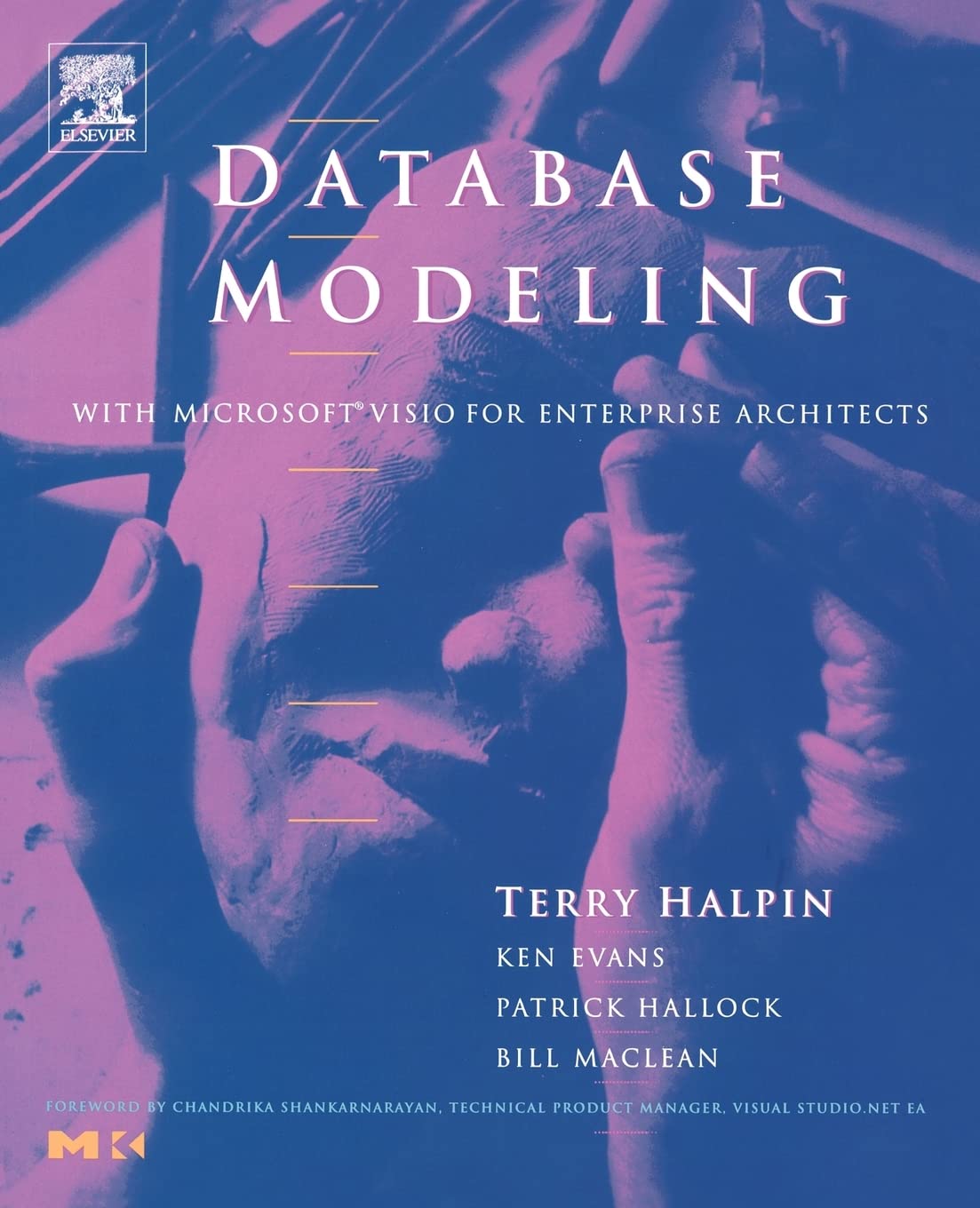
Database Modeling With Microsoft Visio for Enterprise Architects by Terry Halpin – A Complete Guide to Data Modeling wit
Inclusive of all applicable taxes. FREE shipping on all orders.
Available Offers
- 🚚Free Delivery — Free shipping on all orders
- 💵Cash on Delivery — Pay when your order arrives
- ↩️15-Day Easy Returns — Hassle-free return policy
- 🔒Cash on Delivery — Pay safely when your order arrives
Check Delivery
Product Description
Introduction
In the world of database design, precision and clarity are paramount. Database Modeling With Microsoft Visio for Enterprise Architects by Terry Halpin is a comprehensive guide that bridges the gap between theoretical data modeling and practical implementation using one of the most powerful tools in the Microsoft ecosystem. Tailored for database professionals and students in India, this hardcover edition from Morgan Kaufmann Publishers offers a deep dive into the art and science of creating robust database models. Whether you are preparing for enterprise-level projects or academic research, this book equips you with the skills to transform complex data requirements into clear, actionable designs.
Book Overview
This book is an authoritative resource for anyone who works with Microsoft Visio for Enterprise Architects (VEA), a database modeling component included in Visual Studio .NET for Enterprise Architects and MSDN subscriptions. Terry Halpin, the program manager behind VEA’s database modeling features, provides an insider’s perspective on tool capabilities. The book covers both Object Role Modeling (ORM) and Entity Relationship Modeling (ERM), offering a platform-independent introduction to data modeling. It also includes practical advice on managing database projects, making it a valuable companion for Indian IT professionals navigating complex data environments.
Key Highlights
- Expert Author: Written by Terry Halpin, the program manager of VEA’s database modeling solutions, ensuring authoritative content.
- Dual Modeling Approach: Covers both ORM and ERM, providing a versatile skill set for different project needs.
- Tool-Focused: Explains how to use Microsoft Visio for Enterprise Architects effectively, with step-by-step guidance.
- Practical Insights: Includes advice on managing database projects, from planning to deployment.
- Supplementary Resources: Additional ORM models, course notes, and add-ins available online for extended learning.
Inside the Book
The book is structured to take you from foundational concepts to advanced modeling techniques. Early chapters introduce data modeling principles using ORM, a fact-based approach that simplifies complex relationships. Later sections delve into ERM, showing how to create entity-relationship diagrams that align with industry standards. Each chapter includes hands-on examples, diagrams, and exercises that reinforce learning. The focus on Microsoft Visio for Enterprise Architects means you will learn how to leverage features like reverse engineering, forward engineering, and database schema generation. Real-world case studies illustrate how these techniques apply to Indian business scenarios, such as managing inventory systems or customer databases.
Key Topics
- Introduction to Object Role Modeling (ORM) and Entity Relationship Modeling (ERM)
- Using Microsoft Visio for Enterprise Architects for database design
- Fact-based modeling and constraint representation
- Reverse engineering existing databases into models
- Forward engineering models into SQL scripts
- Managing database projects with version control and collaboration
- Best practices for normalization and schema optimization
Reader Benefits
By studying this book, you will gain the ability to create accurate, maintainable database models that reduce errors and improve performance. You will learn how to communicate data structures clearly with stakeholders using visual diagrams. Indian readers will appreciate the practical focus on enterprise environments, where data integrity and scalability are critical. The book also helps you prepare for certifications or advanced roles in database administration and architecture. With its blend of theory and tool-specific instruction, it saves you time by teaching you exactly what you need for real-world projects.
Learning Outcomes
- Master the fundamentals of ORM and ERM for data modeling
- Become proficient in using Microsoft Visio for Enterprise Architects
- Design databases that are both logical and efficient
- Translate business requirements into technical models
- Manage database projects from conception to deployment
- Apply best practices for data integrity and normalization
Who Should Read
This book is ideal for database designers, database administrators, and IT professionals who use Microsoft Visio or plan to adopt it. It is also suitable for students pursuing computer science or information technology degrees in Indian universities, especially those focusing on data management. Developers transitioning into database roles will find the practical examples helpful. Even experienced professionals will benefit from the advanced features and project management advice. If you work with data in any capacity—whether in a startup, a large enterprise, or an academic setting—this book will enhance your skills.
About the Author
Terry Halpin is a renowned expert in data modeling and database design. He served as the program manager for Microsoft’s Visio for Enterprise Architects, where he shaped the database modeling features used by professionals worldwide. With a background in computer science and years of experience teaching and consulting, Halpin brings both academic rigor and practical wisdom to his writing. He is also a prolific author of books on ORM and data modeling, making him a trusted voice in the field.
About the Publisher
Morgan Kaufmann Publishers is a respected imprint known for high-quality books on computer science and information technology. Their titles are widely used in academic and professional circles globally, including in India. The publisher focuses on delivering authoritative content that bridges theory and practice, making complex topics accessible to learners and practitioners alike.
Conclusion
Database Modeling With Microsoft Visio for Enterprise Architects is an indispensable resource for anyone serious about data modeling. Its unique combination of tool-specific guidance and foundational concepts makes it a standout choice for Indian readers. Whether you are a student, a database administrator, or an IT manager, this book will empower you to design better databases and manage projects with confidence. Order your copy today from Bookshops.in and take the next step in your data modeling journey.
Quick Summary
Database Modeling With Microsoft Visio for Enterprise Architects by Terry Halpin is the essential guide for database professionals who want to master data modeling using Microsoft's powerful Visio tool. Written by the program manager who led the development of VEA's database modeling solutions, this book offers an authoritative, hands-on approach to both Object Role Modeling (ORM) and Entity Relationship Modeling (ERM). It provides a platform-independent introduction to data modeling concepts, making it suitable for beginners while still offering deep insights for experienced DBAs and architects. Readers will learn how to model databases efficiently, manage database projects effectively, and leverage Visio's features to streamline their workflow. The book includes practical advice, real-world examples, and best practices that can be applied immediately. Published by Morgan Kaufmann, this hardcover edition is a valuable resource for Indian students, database administrators, and IT professionals. Purchase your copy from Bookshops.in, India's premium online bookstore, for reliable delivery and excellent service.
Book Highlights
Book Specifications
| ISBN-13 | 9781558609198 |
| ISBN-10 | 1558609199 |
| Publisher | Morgan Kaufmann Pub |
| Language | English |
| Dimensions | 18.54 x 2.54 x 23.62 cm |
| Weight | 499 g |
| Country | India |
| Category | Computer Science › Database Storage & Design |
| Genre | Non-fiction |
| Original Language | English |
Frequently Asked Questions
What is this book about?
Who is the author?
Is this book suitable for beginners?
Does the book cover only Microsoft tools?
What is ORM and ERM?
Can I use this book for academic study?
Is this book still relevant for modern databases?
Does the book include practical examples?
Is this book only for DBAs?
Does the book cover SQL?
Can I buy this book from Bookshops.in?
What is the ISBN?
Is this book available in Indian bookstores?
Readers Also Search For
Customers Also Bought
Computer Science
Spring 2.5 Aspect Oriented Programming (English, Massimiliano Dess� | Massimiliano Dessi)

Computer Science
Asterisk 1.4 - the Professional's Guide (English, Colman Carpenter | David Duffett | Nik Middleton)

Computer Science
Advances In Natural Language Processing: 4th International Conference, Estal 2004, Alicante, Spain, October 20-22, 2004. Proceedings: 3230 (Lecture Notes in Computer Science)
Computer Science
Multimedia, Communication and Computing Application: Proceedings of the 2014 International Conference on Multimedia, Communication and Computing ... 2014), Xiamen, China, October 16-17, 2014

Computer Science
Cases on Database Technologies and Applications (Cases on Information Technology Series)
Computer Science
ASP.Net 3.5 Social Networking (English, Andrew Siemer)
Related Products
View AllComputer Science
Spring 2.5 Aspect Oriented Programming (English, Massimiliano Dess� | Massimiliano Dessi)
Computer Science
Asterisk 1.4 - the Professional's Guide (English, Colman Carpenter | David Duffett | Nik Middleton)
Computer Science
Advances In Natural Language Processing: 4th International Conference, Estal 2004, Alicante, Spain, October 20-22, 2004. Proceedings: 3230 (Lecture Notes in Computer Science)
Computer Science
Multimedia, Communication and Computing Application: Proceedings of the 2014 International Conference on Multimedia, Communication and Computing ... 2014), Xiamen, China, October 16-17, 2014
Computer Science
Cases on Database Technologies and Applications (Cases on Information Technology Series)
Computer Science