
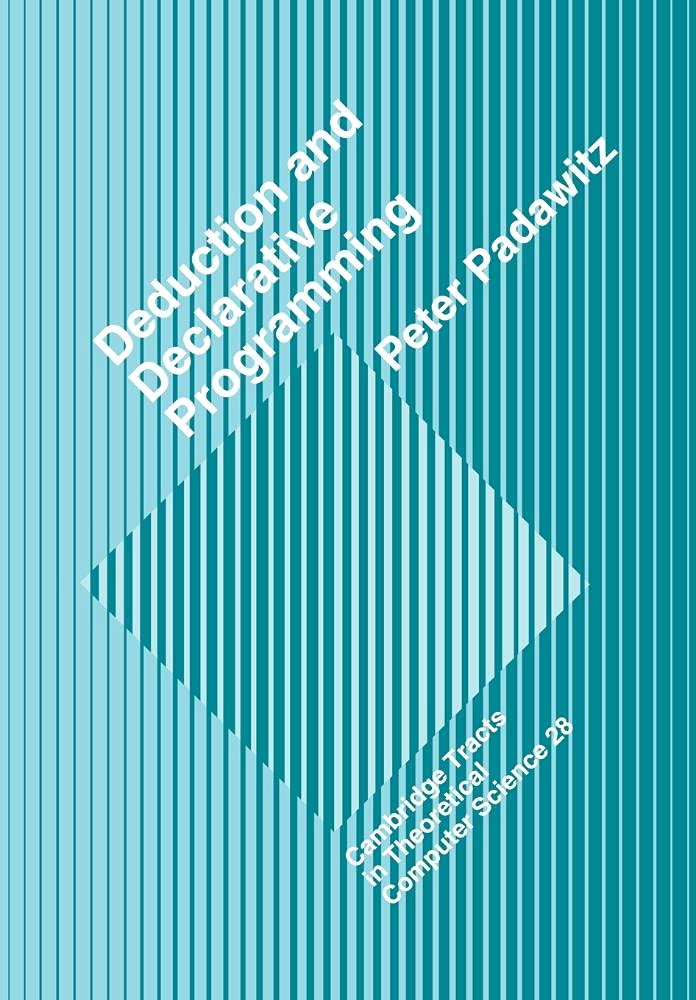
Deductive and Declarative Programming by P. Padawitz – A Deep Dive into Logical Inference and Formal Verification for De
Inclusive of all applicable taxes. FREE shipping on all orders.
Available Offers
- 🚚Free Delivery — Free shipping on all orders
- 💵Cash on Delivery — Pay when your order arrives
- ↩️15-Day Easy Returns — Hassle-free return policy
- 🔒Cash on Delivery — Pay safely when your order arrives
Check Delivery
Product Description
Introduction
In the ever-evolving landscape of computer science, the quest for rigorous, verifiable, and mathematically sound programming paradigms remains paramount. Deductive and Declarative Programming by P. Padawitz stands as a seminal text that bridges the gap between theoretical logic and practical software development. This hardcover volume from Cambridge University Press is an indispensable resource for Indian students, researchers, and professionals who seek to master the art of constructing programs that are not only correct by design but also amenable to formal proof. Whether you are delving into functional programming, logic programming, or automated theorem proving, this book provides a unified framework that will transform the way you think about code.
Book Overview
This book offers a comprehensive exploration of declarative programming—a paradigm where programs are expressed as mathematical functions and relations rather than step-by-step instructions. Dr. Padawitz emphasizes a deductive approach to program verification, meaning that correctness is established through logical inference rules rather than model checking alone. The text is meticulously structured to balance theoretical depth with practical applicability, making it suitable for both advanced coursework and self-study. Unlike other works that either oversimplify the logic or become too abstract, this book strikes a perfect chord by capturing real-world programming styles while maintaining rigorous mathematical foundations.
Key Highlights
- Unified Proof Methods: Generalizes classical theorem-proving and term rewriting into cohesive techniques for declarative program synthesis and verification.
- Practical Examples: Every method is accompanied by detailed, worked-out examples that illustrate how to apply deductive reasoning to actual programming problems.
- Prototyping System Support: The methods are backed by a documented prototyping system, allowing readers to experiment with and validate the concepts in practice.
- Graduate-Level Rigor: Designed for advanced students and professionals, the content assumes a basic familiarity with logic but builds up to sophisticated proof strategies.
- Timeless Relevance: Although published as a classic, the principles of deductive verification remain central to modern fields like formal methods, certified programming, and AI reasoning.
Inside the Book
The book is organized into well-structured chapters that progressively build the reader's understanding. It begins with foundational concepts in logic and declarative programming, then moves into the core of deductive verification. Key chapters cover term rewriting systems, inductive theorem proving, and the synthesis of programs from specifications. Dr. Padawitz carefully explains how to construct proofs of correctness for recursive functions, data structures, and relational programs. The inclusion of a complete prototyping system—with documented code—enables readers to see theory in action, making abstract concepts tangible. The appendices provide essential reference material on logical notation and proof rules.
Key Topics
- Foundations of declarative and functional programming
- Mathematical logic and inference systems
- Term rewriting and equational reasoning
- Inductive theorem proving for program verification
- Program synthesis from formal specifications
- Deductive methods for data type and function definitions
- Prototyping and automated proof support
Reader Benefits
By engaging with this book, readers will acquire a deep, principled understanding of how to write programs that are provably correct. This is especially valuable in safety-critical domains such as aerospace, medical devices, and financial systems, where errors are unacceptable. The deductive approach also enhances problem-solving skills, as it trains the mind to reason logically about complex systems. Indian students preparing for competitive examinations or research positions will find the material directly applicable to advanced topics in computer science theory. Moreover, the book's emphasis on automation and prototyping means that the methods can be integrated into real-world development workflows, improving code reliability without sacrificing efficiency.
Learning Outcomes
- Master the principles of declarative programming and its distinction from imperative paradigms.
- Apply logical inference rules to verify the correctness of functional and relational programs.
- Design and implement term rewriting systems for equational reasoning.
- Synthesize programs from formal specifications using deductive techniques.
- Use inductive proofs to establish properties of recursive algorithms and data structures.
- Leverage prototyping tools to automate parts of the verification process.
- Critically evaluate the strengths and limitations of deductive versus model-theoretic approaches.
Who Should Read
This book is ideally suited for graduate students in computer science, especially those specializing in programming languages, formal methods, logic, or artificial intelligence. It is also an excellent reference for academic researchers exploring program verification and synthesis. Practising software engineers and architects who work on high-assurance systems will find the deductive methods invaluable for ensuring robustness. Additionally, instructors designing advanced courses on functional or logic programming can use this text as a primary or supplementary resource. The material is challenging but rewarding, making it best for readers who already possess a basic understanding of discrete mathematics and programming.
About the Author
Dr. P. Padawitz is a respected figure in the field of theoretical computer science, with decades of research experience in logic, term rewriting, and program verification. His work has contributed significantly to the development of deductive methods for declarative languages. Dr. Padawitz is known for his ability to present complex mathematical ideas in a clear, accessible manner, as evidenced by the careful exposition in this book. His academic background and practical insights ensure that the content is both authoritative and grounded in real programming concerns.
About the Publisher
Cambridge University Press is one of the world's oldest and most prestigious academic publishers, with a legacy of disseminating high-quality scholarly works since 1584. Their computer science catalogue is renowned for titles that combine rigorous theory with practical relevance. This hardcover edition is produced to the highest standards of durability and readability, making it a lasting addition to any library. For Indian readers, Cambridge University Press books are widely available through trusted distributors, ensuring authenticity and quality.
Conclusion
Deductive and Declarative Programming is more than a textbook—it is a gateway to a deeper understanding of how programs can be built on a foundation of mathematical certainty. In an era where software correctness is increasingly critical, the deductive methods presented here empower programmers to move beyond testing and towards proof. Whether you are a student aiming for academic excellence, a researcher pushing the boundaries of formal methods, or a professional seeking to elevate your coding practice, this book offers timeless wisdom. Add this essential volume to your collection and embark on a journey to master the art of declarative programming with deductive rigor.
Quick Summary
Deductive and Declarative Programming by P. Padawitz is a comprehensive academic work that bridges the gap between theory and practice in formal program verification. The book teaches readers how to apply logical inference rules—deduction—to verify declarative programs, which are built using mathematical functions and relations. Unlike other texts, it generalizes and unifies classical theorem-proving and term rewriting to provide proof methods that are both rigorous and applicable to real-world programming. Readers will learn about formal specification, soundness, completeness, and automated deduction techniques. This hardcover edition from Cambridge University Press is ideal for Indian computer science students, researchers, and professionals who want to deepen their understanding of program correctness and logic-based programming. By purchasing from Bookshops.in, you get authentic, high-quality academic content delivered to your doorstep.
Book Highlights
Book Specifications
| ISBN-13 | 9780521032513 |
| ISBN-10 | 0521032512 |
| Publisher | Cambridge University Press |
| Language | English |
| Dimensions | 16.99 x 1.65 x 24.41 cm |
| Weight | 469 g |
| Country | India |
| Category | Languages › C & C++ |
| Genre | Non-fiction |
| Original Language | English |
Frequently Asked Questions
What is the main focus of this book?
Who is the author of this book?
Is this book suitable for beginners?
What programming paradigms does the book cover?
Does the book include practical examples?
Is this book used in Indian universities?
What is the ISBN?
Is this a hardcover edition?
Can I use this book for self-study?
What makes this book different from others?
Does the book cover automated deduction?
What topics are included in term rewriting?
Where can I buy this book in India?
Readers Also Search For
Customers Also Bought
Programming
Algorithmische Sprache Und Programmentwicklung | by H. Partsch | F. L. Bauer | P. Pepper | Springer | by H. Partsch | F. L. Bauer | P. Pepper | Springer | by H. Partsch | F. L. Bauer | P. Pepper | Springer | by H. Partsch | F. L. Bauer | P. Pepper | Springer | by H. Partsch | F. L. Bauer | P. Pepper | Springer | by H. Partsch | F. L. Bauer | P. Pepper | Springer | by H. Partsch | F. L. Bauer | P. Pepper | Springer | by H. Partsch | F. L. Bauer | P. Pepper | Springer | by H. Partsch | F. L. Bauer
Programming
Distributed Algorithms | by Jean-Claude Bermond | Michel Raynal | Springer | by Jean-Claude Bermond | Michel Raynal | Springer | by Jean-Claude Bermond | Michel Raynal | Springer | by Jean-Claude Bermond | Michel Raynal | Springer | by Jean-Claude Bermond | Michel Raynal | Springer | by Jean-Claude Bermond | Michel Raynal | Springer | by Jean-Claude Bermond | Michel Raynal | Springer | by Jean-Claude Bermond | Michel Raynal | Springer | by Jean-Claude Bermond | Michel Raynal | Springer | by Jean
Programming
Meta-Level Control for Deductive Database Systems | by Helmut Schmidt | Springer | by Helmut Schmidt | Springer | by Helmut Schmidt | Springer | by Helmut Schmidt | Springer | by Helmut Schmidt | Springer | by Helmut Schmidt | Springer | by Helmut Schmidt | Springer | by Helmut Schmidt | Springer | by Helmut Schmidt | Springer | by Helmut Schmidt | Springer | by Helmut Schmidt | Springer | by Helmut Schmidt | Springer | by Helmut Schmidt | Springer | by Helmut Schmidt | Springer | by Helmut Schm
Programming
Java Web Services | by David A. Chappell | Tyler Jewell | O'Reilly Media | by David A. Chappell | Tyler Jewell | O'Reilly Media | by David A. Chappell | Tyler Jewell | O'Reilly Media | by David A. Chappell | Tyler Jewell | O'Reilly Media | by David A. Chappell | Tyler Jewell | O'Reilly Media | by David A. Chappell | Tyler Jewell | O'Reilly Media | by David A. Chappell | Tyler Jewell | O'Reilly Media | by David A. Chappell | Tyler Jewell | O'Reilly Media | by David A. Chappell | Tyler Jewell | O'
Programming
Database in Depth | by Chris J. Date | O'Reilly Media | by Chris J. Date | O'Reilly Media | by Chris J. Date | O'Reilly Media | by Chris J. Date | O'Reilly Media | by Chris J. Date | O'Reilly Media | by Chris J. Date | O'Reilly Media | by Chris J. Date | O'Reilly Media | by Chris J. Date | O'Reilly Media | by Chris J. Date | O'Reilly Media | by Chris J. Date | O'Reilly Media | by Chris J. Date | O'Reilly Media | by Chris J. Date | O'Reilly Media | by Chris J. Date | O'Reilly Media | by Chris J.
Programming
Integration of AI and OR Techniques in Constraint Programming for Combinatorial Optimization Problem | by Nicolas Beldiceanu | Narendra Jussien | Eric Pinson | Springer | by Nicolas Beldiceanu | Narendra Jussien | Eric Pinson | Springer | by Nicolas Beldiceanu | Narendra Jussien | Eric Pinson | Springer | by Nicolas Beldiceanu | Narendra Jussien | Eric Pinson | Springer | by Nicolas Beldiceanu | Narendra Jussien | Eric Pinson | Springer | by Nicolas Beldiceanu | Narendra Jussien | Eric Pinson |
Related Products
View All
Computers & Internet
Modern Full-Stack React Projects by Daniel Bugl
Computers & Internet
Mootools 1.2 Beginner's Guide (English, Jacob Gube)
Computers & Internet
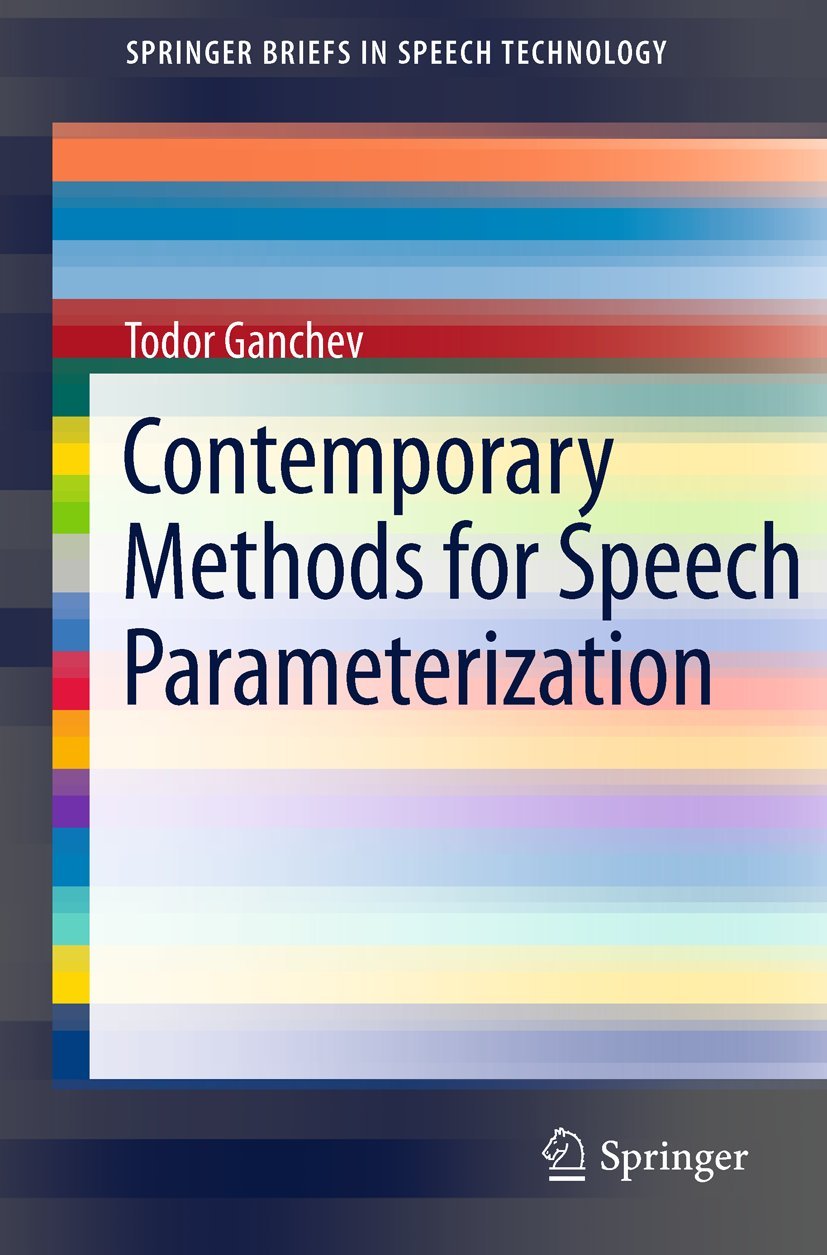
Contemporary Methods for Speech Parameterization (Springerbriefs in Electrical and Computer Engineering / Springerbriefs in Speech Technology)

Computers & Internet
Information Technology and Lawyers | by Arno R. Lodder | Anja Oskamp | Springer | by Arno R. Lodder | Anja Oskamp | Springer | by Arno R. Lodder | Anja Oskamp | Springer | by Arno R. Lodder | Anja Oskamp | Springer | by Arno R. Lodder | Anja Oskamp | Springer | by Arno R. Lodder | Anja Oskamp | Springer | by Arno R. Lodder | Anja Oskamp | Springer | by Arno R. Lodder | Anja Oskamp | Springer | by Arno R. Lodder | Anja Oskamp | Springer | by Arno R. Lodder | Anja Oskamp | Springer | by Arno R. Lo

Computers & Internet
Digital Analysis of Remotely Sensed Imagery | by Jay Gao | McGraw-Hill Companies | by Jay Gao | McGraw-Hill Companies | by Jay Gao | McGraw-Hill Companies | by Jay Gao | McGraw-Hill Companies | by Jay Gao | McGraw-Hill Companies | by Jay Gao | McGraw-Hill Companies | by Jay Gao | McGraw-Hill Companies | by Jay Gao | McGraw-Hill Companies | by Jay Gao | McGraw-Hill Companies | by Jay Gao | McGraw-Hill Companies | by Jay Gao | McGraw-Hill Companies | by Jay Gao | McGraw-Hill Companies | by Jay Gao
Computers & Internet