

Evolutionary Algorithms in Theory and Practice: Evolution Strategies, Evolutionary Programming, Genetic Algorithms by Th
Inclusive of all applicable taxes. FREE shipping on all orders.
Available Offers
- 🚚Free Delivery — Free shipping on all orders
- 💵Cash on Delivery — Pay when your order arrives
- ↩️15-Day Easy Returns — Hassle-free return policy
- 🔒Cash on Delivery — Pay safely when your order arrives
Check Delivery
Product Description
Introduction
For students, researchers, and professionals navigating the complex world of computational intelligence, Evolutionary Algorithms in Theory and Practice: Evolution Strategies, Evolutionary Programming, Genetic Algorithms by Thomas Back stands as an essential reference. Published by Oxford University Press, this hardcover volume offers a rigorous yet accessible journey into the three core paradigms of evolutionary computation. Whether you are a computer science postgraduate in an Indian university or a software engineer exploring optimization techniques, this book provides the theoretical foundation and practical insights needed to master these powerful algorithms.
Book Overview
This authoritative work systematically compares and contrasts the three major branches of evolutionary algorithms: genetic algorithms, evolution strategies, and evolutionary programming. Thomas Back presents these methods within a unified formal framework, making it easier to understand their distinct characteristics and shared principles. The book bridges the gap between computer science and evolutionary biology, offering a deep dive into how natural selection inspires computational problem-solving. It is not merely a survey but a critical analysis that includes new theoretical results and meta-evolutionary approaches to validate key concepts.
Key Highlights
- Unified Framework: All three algorithm families are explained using a common mathematical notation, enabling direct comparison and deeper comprehension.
- Original Research: Includes novel findings on the role of mutation and selection in genetic algorithms, backed by meta-evolutionary experiments.
- Comprehensive Coverage: From basic principles to advanced theoretical results, the book covers both foundational and cutting-edge topics.
- Rigorous Approach: Mathematical formulations are presented clearly, making complex ideas accessible to serious learners.
Inside the Book
The book is structured to guide readers from fundamental concepts to sophisticated analyses. Early chapters introduce the biological inspiration and historical development of evolutionary algorithms. Subsequent sections delve into the mechanics of each paradigm, examining representation, fitness evaluation, selection mechanisms, and variation operators. The latter part of the book presents original theoretical contributions, including a detailed study of how mutation rates and selection pressure affect algorithm performance. A meta-evolutionary approach is employed to empirically confirm theoretical predictions, offering a unique perspective on algorithm design.
Key Topics
- Formal characterization of genetic algorithms, evolution strategies, and evolutionary programming
- Role of mutation, crossover, and selection in optimization
- Convergence analysis and performance metrics
- Self-adaptation and parameter control
- Meta-evolutionary techniques for algorithm validation
- Comparison of continuous and discrete optimization approaches
- Applications and case studies in engineering and scientific domains
Reader Benefits
By studying this book, readers gain a clear understanding of when and why to use each type of evolutionary algorithm. The unified framework eliminates confusion caused by varying terminologies across different traditions. The theoretical insights help practitioners make informed decisions about algorithm design, parameter tuning, and hybridization. For Indian students preparing for competitive exams or research careers, this book provides the depth required to excel in advanced topics like machine learning, artificial intelligence, and operations research.
Learning Outcomes
- Distinguish between genetic algorithms, evolution strategies, and evolutionary programming with clarity
- Apply formal mathematical models to analyze and predict algorithm behaviour
- Design efficient evolutionary algorithms tailored to specific optimization problems
- Critically evaluate the role of mutation and selection in evolutionary search
- Implement meta-evolutionary methods to test theoretical hypotheses
- Understand the biological roots of computational evolution without oversimplification
Who Should Read
This book is ideal for postgraduate students in computer science, engineering, and applied mathematics who are studying computational intelligence or optimization. It is equally valuable for researchers seeking a deeper theoretical grounding in evolutionary algorithms. Practitioners in fields like data science, robotics, finance, and bioinformatics will find the rigorous analysis useful for developing robust solutions. Indian educators teaching courses on soft computing or evolutionary computation will appreciate the book's structured approach and original content.
About the Author
Thomas Back is a leading figure in the field of evolutionary computation. A professor and researcher with decades of experience, he has contributed significantly to the theoretical understanding of evolution strategies and genetic algorithms. His work has been widely cited and has influenced both academic research and industrial applications. This book reflects his deep expertise and his ability to communicate complex ideas with precision and clarity.
About the Publisher
Oxford University Press is a globally respected academic publisher known for its high-quality scholarly books and textbooks. With a strong presence in India, OUP ensures that students and professionals have access to authoritative works in science, technology, and mathematics. This hardcover edition is produced to the highest standards, making it a durable addition to any library.
Conclusion
Evolutionary Algorithms in Theory and Practice is more than a textbook—it is a cornerstone for anyone serious about understanding the mechanics of evolutionary computation. By combining theoretical depth with practical relevance, Thomas Back has created a work that remains relevant years after its publication. For Indian readers eager to master the algorithms that power modern optimization, this book is an indispensable resource. Order your copy today from Bookshops.in and add this classic to your collection.
Quick Summary
Evolutionary Algorithms in Theory and Practice by Thomas Back is a seminal work that systematically compares the three principal branches of evolutionary computation: genetic algorithms, evolution strategies, and evolutionary programming. The book establishes a common formal framework to highlight both the shared principles and the distinct characteristics of each method. Readers will gain a deep understanding of how mutation, selection, and other operators influence algorithm performance. The author also introduces novel theoretical results, including a meta-evolutionary approach that empirically validates key predictions. This book is intended for graduate students, researchers, and professionals in computer science, artificial intelligence, and optimization who seek a rigorous theoretical foundation. By reading it, one will learn to critically evaluate and choose the right evolutionary algorithm for various problem domains. Purchasing from Bookshops.in ensures a genuine, high-quality hardcover copy delivered across India, backed by reliable service and competitive pricing.
Book Highlights
Book Specifications
| ISBN-13 | 9780195099713 |
| ISBN-10 | 0195099710 |
| Publisher | OUP USA |
| Language | English |
| Dimensions | 16.26 x 2.39 x 24.43 cm |
| Weight | 658 g |
| Category | Software Design, Testing & Engineering › Software Architecture |
| Genre | Non-fiction |
| Reading Age | Adult |
| Original Language | English |
Frequently Asked Questions
What is this book about?
Who is the author of this book?
Is this book suitable for beginners?
Does the book include practical examples?
What is the ISBN?
What makes this book different from other evolutionary algorithm books?
Can I use this book for my PhD research?
Is the book available in Indian bookstores?
What is the price of this book?
Does the book cover genetic programming?
What is the language of the book?
Is this book part of a series?
What is the reader rating?
Readers Also Search For
Customers Also Bought

Programming
Algorithmische Sprache Und Programmentwicklung | by H. Partsch | F. L. Bauer | P. Pepper | Springer | by H. Partsch | F. L. Bauer | P. Pepper | Springer | by H. Partsch | F. L. Bauer | P. Pepper | Springer | by H. Partsch | F. L. Bauer | P. Pepper | Springer | by H. Partsch | F. L. Bauer | P. Pepper | Springer | by H. Partsch | F. L. Bauer | P. Pepper | Springer | by H. Partsch | F. L. Bauer | P. Pepper | Springer | by H. Partsch | F. L. Bauer | P. Pepper | Springer | by H. Partsch | F. L. Bauer
Programming
Distributed Algorithms | by Jean-Claude Bermond | Michel Raynal | Springer | by Jean-Claude Bermond | Michel Raynal | Springer | by Jean-Claude Bermond | Michel Raynal | Springer | by Jean-Claude Bermond | Michel Raynal | Springer | by Jean-Claude Bermond | Michel Raynal | Springer | by Jean-Claude Bermond | Michel Raynal | Springer | by Jean-Claude Bermond | Michel Raynal | Springer | by Jean-Claude Bermond | Michel Raynal | Springer | by Jean-Claude Bermond | Michel Raynal | Springer | by Jean

Programming
Meta-Level Control for Deductive Database Systems | by Helmut Schmidt | Springer | by Helmut Schmidt | Springer | by Helmut Schmidt | Springer | by Helmut Schmidt | Springer | by Helmut Schmidt | Springer | by Helmut Schmidt | Springer | by Helmut Schmidt | Springer | by Helmut Schmidt | Springer | by Helmut Schmidt | Springer | by Helmut Schmidt | Springer | by Helmut Schmidt | Springer | by Helmut Schmidt | Springer | by Helmut Schmidt | Springer | by Helmut Schmidt | Springer | by Helmut Schm
Programming
Java Web Services | by David A. Chappell | Tyler Jewell | O'Reilly Media | by David A. Chappell | Tyler Jewell | O'Reilly Media | by David A. Chappell | Tyler Jewell | O'Reilly Media | by David A. Chappell | Tyler Jewell | O'Reilly Media | by David A. Chappell | Tyler Jewell | O'Reilly Media | by David A. Chappell | Tyler Jewell | O'Reilly Media | by David A. Chappell | Tyler Jewell | O'Reilly Media | by David A. Chappell | Tyler Jewell | O'Reilly Media | by David A. Chappell | Tyler Jewell | O'

Programming
Database in Depth | by Chris J. Date | O'Reilly Media | by Chris J. Date | O'Reilly Media | by Chris J. Date | O'Reilly Media | by Chris J. Date | O'Reilly Media | by Chris J. Date | O'Reilly Media | by Chris J. Date | O'Reilly Media | by Chris J. Date | O'Reilly Media | by Chris J. Date | O'Reilly Media | by Chris J. Date | O'Reilly Media | by Chris J. Date | O'Reilly Media | by Chris J. Date | O'Reilly Media | by Chris J. Date | O'Reilly Media | by Chris J. Date | O'Reilly Media | by Chris J.
Programming
Integration of AI and OR Techniques in Constraint Programming for Combinatorial Optimization Problem | by Nicolas Beldiceanu | Narendra Jussien | Eric Pinson | Springer | by Nicolas Beldiceanu | Narendra Jussien | Eric Pinson | Springer | by Nicolas Beldiceanu | Narendra Jussien | Eric Pinson | Springer | by Nicolas Beldiceanu | Narendra Jussien | Eric Pinson | Springer | by Nicolas Beldiceanu | Narendra Jussien | Eric Pinson | Springer | by Nicolas Beldiceanu | Narendra Jussien | Eric Pinson |
Related Products
View All
Computers & Internet
Modern Full-Stack React Projects by Daniel Bugl
Computers & Internet
Mootools 1.2 Beginner's Guide (English, Jacob Gube)
Computers & Internet
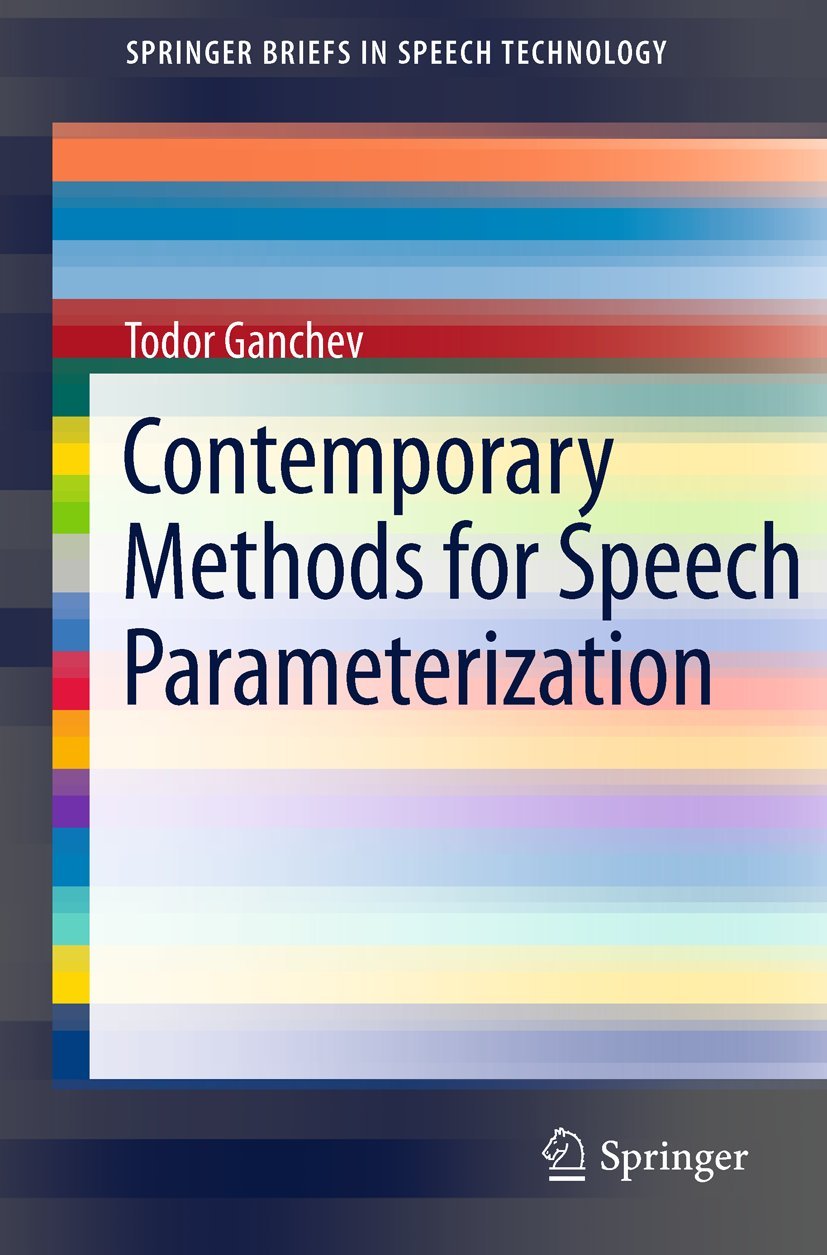
Contemporary Methods for Speech Parameterization (Springerbriefs in Electrical and Computer Engineering / Springerbriefs in Speech Technology)

Computers & Internet
Information Technology and Lawyers | by Arno R. Lodder | Anja Oskamp | Springer | by Arno R. Lodder | Anja Oskamp | Springer | by Arno R. Lodder | Anja Oskamp | Springer | by Arno R. Lodder | Anja Oskamp | Springer | by Arno R. Lodder | Anja Oskamp | Springer | by Arno R. Lodder | Anja Oskamp | Springer | by Arno R. Lodder | Anja Oskamp | Springer | by Arno R. Lodder | Anja Oskamp | Springer | by Arno R. Lodder | Anja Oskamp | Springer | by Arno R. Lodder | Anja Oskamp | Springer | by Arno R. Lo

Computers & Internet
Digital Analysis of Remotely Sensed Imagery | by Jay Gao | McGraw-Hill Companies | by Jay Gao | McGraw-Hill Companies | by Jay Gao | McGraw-Hill Companies | by Jay Gao | McGraw-Hill Companies | by Jay Gao | McGraw-Hill Companies | by Jay Gao | McGraw-Hill Companies | by Jay Gao | McGraw-Hill Companies | by Jay Gao | McGraw-Hill Companies | by Jay Gao | McGraw-Hill Companies | by Jay Gao | McGraw-Hill Companies | by Jay Gao | McGraw-Hill Companies | by Jay Gao | McGraw-Hill Companies | by Jay Gao

Computers & Internet