
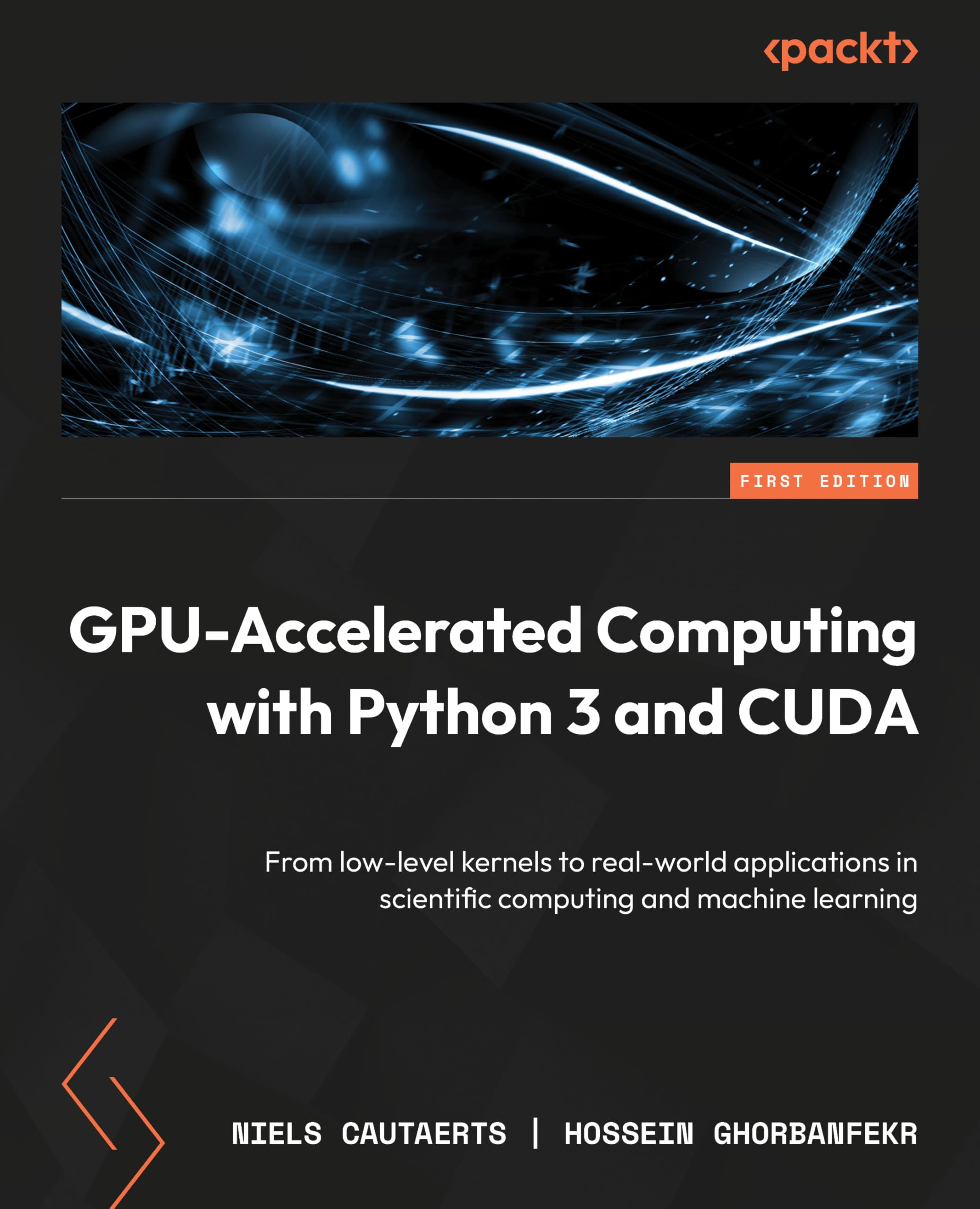
GPU-Accelerated Computing with Python 3 and CUDA: From Low-Level Kernels to Real-World Applications in Scientific Comput
Inclusive of all applicable taxes. FREE shipping on all orders.
Available Offers
- 🚚Free Delivery — Free shipping on all orders
- 💵Cash on Delivery — Pay when your order arrives
- ↩️15-Day Easy Returns — Hassle-free return policy
- 🔒Cash on Delivery — Pay safely when your order arrives
Check Delivery
Product Description
Introduction
In the rapidly evolving world of scientific computing and machine learning, the ability to harness the raw power of Graphics Processing Units (GPUs) has become a game-changer. GPU-Accelerated Computing with Python 3 and CUDA by Niels Cautaerts is a comprehensive guide that bridges the gap between Python's ease of use and the blistering performance of NVIDIA's CUDA platform. Whether you are a researcher, data scientist, or engineer in India, this book equips you with the practical skills to transform your Python code into high-speed, parallelized applications without abandoning the language you love.
Book Overview
Published by Packt Publishing, this hardcover volume takes you on a journey from the very basics of GPU architecture to advanced real-world applications. The book is structured to build a solid foundation in CUDA programming using Python, primarily through the Numba-CUDA library, before diving into modern tools like JAX, CuPy, and the RAPIDS ecosystem. With a focus on hands-on learning, each chapter presents clear examples and projects that demonstrate how to solve complex problems in scientific computing, image processing, and machine learning. The author ensures that even readers with limited experience in parallel computing can follow along and achieve tangible performance gains.
Key Highlights
- Practical Approach: Learn by doing with real code examples and projects that you can adapt for your own work.
- Comprehensive Coverage: From low-level kernel design to high-level library integration, this book covers the entire GPU computing stack.
- Performance Optimization: Master techniques like efficient memory access, CUDA streams, and multi-GPU scaling to squeeze every ounce of performance from your hardware.
- Modern Ecosystem: Explore cutting-edge Python libraries such as JAX, CuPy, RAPIDS, and Numba that are transforming the landscape of accelerated computing.
- Real-World Applications: Build practical solutions, including partial differential equation (PDE) solvers, image processing pipelines, and transformer models for natural language processing.
Inside the Book
This book is divided into well-structured sections that progressively build your expertise. You will start with the fundamentals of CUDA programming in Python using Numba-CUDA, understanding how to write and launch kernels on the GPU. Next, you will delve into memory management, learning how to optimize data transfers and leverage shared memory for maximum speed. The middle chapters introduce CUDA streams and asynchronous execution, enabling you to overlap computation and data movement. Later, you will explore multi-GPU setups and scaling your applications across multiple devices. The final part of the book is dedicated to real-world case studies, where you will apply your skills to solve problems in numerical computing, image analysis, and deep learning. Each chapter includes exercises and challenges to reinforce your learning.
Key Topics
- Introduction to GPU architecture and the CUDA programming model
- Writing and debugging CUDA kernels with Numba-CUDA
- Efficient memory access patterns and shared memory optimization
- Asynchronous execution with CUDA streams and events
- Multi-GPU programming and load balancing
- Using JAX for automatic differentiation and just-in-time compilation
- Accelerating numerical computations with CuPy
- Building end-to-end machine learning pipelines with RAPIDS
- Implementing PDE solvers and image processing algorithms
- Developing transformer models for natural language processing
Reader Benefits
By working through this book, you will gain a deep understanding of how to accelerate Python code on GPUs, reducing computation times from hours to minutes. You will learn to write efficient, parallel code that scales across multiple GPUs, making it possible to tackle larger datasets and more complex models. The practical skills you acquire will directly apply to fields like data science, artificial intelligence, computational physics, and financial modeling. Moreover, you will become proficient with the latest Python libraries that are driving innovation in high-performance computing, giving you a competitive edge in the job market or in academic research.
Learning Outcomes
- Design and implement custom CUDA kernels using Python and Numba
- Optimize GPU memory usage to minimize bottlenecks
- Manage concurrent operations with CUDA streams for improved throughput
- Scale applications across multiple GPUs for massive parallelism
- Leverage JAX, CuPy, and RAPIDS to accelerate numerical and ML workflows
- Build real-world applications like PDE solvers, image filters, and transformer models
- Debug and profile GPU code to identify performance issues
Who Should Read
This book is ideal for Python developers, data scientists, machine learning engineers, and researchers who want to supercharge their code using GPU acceleration. It is especially valuable for students and professionals in India working on computationally intensive projects in fields like artificial intelligence, scientific simulation, image processing, and big data analytics. A basic understanding of Python programming and some familiarity with linear algebra and calculus will help, but no prior experience with CUDA or GPU programming is required. The book is also a great resource for those transitioning from CPU-based workflows to GPU-accelerated pipelines.
About the Author
Niels Cautaerts is an experienced researcher and software engineer with a deep passion for high-performance computing and scientific software development. With a background in computational materials science, he has worked extensively with GPU programming, parallel algorithms, and machine learning. His practical, hands-on teaching style ensures that complex concepts become accessible to readers at all levels. Through this book, he shares his expertise to help the Python community harness the full potential of modern GPU hardware.
About the Publisher
Packt Publishing is a leading global publisher of technology books, known for delivering practical, cutting-edge content for developers, IT professionals, and students. With a focus on actionable knowledge and real-world applications, Packt has helped millions of readers worldwide advance their skills in programming, data science, cloud computing, and more. This book continues that tradition by providing a thorough, up-to-date guide to GPU-accelerated computing with Python.
Conclusion
GPU-Accelerated Computing with Python 3 and CUDA is an indispensable resource for anyone looking to unlock the full power of GPU computing while staying within the Python ecosystem. With its clear explanations, practical examples, and coverage of the latest tools, this book will empower you to build faster, more efficient applications for scientific computing and machine learning. Whether you are a student in Bangalore, a researcher in Mumbai, or an engineer in Hyderabad, this book will be your trusted companion on the journey to mastering GPU acceleration. Order your hardcover copy from Bookshops.in today and take the first step toward transforming your computational workflows.
Quick Summary
GPU-Accelerated Computing with Python 3 and CUDA by Niels Cautaerts is a comprehensive guide for Python developers, data scientists, and researchers who want to supercharge their applications using NVIDIA GPUs. The book covers everything from writing low-level CUDA kernels to leveraging high-level libraries like Numba, CuPy, JAX, and RAPIDS for scientific computing and machine learning. Readers will learn to optimize memory access, use CUDA streams, scale across multiple GPUs, and build real-world applications such as PDE solvers, image processors, and transformer models. The book is hands-on with practical examples and exercises, making it suitable for both beginners and experienced programmers. Published by Packt Publishing, this hardcover edition is a durable resource for Indian students and professionals. Buying from Bookshops.in ensures you receive a genuine product with fast delivery across India, supporting your journey into high-performance GPU computing.
Book Highlights
Book Specifications
| ISBN-13 | 9781803245423 |
| ISBN-10 | 1803245425 |
| Publisher | Packt Publishing |
| Language | English |
| Dimensions | 19.05 x 3.07 x 23.5 cm |
| Weight | 907 g |
| Country | India |
| Category | Languages › C & C++ |
| Genre | Programming |
| Original Language | English |
Frequently Asked Questions
What is GPU-accelerated computing with Python?
Do I need prior GPU programming experience?
Which Python libraries are covered?
Is this book suitable for machine learning?
Can I use this book with any GPU?
Are there hands-on exercises?
What is the publication date?
Is this a hardcover book?
Who is the author?
What is the ISBN?
Can I use this book for academic courses?
Does it cover multi-GPU setups?
How is this book different from online tutorials?
Is the code compatible with Python 3?
Why buy from Bookshops.in?
Readers Also Search For
Customers Also Bought
Programming
Algorithmische Sprache Und Programmentwicklung | by H. Partsch | F. L. Bauer | P. Pepper | Springer | by H. Partsch | F. L. Bauer | P. Pepper | Springer | by H. Partsch | F. L. Bauer | P. Pepper | Springer | by H. Partsch | F. L. Bauer | P. Pepper | Springer | by H. Partsch | F. L. Bauer | P. Pepper | Springer | by H. Partsch | F. L. Bauer | P. Pepper | Springer | by H. Partsch | F. L. Bauer | P. Pepper | Springer | by H. Partsch | F. L. Bauer | P. Pepper | Springer | by H. Partsch | F. L. Bauer
Programming
Distributed Algorithms | by Jean-Claude Bermond | Michel Raynal | Springer | by Jean-Claude Bermond | Michel Raynal | Springer | by Jean-Claude Bermond | Michel Raynal | Springer | by Jean-Claude Bermond | Michel Raynal | Springer | by Jean-Claude Bermond | Michel Raynal | Springer | by Jean-Claude Bermond | Michel Raynal | Springer | by Jean-Claude Bermond | Michel Raynal | Springer | by Jean-Claude Bermond | Michel Raynal | Springer | by Jean-Claude Bermond | Michel Raynal | Springer | by Jean
Programming
Meta-Level Control for Deductive Database Systems | by Helmut Schmidt | Springer | by Helmut Schmidt | Springer | by Helmut Schmidt | Springer | by Helmut Schmidt | Springer | by Helmut Schmidt | Springer | by Helmut Schmidt | Springer | by Helmut Schmidt | Springer | by Helmut Schmidt | Springer | by Helmut Schmidt | Springer | by Helmut Schmidt | Springer | by Helmut Schmidt | Springer | by Helmut Schmidt | Springer | by Helmut Schmidt | Springer | by Helmut Schmidt | Springer | by Helmut Schm
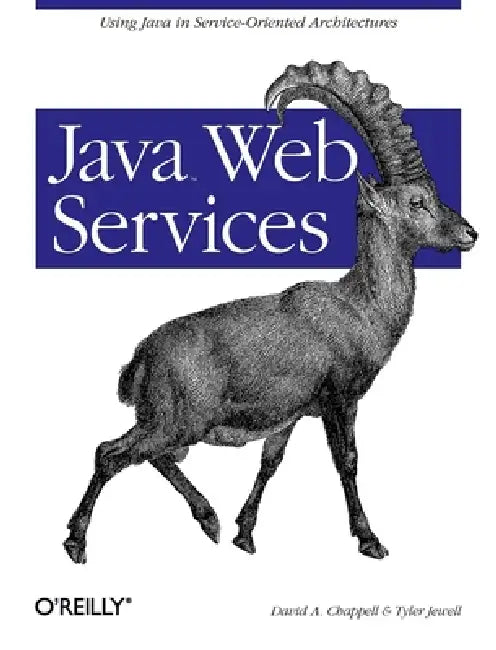
Programming
Java Web Services | by David A. Chappell | Tyler Jewell | O'Reilly Media | by David A. Chappell | Tyler Jewell | O'Reilly Media | by David A. Chappell | Tyler Jewell | O'Reilly Media | by David A. Chappell | Tyler Jewell | O'Reilly Media | by David A. Chappell | Tyler Jewell | O'Reilly Media | by David A. Chappell | Tyler Jewell | O'Reilly Media | by David A. Chappell | Tyler Jewell | O'Reilly Media | by David A. Chappell | Tyler Jewell | O'Reilly Media | by David A. Chappell | Tyler Jewell | O'
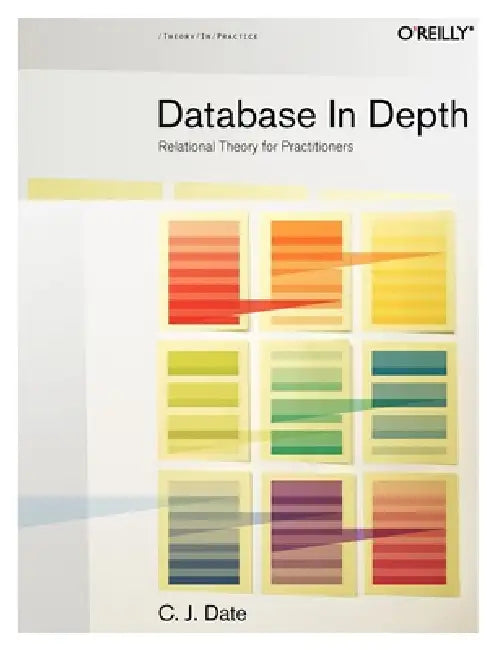
Programming
Database in Depth | by Chris J. Date | O'Reilly Media | by Chris J. Date | O'Reilly Media | by Chris J. Date | O'Reilly Media | by Chris J. Date | O'Reilly Media | by Chris J. Date | O'Reilly Media | by Chris J. Date | O'Reilly Media | by Chris J. Date | O'Reilly Media | by Chris J. Date | O'Reilly Media | by Chris J. Date | O'Reilly Media | by Chris J. Date | O'Reilly Media | by Chris J. Date | O'Reilly Media | by Chris J. Date | O'Reilly Media | by Chris J. Date | O'Reilly Media | by Chris J.
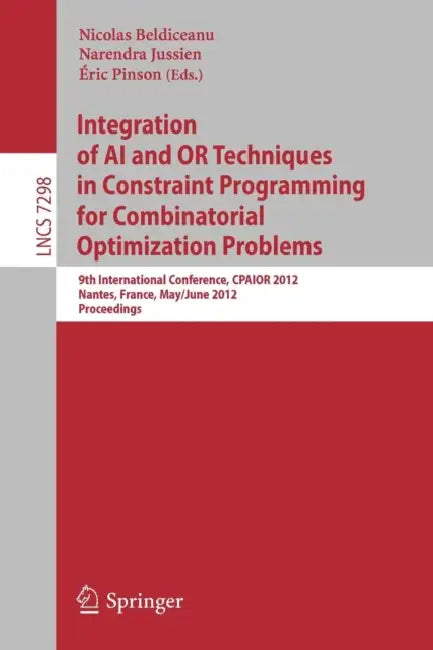
Programming
Integration of AI and OR Techniques in Constraint Programming for Combinatorial Optimization Problem | by Nicolas Beldiceanu | Narendra Jussien | Eric Pinson | Springer | by Nicolas Beldiceanu | Narendra Jussien | Eric Pinson | Springer | by Nicolas Beldiceanu | Narendra Jussien | Eric Pinson | Springer | by Nicolas Beldiceanu | Narendra Jussien | Eric Pinson | Springer | by Nicolas Beldiceanu | Narendra Jussien | Eric Pinson | Springer | by Nicolas Beldiceanu | Narendra Jussien | Eric Pinson |
Related Products
View All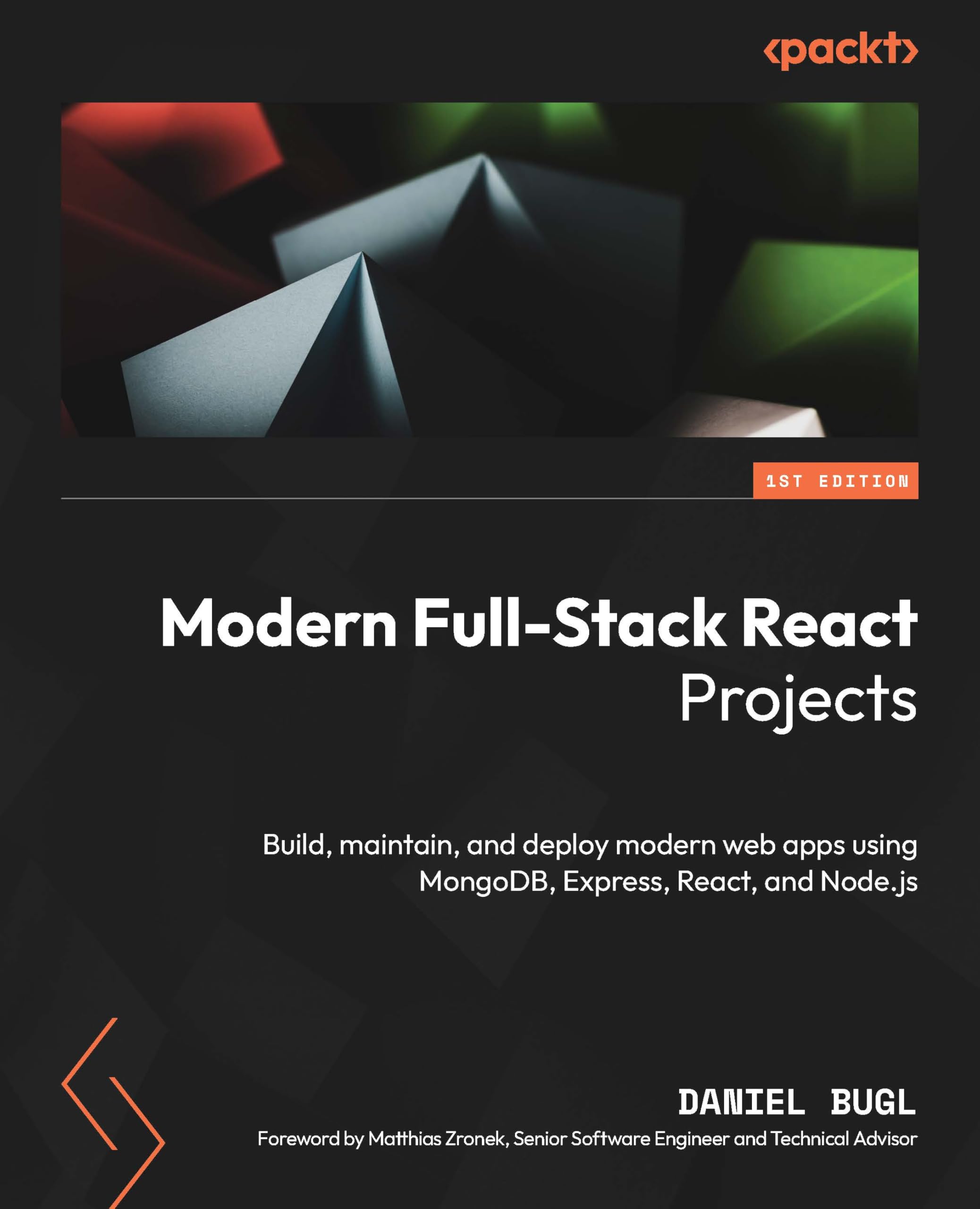
Computers & Internet
Modern Full-Stack React Projects by Daniel Bugl
Computers & Internet
Mootools 1.2 Beginner's Guide (English, Jacob Gube)
Computers & Internet
Contemporary Methods for Speech Parameterization (Springerbriefs in Electrical and Computer Engineering / Springerbriefs in Speech Technology)

Computers & Internet
Information Technology and Lawyers | by Arno R. Lodder | Anja Oskamp | Springer | by Arno R. Lodder | Anja Oskamp | Springer | by Arno R. Lodder | Anja Oskamp | Springer | by Arno R. Lodder | Anja Oskamp | Springer | by Arno R. Lodder | Anja Oskamp | Springer | by Arno R. Lodder | Anja Oskamp | Springer | by Arno R. Lodder | Anja Oskamp | Springer | by Arno R. Lodder | Anja Oskamp | Springer | by Arno R. Lodder | Anja Oskamp | Springer | by Arno R. Lodder | Anja Oskamp | Springer | by Arno R. Lo

Computers & Internet
Digital Analysis of Remotely Sensed Imagery | by Jay Gao | McGraw-Hill Companies | by Jay Gao | McGraw-Hill Companies | by Jay Gao | McGraw-Hill Companies | by Jay Gao | McGraw-Hill Companies | by Jay Gao | McGraw-Hill Companies | by Jay Gao | McGraw-Hill Companies | by Jay Gao | McGraw-Hill Companies | by Jay Gao | McGraw-Hill Companies | by Jay Gao | McGraw-Hill Companies | by Jay Gao | McGraw-Hill Companies | by Jay Gao | McGraw-Hill Companies | by Jay Gao | McGraw-Hill Companies | by Jay Gao
Computers & Internet