
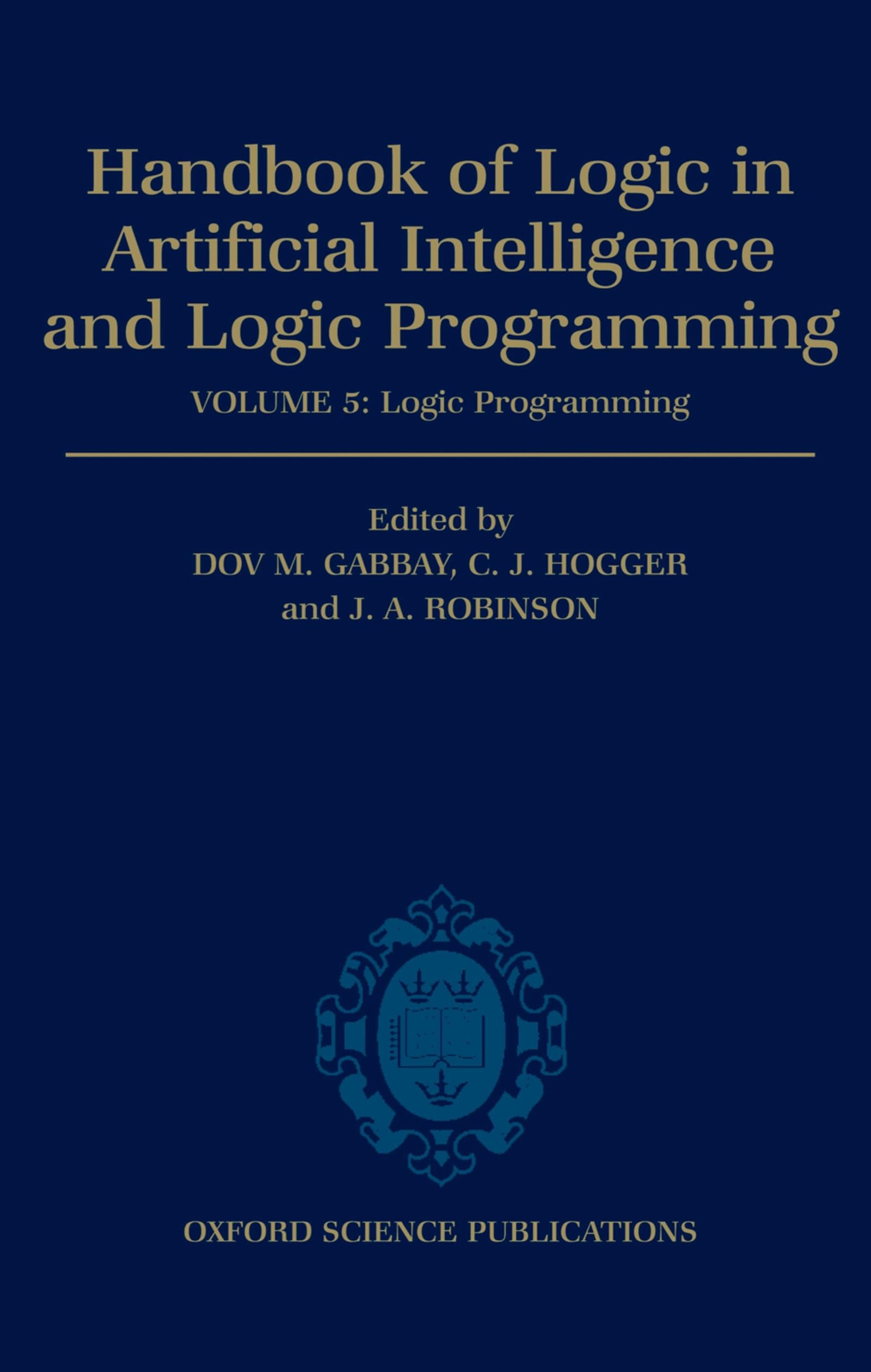
Handbook of Logic in Artificial Intelligence: Logic Programming by Christopher John Hogger – A Foundational Reference fo
Inclusive of all applicable taxes. FREE shipping on all orders.
Available Offers
- 🚚Free Delivery — Free shipping on all orders
- 💵Cash on Delivery — Pay when your order arrives
- ↩️15-Day Easy Returns — Hassle-free return policy
- 🔒Cash on Delivery — Pay safely when your order arrives
Check Delivery
Product Description
Introduction
The Handbook of Logic in Artificial Intelligence: Logic Programming by Christopher John Hogger is an authoritative volume that delves deep into the intersection of logic and artificial intelligence. As part of a prestigious five-volume series, this hardcover edition from OUP Oxford offers a rigorous exploration of logic programming, a foundational pillar of modern AI. For Indian students, researchers, and professionals in computer science and AI, this book serves as an indispensable resource for understanding how logical reasoning drives intelligent systems.
Book Overview
This volume is the fifth and concluding part of the Handbook of Logic in Artificial Intelligence series, designed to provide a comprehensive survey of logic's role in AI. Focused exclusively on logic programming, it brings together contributions from internationally renowned experts. The book examines the theoretical underpinnings, practical methodologies, and unifying themes that make logic programming a powerful paradigm for knowledge representation, automated reasoning, and problem-solving. It is a definitive reference that bridges abstract logic with real-world AI applications.
Key Highlights
- Authoritative Content: Edited by Christopher John Hogger, a respected figure in logic and computation, with chapters from leading global researchers.
- Comprehensive Scope: Covers the entire spectrum of logic programming, from foundational theory to advanced topics like non-monotonic reasoning and constraint logic programming.
- Monograph-Length Chapters: Each chapter is detailed and self-contained, offering deep insights suitable for advanced study.
- Emphasis on Unifying Themes: Highlights connections between different logic programming paradigms, aiding holistic understanding.
- Premium Hardbound Edition: A durable, high-quality print from OUP Oxford, ideal for academic libraries and personal collections.
Inside the Book
The book is structured around several major themes. It begins with the core principles of logic programming, including Horn clause logic and resolution-based proof procedures. Subsequent chapters explore extensions like negation as failure, disjunctive logic programming, and meta-programming. The volume also addresses practical aspects such as implementation techniques, semantics, and the integration of logic programming with databases and knowledge-based systems. Each chapter is rich with formal definitions, theorems, and examples that clarify complex concepts.
Key Topics
- Foundations of Logic Programming: Syntax, semantics, and proof theory of Horn clause logic.
- Negation and Non-Monotonic Reasoning: Handling incomplete information and default assumptions.
- Constraint Logic Programming: Combining logic with constraint solving for real-world problems.
- Meta-Programming and Reflection: Techniques for programs that manipulate other programs.
- Logic Programming and Databases: Deductive databases and query optimization.
- Implementation Strategies: Compilation, abstract machines, and parallel execution models.
Reader Benefits
Readers gain a deep, formal grounding in logic programming that is directly applicable to AI research and development. The book helps build a strong conceptual framework for understanding how logical inference can be mechanized. It also provides practical knowledge for designing and implementing logic-based systems, making it valuable for both theoretical exploration and applied projects. For Indian academics, this volume aligns well with advanced curricula in AI, computational logic, and knowledge engineering.
Learning Outcomes
- Master the theoretical foundations of logic programming, including syntax, semantics, and proof procedures.
- Understand how to represent knowledge using Horn clauses and handle negation effectively.
- Learn to apply constraint logic programming to optimization and scheduling problems.
- Gain insights into meta-programming techniques for building flexible AI systems.
- Develop the ability to critically evaluate and extend logic programming paradigms.
Who Should Read
This book is ideal for postgraduate students and researchers in artificial intelligence, computer science, and logic. It is also highly relevant for professionals working in knowledge representation, automated reasoning, and software verification. Faculty members designing advanced courses in AI or logic programming will find it a valuable reference. Anyone with a solid background in discrete mathematics and basic logic will benefit from this deep dive into logic programming.
About the Author
Christopher John Hogger is a renowned British computer scientist and logician, known for his contributions to logic programming and automated reasoning. He has been a faculty member at Imperial College London and has authored several influential works on logic and computation. His editorial leadership ensures that this handbook maintains the highest standards of academic rigor and clarity.
About the Publisher
OUP Oxford (Oxford University Press) is one of the world's oldest and most respected academic publishers. With a legacy of excellence spanning over five centuries, OUP is synonymous with authoritative scholarship in science, technology, and the humanities. This hardcover edition reflects OUP's commitment to producing high-quality, enduring academic works.
Conclusion
The Handbook of Logic in Artificial Intelligence: Logic Programming is an essential acquisition for any serious AI library. It offers a comprehensive, rigorous, and well-organized treatment of logic programming that will benefit students, researchers, and practitioners alike. Whether you are exploring the theoretical depths of logical inference or building practical AI systems, this volume provides the clarity and depth you need. Order your copy from Bookshops.in today and add a cornerstone reference to your collection.
Quick Summary
The Handbook of Logic in Artificial Intelligence: Logic Programming by Christopher John Hogger is a definitive reference volume that explores the foundational role of logic in AI, with a specific focus on logic programming. Published by OUP Oxford, this hardcover book is part of a prestigious series and offers comprehensive coverage of topics such as resolution, Horn clause logic, SLD derivation, nonmonotonic reasoning, and constraint logic programming. Aimed at advanced students, researchers, and AI practitioners, it bridges theoretical logic with practical applications in knowledge representation, automated reasoning, and expert systems. Readers will gain a deep understanding of how logic underpins modern AI systems and will be equipped with the knowledge to apply these concepts in research and development. Buying from Bookshops.in ensures you receive an authentic, high-quality print edition delivered across India, backed by reliable customer service.
Book Highlights
Book Specifications
| ISBN-13 | 9780198537922 |
| ISBN-10 | 0198537921 |
| Publisher | Clarendon Pr |
| Language | English |
| Dimensions | 23.62 x 5.08 x 16.26 cm |
| Weight | 1 kg 320 g |
| Category | Clinical › Anesthesiology |
| Series | Handbook of Logic in Artificial Intelligence |
| Genre | Non-fiction |
| Original Language | English |
Frequently Asked Questions
What is the main focus of this book?
Who is the author of this handbook?
Is this book suitable for beginners in AI?
Does the book cover Prolog?
Is this a hardcover edition?
What is the ISBN?
Can I use this for my PhD research?
Does the book include exercises or problems?
What topics in logic programming are covered?
Is this part of a series?
What is the price in India?
Who is the publisher?
Is the book available in Indian bookstores?
What is the language of the book?
Readers Also Search For
Customers Also Bought

Anatomy
Ultrastructure of the Digestive Tract: 4 (Electron Microscopy in Biology and Medicine)

Anatomy
Ultrastructure of the Connective Tissue Matrix: 3 (Electron Microscopy in Biology and Medicine)

Anatomy
Reproductive Genetics (Royal College of Obstetricians and Gynaecologists Study Group)

Anatomy
Human Gross Anatomy: An Outline Text by Robert J. Leonard – Medical Anatomy

Pharmacology
Mathematical Modeling and Simulation in Enteric Neurobiology

Anatomy
Nature’s Patterns and the Fractional Calculus: 2 (Fractional Calculus in Applied Sciences and Engineering, 2)
Related Products
View All
Medicine & Health Sciences
Handbook of Hospitality Strategic Management | by Olsen Michael | Taylor & Francis Ltd | by Olsen Michael | Taylor & Francis Ltd | by Olsen Michael | Taylor & Francis Ltd | by Olsen Michael | Taylor & Francis Ltd | by Olsen Michael | Taylor & Francis Ltd | by Olsen Michael | Taylor & Francis Ltd | by Olsen Michael | Taylor & Francis Ltd | by Olsen Michael | Taylor & Francis Ltd | by Olsen Michael | Taylor & Francis Ltd | by Olsen Michael | Taylor & Francis
Medicine & Health Sciences
Pediatrics on Call | by Charles A. Pohl | Kathleen Bradford | Clara Callahan | McGraw Hill / Medical | by Charles A. Pohl | Kathleen Bradford | Clara Callahan | McGraw Hill / Medical | by Charles A. Pohl | Kathleen Bradford | Clara Callahan | McGraw Hill / Medical | by Charles A. Pohl | Kathleen Bradford | Clara Callahan | McGraw Hill / Medical | by Charles A. Pohl | Kathleen Bradford | Clara Callahan | McGraw Hill / Medical | by Charles A. Pohl | Kathleen Bradford | Clara Callahan | McGraw Hill

Medicine & Health Sciences
The Physician's Guide to Depression and Bipolar Disorders | by Dwight L. Evans | Dennis S. Charney | Lydia Lewis | McGraw Hill / Medical | by Dwight L. Evans | Dennis S. Charney | Lydia Lewis | McGraw Hill / Medical | by Dwight L. Evans | Dennis S. Charney | Lydia Lewis | McGraw Hill / Medical | by Dwight L. Evans | Dennis S. Charney | Lydia Lewis | McGraw Hill / Medical | by Dwight L. Evans | Dennis S. Charney | Lydia Lewis | McGraw Hill / Medical | by Dwight L. Evans | Dennis S. Charney | Lydi
Medicine & Health Sciences
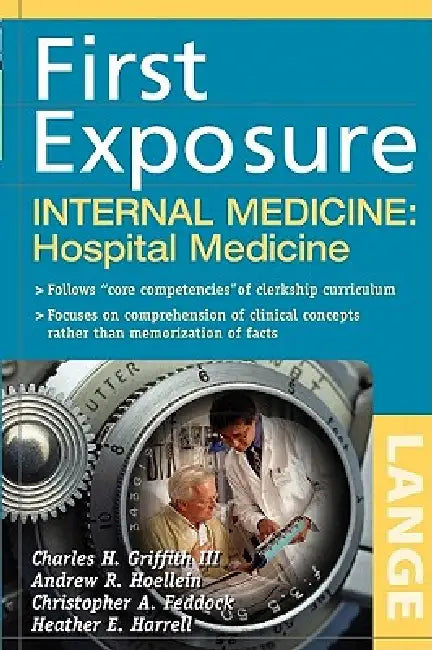
First Exposure to Internal Medicine | by Andrew R. Hoellein | Charles H. Griffith | McGraw Hill / Medical | by Andrew R. Hoellein | Charles H. Griffith | McGraw Hill / Medical | by Andrew R. Hoellein | Charles H. Griffith | McGraw Hill / Medical | by Andrew R. Hoellein | Charles H. Griffith | McGraw Hill / Medical | by Andrew R. Hoellein | Charles H. Griffith | McGraw Hill / Medical | by Andrew R. Hoellein | Charles H. Griffith | McGraw Hill / Medical | by Andrew R. Hoellein | Charles H. Griffit
Medicine & Health Sciences
First Exposure to Internal Medicine | by Charles H. Griffith | Andrew R. Hoellein | McGraw Hill / Medical | by Charles H. Griffith | Andrew R. Hoellein | McGraw Hill / Medical | by Charles H. Griffith | Andrew R. Hoellein | McGraw Hill / Medical | by Charles H. Griffith | Andrew R. Hoellein | McGraw Hill / Medical | by Charles H. Griffith | Andrew R. Hoellein | McGraw Hill / Medical | by Charles H. Griffith | Andrew R. Hoellein | McGraw Hill / Medical | by Charles H. Griffith | Andrew R. Hoellei
Medicine & Health Sciences