

Introduction to Distributed Algorithms: A Comprehensive Textbook on Distributed Systems and Message Passing by Gerard Te
Inclusive of all applicable taxes. FREE shipping on all orders.
Available Offers
- 🚚Free Delivery — Free shipping on all orders
- 💵Cash on Delivery — Pay when your order arrives
- ↩️15-Day Easy Returns — Hassle-free return policy
- 🔒Cash on Delivery — Pay safely when your order arrives
Check Delivery
Product Description
Introduction
Distributed computing forms the backbone of modern networks, cloud systems, and large-scale software architectures. For students and professionals in India seeking a rigorous yet accessible foundation, Introduction to Distributed Algorithms by Gerard Tel stands as a definitive resource. Published by Cambridge University Press, this hardcover edition equips readers with both theoretical depth and practical algorithmic insight, making it indispensable for advanced undergraduate and graduate courses in computer science.
Book Overview
This second edition of a widely acclaimed textbook offers a comprehensive exploration of distributed algorithms within the point-to-point message passing model. The author systematically builds from fundamental concepts to advanced topics, ensuring that readers grasp how algorithms enable communication, synchronization, and coordination across independent processors. The book’s clarity and structured progression make it equally valuable for self-study and classroom instruction, bridging the gap between abstract theory and real-world network implementation.
Key Highlights
- Thoroughly updated second edition with two entirely new chapters on sense of direction and failure detectors
- Focus on the point-to-point message passing model, the foundation of modern computer communication networks
- Rigorous theoretical treatment balanced with algorithmic examples for practical understanding
- State-of-the-art coverage of emerging topics that remain active areas of research
- Clear, student-friendly presentation suitable for advanced undergraduates and graduate students
Inside the Book
The book begins with essential models and definitions, then progresses through synchronization, election algorithms, consensus, and fault tolerance. Each chapter is built around precise algorithmic descriptions, correctness proofs, and complexity analyses. The new chapters on sense of direction explore how nodes can exploit topological information to improve efficiency, while the chapter on failure detectors examines how systems can reliably detect crashes in asynchronous environments. Numerous exercises at the end of each chapter reinforce learning and encourage deeper investigation.
Key Topics
- Distributed system models and communication primitives
- Leader election and mutual exclusion algorithms
- Consensus and agreement protocols
- Sense of direction and its algorithmic implications
- Failure detectors and reliable broadcast
- Time, clocks, and the ordering of events
- Distributed graph algorithms and network routing
Reader Benefits
By studying this book, readers will develop a strong conceptual framework for understanding how distributed systems achieve coordination without centralized control. The algorithmic approach cultivates problem-solving skills essential for designing scalable, fault-tolerant software. The inclusion of failure detectors and sense of direction ensures exposure to cutting-edge research that is directly relevant to modern cloud computing, blockchain networks, and peer-to-peer systems. Indian students preparing for competitive exams or research in distributed computing will find the rigorous proofs and exercises invaluable for mastering the subject.
Learning Outcomes
- Analyze and compare distributed algorithms using complexity measures and correctness proofs
- Design algorithms for leader election, consensus, and mutual exclusion in message-passing systems
- Understand the role of failure detectors in building reliable distributed systems
- Apply the concept of sense of direction to optimize network communication
- Evaluate trade-offs between synchrony, asynchrony, and fault tolerance in algorithm design
Who Should Read
This book is ideal for advanced undergraduate and graduate students in computer science and engineering programmes across Indian universities. It is also highly recommended for practising software engineers, system architects, and researchers who work with distributed systems, cloud infrastructure, or network protocols. The mathematical maturity required is modest, making it accessible to motivated senior undergraduates while remaining deep enough for PhD students and professionals.
About the Author
Gerard Tel is a distinguished computer scientist known for his contributions to distributed algorithms and network theory. He has authored numerous research papers and textbooks that are widely cited in the field. His teaching experience at the University of Utrecht and other institutions informs the clear, pedagogical style of this book, ensuring complex ideas are presented with precision and accessibility.
About the Publisher
Cambridge University Press is a world-leading academic publisher with a rich history of disseminating knowledge across disciplines. Known for rigorous editorial standards and authoritative content, Cambridge University Press brings this hardcover edition to readers in India, ensuring high-quality production and enduring value for students and professionals alike.
Conclusion
Introduction to Distributed Algorithms by Gerard Tel is an essential addition to the library of anyone serious about understanding the algorithmic foundations of distributed computing. With its updated content, clear exposition, and focus on both theory and practice, this book remains a gold standard for the subject. Order your copy from Bookshops.in today and deepen your expertise in one of the most vital areas of modern computer science.
Quick Summary
Introduction to Distributed Algorithms by Gerard Tel is a comprehensive textbook that delves into the theory and practice of algorithms designed for distributed systems, specifically those based on point-to-point message passing. This second edition, published by Cambridge University Press, updates classic content with two new chapters on sense of direction and failure detectors—topics that are at the forefront of current research. The book is structured to serve both advanced undergraduate and graduate students, as well as practicing engineers and researchers who need a solid grasp of how distributed algorithms work. Readers will explore key concepts such as leader election, mutual exclusion, clock synchronization, global state detection, and distributed deadlocks, all explained with clarity and rigor. The practical focus on computer communication networks makes it directly applicable to real-world system design. For Indian students and professionals looking to excel in distributed computing, this hardcover edition from Bookshops.in offers a durable and authoritative resource. Buying from Bookshops.in ensures a trusted purchase with reliable delivery across India.
Book Highlights
Book Specifications
| ISBN-13 | 9780521794831 |
| ISBN-10 | 0521794838 |
| Publisher | Cambridge University Press |
| Language | English |
| Dimensions | 18.9 x 3.51 x 24.61 cm |
| Weight | 1 kg 230 g |
| Country | India |
| Category | Software Design, Testing & Engineering › Software Architecture |
| Genre | Non-fiction |
| Original Language | English |
Frequently Asked Questions
What is the main focus of Introduction to Distributed Algorithms?
Who is the author of this book?
Is this book suitable for beginners?
What are the new chapters in this second edition?
Does this book cover practical implementation?
What is the ISBN of this book?
Which publisher released this book?
Is this book available in Indian bookstores?
What binding does this edition have?
What language is the book written in?
Can this book help with research in distributed systems?
Does the book include exercises or problems?
What is the price of this book in India?
Is this book recommended for Indian university courses?
Readers Also Search For
Customers Also Bought

Programming
Algorithmische Sprache Und Programmentwicklung | by H. Partsch | F. L. Bauer | P. Pepper | Springer | by H. Partsch | F. L. Bauer | P. Pepper | Springer | by H. Partsch | F. L. Bauer | P. Pepper | Springer | by H. Partsch | F. L. Bauer | P. Pepper | Springer | by H. Partsch | F. L. Bauer | P. Pepper | Springer | by H. Partsch | F. L. Bauer | P. Pepper | Springer | by H. Partsch | F. L. Bauer | P. Pepper | Springer | by H. Partsch | F. L. Bauer | P. Pepper | Springer | by H. Partsch | F. L. Bauer
Programming
Distributed Algorithms | by Jean-Claude Bermond | Michel Raynal | Springer | by Jean-Claude Bermond | Michel Raynal | Springer | by Jean-Claude Bermond | Michel Raynal | Springer | by Jean-Claude Bermond | Michel Raynal | Springer | by Jean-Claude Bermond | Michel Raynal | Springer | by Jean-Claude Bermond | Michel Raynal | Springer | by Jean-Claude Bermond | Michel Raynal | Springer | by Jean-Claude Bermond | Michel Raynal | Springer | by Jean-Claude Bermond | Michel Raynal | Springer | by Jean
Programming
Meta-Level Control for Deductive Database Systems | by Helmut Schmidt | Springer | by Helmut Schmidt | Springer | by Helmut Schmidt | Springer | by Helmut Schmidt | Springer | by Helmut Schmidt | Springer | by Helmut Schmidt | Springer | by Helmut Schmidt | Springer | by Helmut Schmidt | Springer | by Helmut Schmidt | Springer | by Helmut Schmidt | Springer | by Helmut Schmidt | Springer | by Helmut Schmidt | Springer | by Helmut Schmidt | Springer | by Helmut Schmidt | Springer | by Helmut Schm
Programming
Java Web Services | by David A. Chappell | Tyler Jewell | O'Reilly Media | by David A. Chappell | Tyler Jewell | O'Reilly Media | by David A. Chappell | Tyler Jewell | O'Reilly Media | by David A. Chappell | Tyler Jewell | O'Reilly Media | by David A. Chappell | Tyler Jewell | O'Reilly Media | by David A. Chappell | Tyler Jewell | O'Reilly Media | by David A. Chappell | Tyler Jewell | O'Reilly Media | by David A. Chappell | Tyler Jewell | O'Reilly Media | by David A. Chappell | Tyler Jewell | O'
Programming
Database in Depth | by Chris J. Date | O'Reilly Media | by Chris J. Date | O'Reilly Media | by Chris J. Date | O'Reilly Media | by Chris J. Date | O'Reilly Media | by Chris J. Date | O'Reilly Media | by Chris J. Date | O'Reilly Media | by Chris J. Date | O'Reilly Media | by Chris J. Date | O'Reilly Media | by Chris J. Date | O'Reilly Media | by Chris J. Date | O'Reilly Media | by Chris J. Date | O'Reilly Media | by Chris J. Date | O'Reilly Media | by Chris J. Date | O'Reilly Media | by Chris J.
Programming
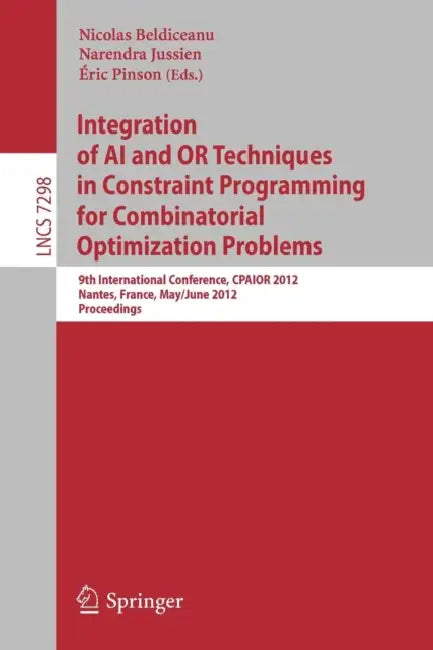
Integration of AI and OR Techniques in Constraint Programming for Combinatorial Optimization Problem | by Nicolas Beldiceanu | Narendra Jussien | Eric Pinson | Springer | by Nicolas Beldiceanu | Narendra Jussien | Eric Pinson | Springer | by Nicolas Beldiceanu | Narendra Jussien | Eric Pinson | Springer | by Nicolas Beldiceanu | Narendra Jussien | Eric Pinson | Springer | by Nicolas Beldiceanu | Narendra Jussien | Eric Pinson | Springer | by Nicolas Beldiceanu | Narendra Jussien | Eric Pinson |
Related Products
View All
Computers & Internet
Modern Full-Stack React Projects by Daniel Bugl

Computers & Internet
Mootools 1.2 Beginner's Guide (English, Jacob Gube)
Computers & Internet
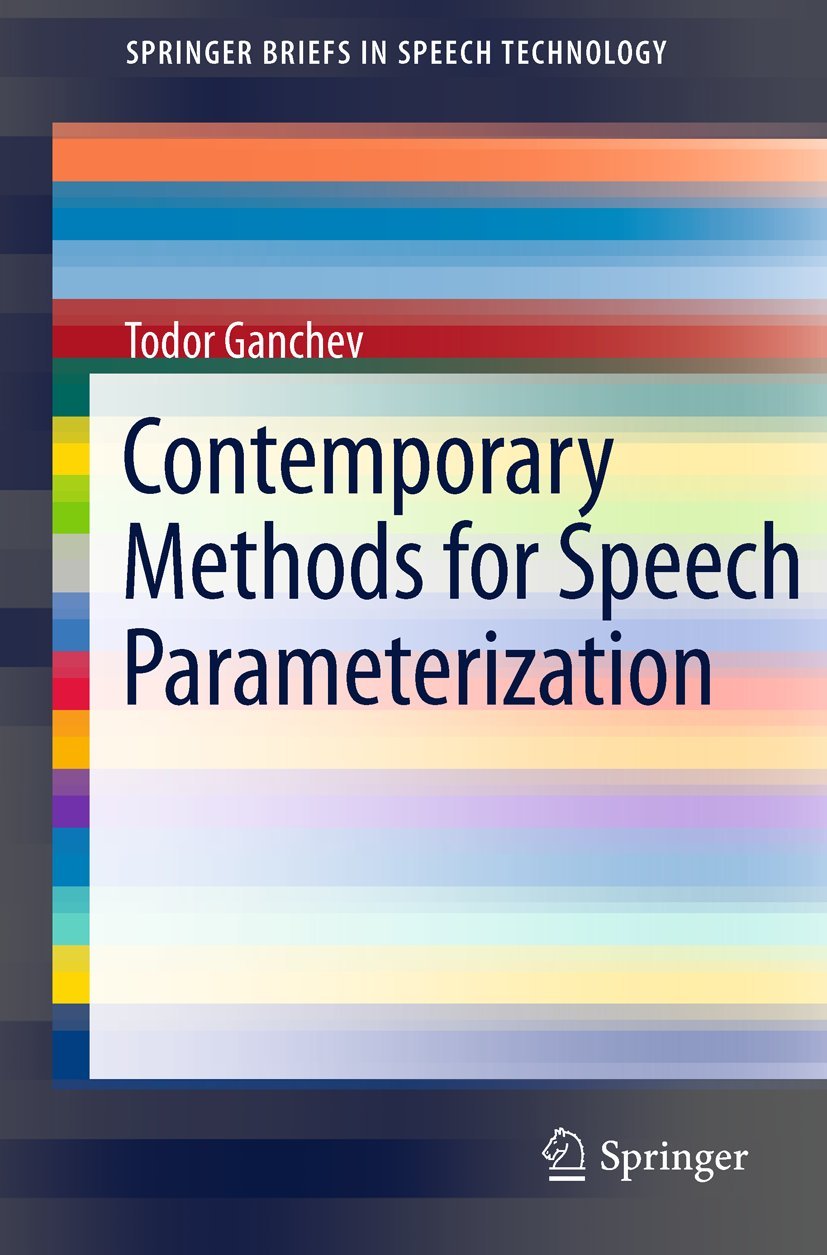
Contemporary Methods for Speech Parameterization (Springerbriefs in Electrical and Computer Engineering / Springerbriefs in Speech Technology)

Computers & Internet
Information Technology and Lawyers | by Arno R. Lodder | Anja Oskamp | Springer | by Arno R. Lodder | Anja Oskamp | Springer | by Arno R. Lodder | Anja Oskamp | Springer | by Arno R. Lodder | Anja Oskamp | Springer | by Arno R. Lodder | Anja Oskamp | Springer | by Arno R. Lodder | Anja Oskamp | Springer | by Arno R. Lodder | Anja Oskamp | Springer | by Arno R. Lodder | Anja Oskamp | Springer | by Arno R. Lodder | Anja Oskamp | Springer | by Arno R. Lodder | Anja Oskamp | Springer | by Arno R. Lo

Computers & Internet
Digital Analysis of Remotely Sensed Imagery | by Jay Gao | McGraw-Hill Companies | by Jay Gao | McGraw-Hill Companies | by Jay Gao | McGraw-Hill Companies | by Jay Gao | McGraw-Hill Companies | by Jay Gao | McGraw-Hill Companies | by Jay Gao | McGraw-Hill Companies | by Jay Gao | McGraw-Hill Companies | by Jay Gao | McGraw-Hill Companies | by Jay Gao | McGraw-Hill Companies | by Jay Gao | McGraw-Hill Companies | by Jay Gao | McGraw-Hill Companies | by Jay Gao | McGraw-Hill Companies | by Jay Gao

Computers & Internet