
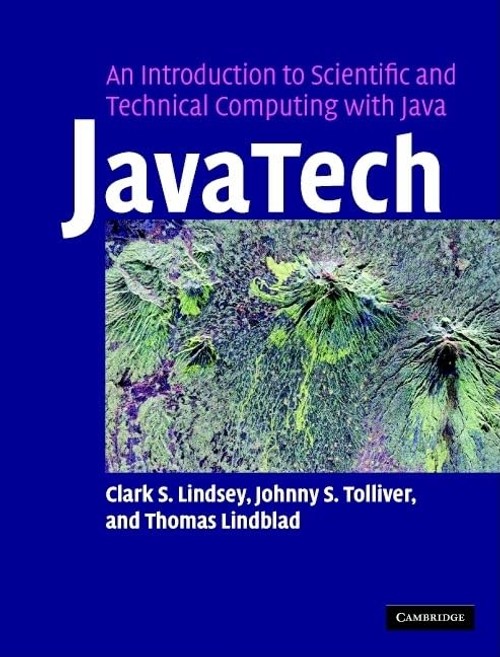
JavaTech, an Introduction to Scientific and Technical Computing with Java by Clark S. Lindsey – A Practical Guide for In
Inclusive of all applicable taxes. FREE shipping on all orders.
Available Offers
- 🚚Free Delivery — Free shipping on all orders
- 💵Cash on Delivery — Pay when your order arrives
- ↩️15-Day Easy Returns — Hassle-free return policy
- 🔒Cash on Delivery — Pay safely when your order arrives
Check Delivery
Product Description
Introduction
For Indian students, researchers, and professionals navigating the intersection of programming and applied sciences, JavaTech, an Introduction to Scientific and Technical Computing with Java by Clark S. Lindsey stands as a definitive guide. Published by Cambridge University Press, this hardcover volume bridges the gap between Java’s general-purpose capabilities and the specialized demands of scientific computation. Whether you are an engineering undergraduate in IIT, a data science enthusiast in Bengaluru, or a physics researcher in Delhi, this book equips you with the tools to harness Java for simulations, data analysis, and complex problem-solving—all within the robust framework of object-oriented programming.
Book Overview
JavaTech is not just another Java tutorial; it is a meticulously crafted resource that transforms Java from a web-development language into a powerhouse for technical computing. The book systematically introduces core Java concepts—syntax, classes, inheritance, and interfaces—before diving into advanced topics like numerical methods, graphics, and concurrency. With a focus on real-world applications, it covers matrix operations, differential equations, random number generation, and plotting, ensuring readers can immediately apply their learning to scientific projects. The inclusion of Java’s standard libraries and third-party tools like Colt and JFreeChart makes this a practical companion for laboratory work and research.
Key Highlights
- Hands-On Approach: Each chapter includes executable code examples and exercises tailored to scientific problems.
- Numerical Methods Coverage: Detailed explanations of linear algebra, integration, optimization, and statistical analysis.
- Graphics and Visualization: Step-by-step guidance on creating 2D/3D plots, histograms, and real-time data displays using Java 2D API.
- Concurrency for Performance: Introduction to multithreading and parallel computing to speed up heavy computations.
- Indian Context: Examples relevant to local curricula, such as weather simulation, circuit analysis, and population modeling.
Inside the Book
This hardbound edition spans over 700 pages of well-structured content. The opening sections lay a solid foundation with Java basics, including data types, control flow, and object-oriented design. Mid-chapters delve into mathematical libraries, file I/O for large datasets, and error handling. Advanced chapters explore GUI-based scientific tools, networking for distributed computing, and integration with native code via JNI. Appendices provide quick references for Java syntax, key APIs, and installation guides for popular IDEs like Eclipse and NetBeans—ideal for students setting up their first scientific programming environment.
Key Topics
- Java fundamentals and object-oriented principles
- Numerical computation: arrays, matrices, and linear algebra
- Random number generation and Monte Carlo simulations
- Solving ordinary and partial differential equations
- Data visualization and plotting in Java
- Multithreading for parallel scientific tasks
- File handling for CSV, binary, and XML data
- Integration with MATLAB and C/C++ libraries
- Building interactive scientific applications with Swing
Reader Benefits
By studying this book, Indian readers gain a dual advantage: mastery of Java—one of the most in-demand programming languages in the country’s IT sector—and the ability to apply it to scientific challenges. You will learn to write efficient, maintainable code that handles large datasets, performs complex calculations, and produces publication-ready graphics. The practical exercises mimic real research scenarios, from analyzing climate data to simulating particle physics, giving you confidence to tackle projects in academia or industry. Moreover, the hardcover format ensures durability for long-term reference on your desk or in the lab.
Learning Outcomes
- Write Java programs that solve mathematical and statistical problems with accuracy.
- Implement algorithms for numerical integration, root finding, and data fitting.
- Create graphical representations of scientific data using Java’s built-in libraries.
- Design multithreaded applications to accelerate computations.
- Read, process, and visualize experimental data from sensors or simulations.
- Integrate Java with existing scientific software and libraries.
Who Should Read
This book is ideal for undergraduate and postgraduate students in engineering, physics, chemistry, biology, and mathematics who need a programming language for their coursework or research. It also serves professionals in data science, computational finance, and R&D departments who wish to adopt Java for technical computing. Instructors designing lab sessions or project-based courses will find the structured progression and ready-to-use code examples invaluable. Even self-taught programmers with basic Java knowledge will benefit from the focused scientific applications.
About the Author
Clark S. Lindsey is a seasoned physicist and software engineer with extensive experience in scientific computing. He has contributed to projects at NASA and various research institutions, blending deep domain expertise with practical programming skills. His writing style is clear and methodical, making complex topics accessible to beginners while retaining depth for advanced readers. Lindsey’s passion for teaching shines through in every chapter, as he anticipates common pitfalls and provides elegant solutions.
About the Publisher
Cambridge University Press is a globally respected academic publisher with a legacy of excellence spanning over four centuries. Known for rigorous editorial standards and authoritative content, CUP brings you this edition with precise typesetting, high-quality paper, and a sturdy hardcover binding. For Indian readers, this book represents a trusted source of knowledge that aligns with international benchmarks in education and research.
Conclusion
JavaTech, an Introduction to Scientific and Technical Computing with Java is more than a textbook—it is a gateway to merging programming prowess with scientific inquiry. Whether you are simulating weather patterns, analyzing genomic data, or building a real-time monitoring system, this book provides the foundational skills and advanced techniques you need. Order your hardcover copy from Bookshops.in today and take a decisive step toward mastering scientific computing with Java.
Quick Summary
JavaTech, an Introduction to Scientific and Technical Computing with Java by Clark S. Lindsey is a definitive guide for Indian students, engineers, and researchers who want to harness Java for scientific and technical applications. The book bridges the gap between general Java programming and specialized scientific computing, covering numerical methods, data analysis, simulation, and performance optimization. Readers will learn to write efficient, maintainable code for solving complex problems in physics, engineering, data science, and more. With practical examples and clear explanations, it is ideal for both classroom learning and self-study. Published by Cambridge University Press, this hardcover edition is a durable resource. Buying from Bookshops.in ensures fast delivery across India, secure packaging, and excellent customer service. Whether you are a student preparing for exams or a researcher developing simulations, JavaTech provides the tools you need to succeed in scientific computing with Java.
Book Highlights
Book Specifications
| ISBN-13 | 9780521821131 |
| ISBN-10 | 0521821134 |
| Publisher | Cambridge University Press |
| Language | English |
| Dimensions | 19.05 x 3.18 x 24.13 cm |
| Weight | 215 g |
| Category | Languages › Java |
| Genre | Non-fiction |
| Reading Age | 18+ |
| Original Language | English |
Frequently Asked Questions
Is JavaTech suitable for beginners in Java?
Does this book cover numerical methods?
Can I use this book for self-study?
Is this book relevant for Indian university courses?
Does the book include code examples?
Who is the author of JavaTech?
Is this a hardcover or paperback edition?
What is the ISBN-13 of this book?
Does this book cover Java for data science?
Can I use this book for research work?
Are there exercises at the end of chapters?
What is the price of this book on Bookshops.in?
Does Bookshops.in deliver across India?
Is this book available in other languages?
Readers Also Search For
Customers Also Bought
Programming
Algorithmische Sprache Und Programmentwicklung | by H. Partsch | F. L. Bauer | P. Pepper | Springer | by H. Partsch | F. L. Bauer | P. Pepper | Springer | by H. Partsch | F. L. Bauer | P. Pepper | Springer | by H. Partsch | F. L. Bauer | P. Pepper | Springer | by H. Partsch | F. L. Bauer | P. Pepper | Springer | by H. Partsch | F. L. Bauer | P. Pepper | Springer | by H. Partsch | F. L. Bauer | P. Pepper | Springer | by H. Partsch | F. L. Bauer | P. Pepper | Springer | by H. Partsch | F. L. Bauer
Programming
Distributed Algorithms | by Jean-Claude Bermond | Michel Raynal | Springer | by Jean-Claude Bermond | Michel Raynal | Springer | by Jean-Claude Bermond | Michel Raynal | Springer | by Jean-Claude Bermond | Michel Raynal | Springer | by Jean-Claude Bermond | Michel Raynal | Springer | by Jean-Claude Bermond | Michel Raynal | Springer | by Jean-Claude Bermond | Michel Raynal | Springer | by Jean-Claude Bermond | Michel Raynal | Springer | by Jean-Claude Bermond | Michel Raynal | Springer | by Jean
Programming
Meta-Level Control for Deductive Database Systems | by Helmut Schmidt | Springer | by Helmut Schmidt | Springer | by Helmut Schmidt | Springer | by Helmut Schmidt | Springer | by Helmut Schmidt | Springer | by Helmut Schmidt | Springer | by Helmut Schmidt | Springer | by Helmut Schmidt | Springer | by Helmut Schmidt | Springer | by Helmut Schmidt | Springer | by Helmut Schmidt | Springer | by Helmut Schmidt | Springer | by Helmut Schmidt | Springer | by Helmut Schmidt | Springer | by Helmut Schm
Programming
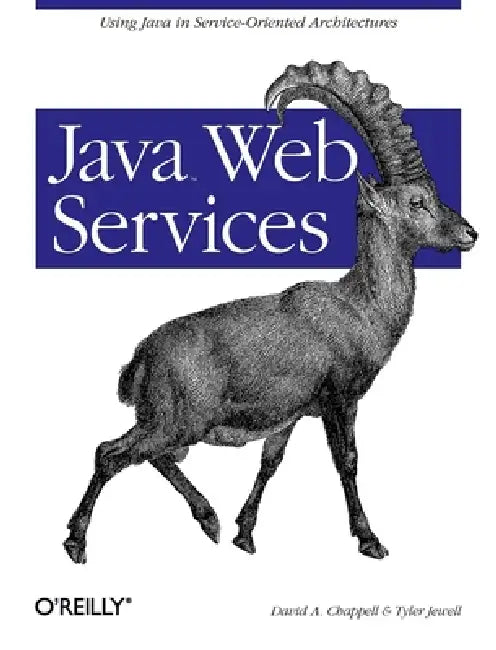
Java Web Services | by David A. Chappell | Tyler Jewell | O'Reilly Media | by David A. Chappell | Tyler Jewell | O'Reilly Media | by David A. Chappell | Tyler Jewell | O'Reilly Media | by David A. Chappell | Tyler Jewell | O'Reilly Media | by David A. Chappell | Tyler Jewell | O'Reilly Media | by David A. Chappell | Tyler Jewell | O'Reilly Media | by David A. Chappell | Tyler Jewell | O'Reilly Media | by David A. Chappell | Tyler Jewell | O'Reilly Media | by David A. Chappell | Tyler Jewell | O'
Programming
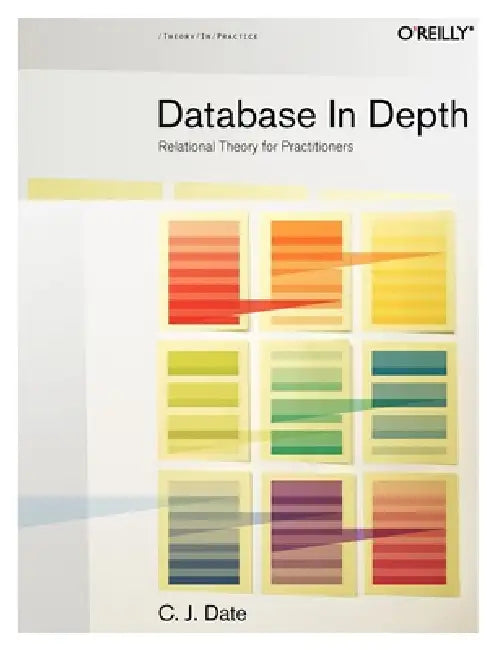
Database in Depth | by Chris J. Date | O'Reilly Media | by Chris J. Date | O'Reilly Media | by Chris J. Date | O'Reilly Media | by Chris J. Date | O'Reilly Media | by Chris J. Date | O'Reilly Media | by Chris J. Date | O'Reilly Media | by Chris J. Date | O'Reilly Media | by Chris J. Date | O'Reilly Media | by Chris J. Date | O'Reilly Media | by Chris J. Date | O'Reilly Media | by Chris J. Date | O'Reilly Media | by Chris J. Date | O'Reilly Media | by Chris J. Date | O'Reilly Media | by Chris J.
Programming
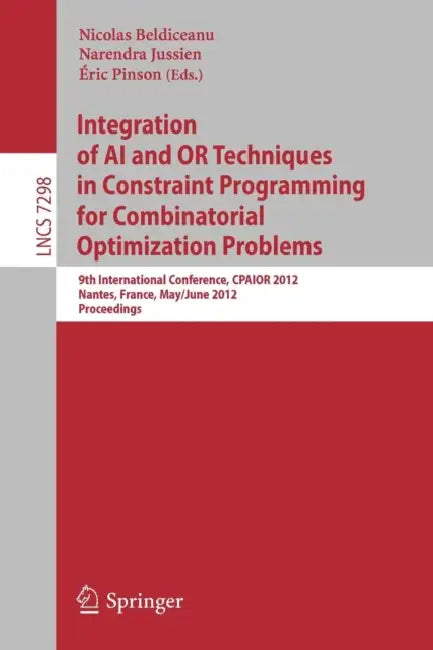
Integration of AI and OR Techniques in Constraint Programming for Combinatorial Optimization Problem | by Nicolas Beldiceanu | Narendra Jussien | Eric Pinson | Springer | by Nicolas Beldiceanu | Narendra Jussien | Eric Pinson | Springer | by Nicolas Beldiceanu | Narendra Jussien | Eric Pinson | Springer | by Nicolas Beldiceanu | Narendra Jussien | Eric Pinson | Springer | by Nicolas Beldiceanu | Narendra Jussien | Eric Pinson | Springer | by Nicolas Beldiceanu | Narendra Jussien | Eric Pinson |
Related Products
View All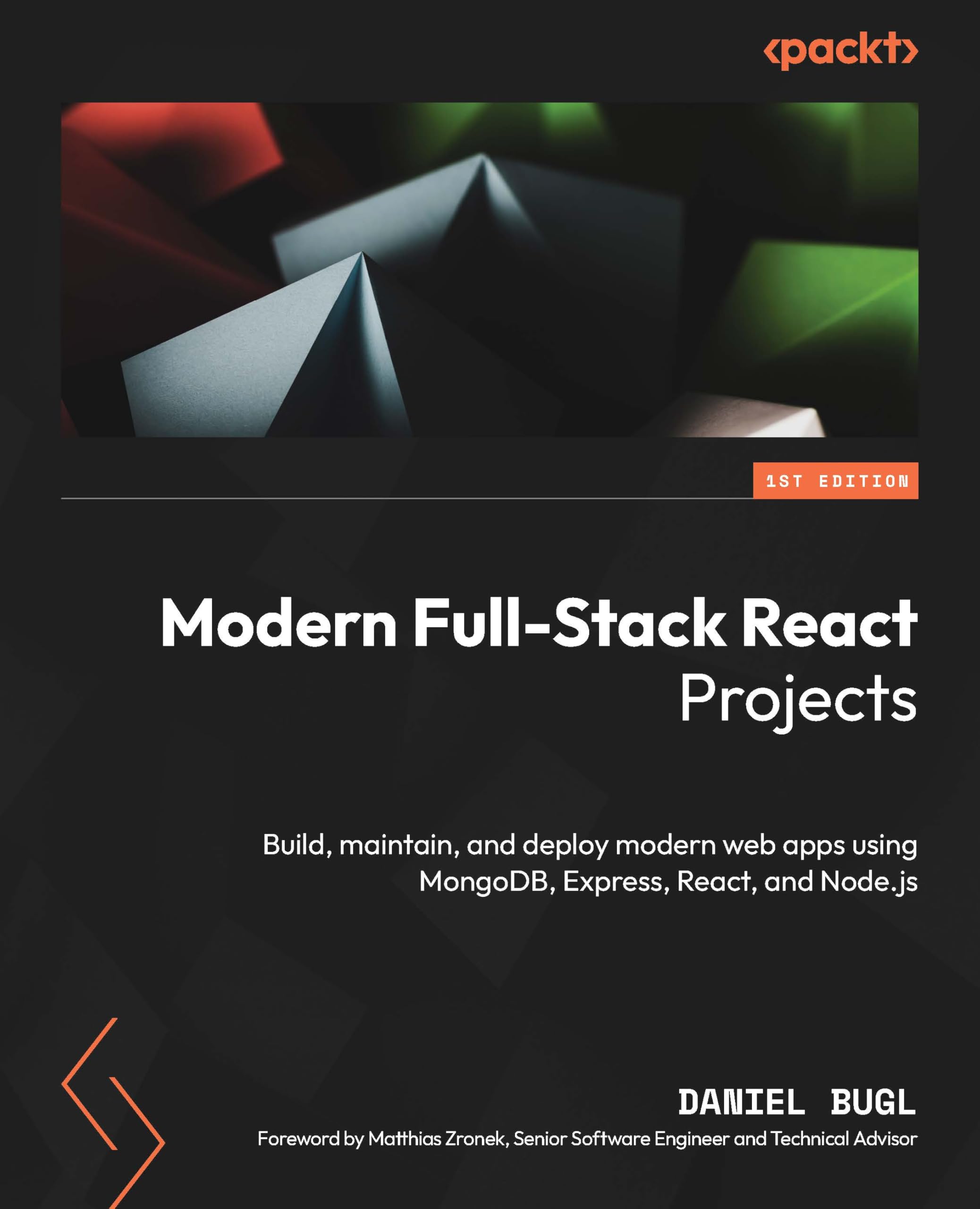
Computers & Internet
Modern Full-Stack React Projects by Daniel Bugl
Computers & Internet
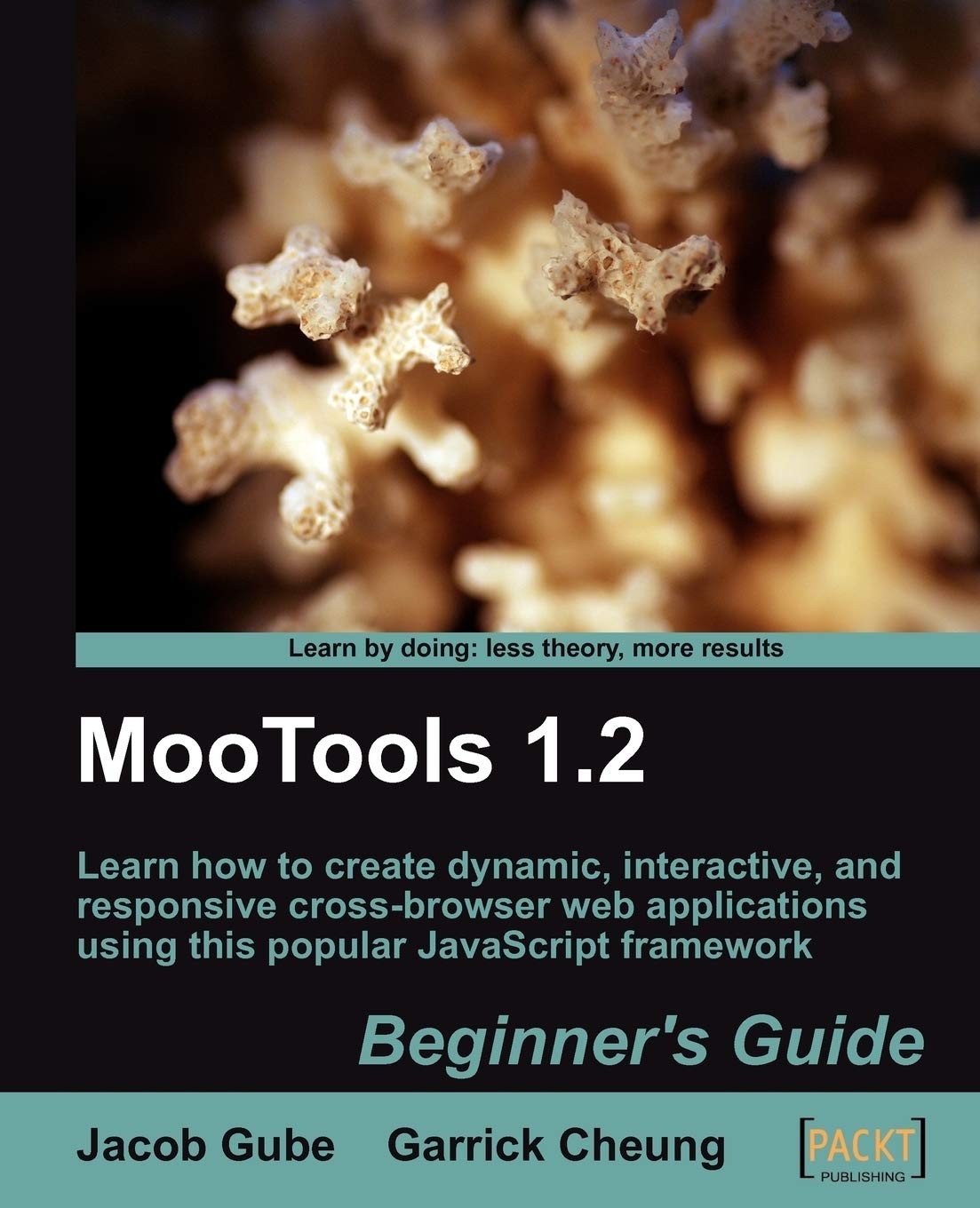
Mootools 1.2 Beginner's Guide (English, Jacob Gube)
Computers & Internet
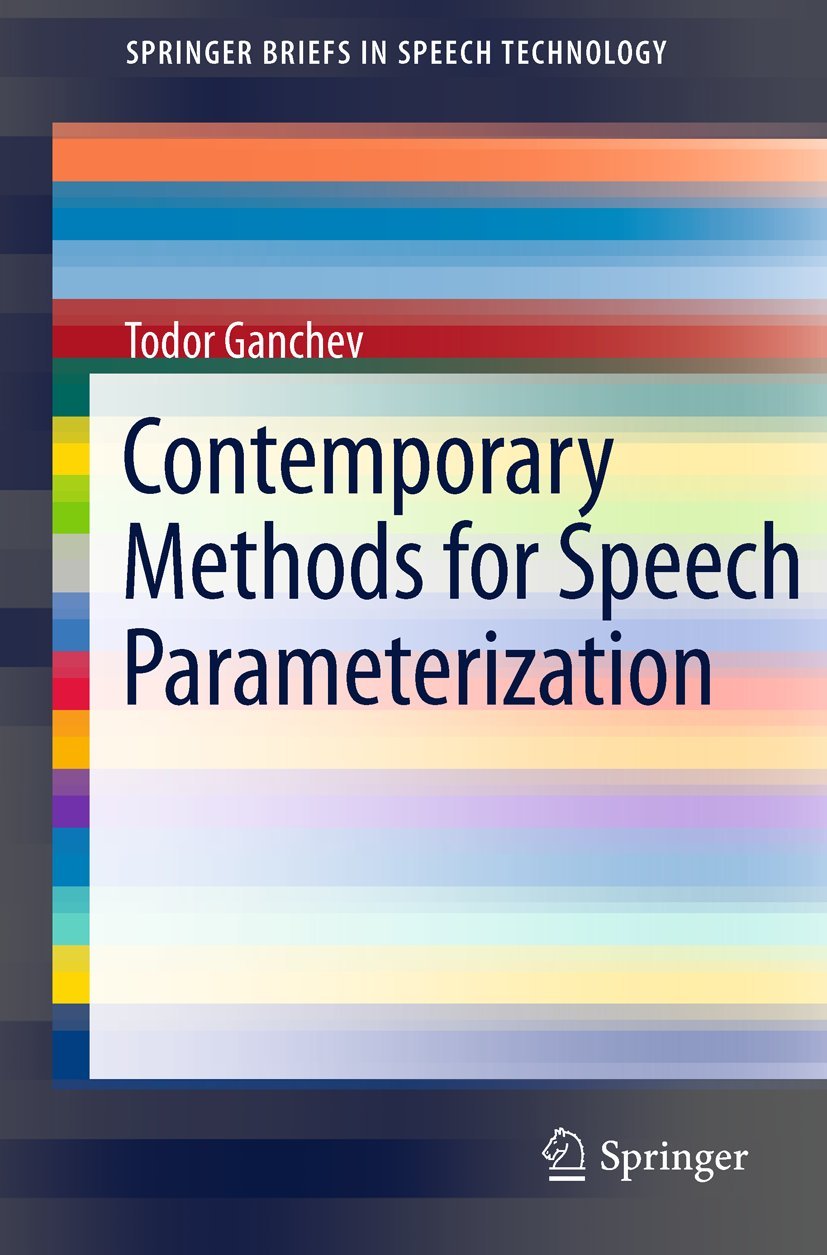
Contemporary Methods for Speech Parameterization (Springerbriefs in Electrical and Computer Engineering / Springerbriefs in Speech Technology)

Computers & Internet
Information Technology and Lawyers | by Arno R. Lodder | Anja Oskamp | Springer | by Arno R. Lodder | Anja Oskamp | Springer | by Arno R. Lodder | Anja Oskamp | Springer | by Arno R. Lodder | Anja Oskamp | Springer | by Arno R. Lodder | Anja Oskamp | Springer | by Arno R. Lodder | Anja Oskamp | Springer | by Arno R. Lodder | Anja Oskamp | Springer | by Arno R. Lodder | Anja Oskamp | Springer | by Arno R. Lodder | Anja Oskamp | Springer | by Arno R. Lodder | Anja Oskamp | Springer | by Arno R. Lo

Computers & Internet
Digital Analysis of Remotely Sensed Imagery | by Jay Gao | McGraw-Hill Companies | by Jay Gao | McGraw-Hill Companies | by Jay Gao | McGraw-Hill Companies | by Jay Gao | McGraw-Hill Companies | by Jay Gao | McGraw-Hill Companies | by Jay Gao | McGraw-Hill Companies | by Jay Gao | McGraw-Hill Companies | by Jay Gao | McGraw-Hill Companies | by Jay Gao | McGraw-Hill Companies | by Jay Gao | McGraw-Hill Companies | by Jay Gao | McGraw-Hill Companies | by Jay Gao | McGraw-Hill Companies | by Jay Gao
Computers & Internet