

Laboratory Experimentation in Economics: Six Points of View by Alvin E. Roth – A Cambridge University Press Classic on E
Inclusive of all applicable taxes. FREE shipping on all orders.
Available Offers
- 🚚Free Delivery — Free shipping on all orders
- 💵Cash on Delivery — Pay when your order arrives
- ↩️15-Day Easy Returns — Hassle-free return policy
- 🔒Cash on Delivery — Pay safely when your order arrives
Check Delivery
Product Description
Introduction
Economics, traditionally viewed as a non-experimental science, has undergone a remarkable transformation in recent decades. Laboratory experimentation now stands as a rigorous method for testing economic theories, challenging assumptions, and uncovering real human behaviour in controlled settings. For Indian students and researchers eager to understand this paradigm shift, Laboratory Experimentation in Economics: Six Points of View offers an authoritative gateway into the foundational ideas and practices of experimental economics. Edited by the renowned Alvin E. Roth, this hardcover volume from Cambridge University Press brings together six pioneering voices who shaped the field, making it an indispensable resource for anyone serious about the scientific study of economic decision-making.
Book Overview
This book is a curated collection of essays that emerged from a landmark conference, presenting six distinct perspectives on how laboratory experiments should be designed, conducted, and interpreted. Rather than a dry textbook, it reads like a conversation among masters—each contributor reflects on their own experience, the power and limits of experimentation, and the areas where this method can yield the most profound insights into economic behaviour. From the psychology of choice to market design, the chapters cover a broad spectrum, making the book both a historical document and a practical guide. For Indian readers, it provides a clear framework to appreciate how experimental methods can address local questions—from auction design for spectrum allocation to understanding consumer behaviour in informal markets.
Key Highlights
- Six Pioneering Perspectives: Features contributions from leading figures including Vernon Smith, Charles Plott, and Reinhard Selten, each offering a unique lens on experimental methodology.
- Foundational Yet Practical: Bridges theory and practice, with insights on designing experiments, avoiding pitfalls, and interpreting results.
- Timeless Relevance: First published in 1987, the principles discussed remain central to modern experimental economics and behavioural economics.
- Compact and Authoritative: A concise hardcover volume that distills decades of collective expertise into accessible chapters.
- Indian Context Applicability: Offers tools that can be adapted to study everything from microfinance decisions to policy experiments in developing economies.
Inside the Book
The book opens with an introduction by Alvin E. Roth, setting the stage for the experimental revolution in economics. Each of the six chapters presents a self-contained viewpoint: one explores the role of individual decision-making and the psychology of choice; another examines how markets function under controlled conditions; a third delves into game theory and strategic interaction. The authors candidly discuss the limitations of lab experiments—such as artificiality and subject pool biases—while arguing for their unique ability to isolate causal mechanisms. The final chapters offer reflections on the future of the field, many of which have proven remarkably prescient. Throughout, the writing is clear, rigorous, and free of unnecessary jargon, making it suitable for advanced undergraduate and postgraduate students in Indian universities.
Key Topics
- Experimental Design Fundamentals: How to construct controlled environments that test economic hypotheses.
- Induced Value Theory: The core principle that allows experimenters to create real incentives in the lab.
- Market Behaviour: Testing theories of supply, demand, price formation, and auction mechanisms.
- Game Theory and Strategic Interaction: Laboratory tests of bargaining, cooperation, and competition.
- Individual Decision-Making: Exploring deviations from rational choice, including heuristics and biases.
- Methodological Debates: Internal validity, external validity, and the art of generalising from lab to field.
- Future Directions: Early thoughts on how experiments can inform policy and institutional design.
Reader Benefits
- Deepen Your Understanding: Gain a solid grasp of why experiments matter in economics and how they complement traditional theoretical and empirical work.
- Learn from the Masters: Absorb decades of wisdom from the very researchers who established experimental economics as a legitimate discipline.
- Improve Your Own Research: Whether you are designing a thesis experiment or evaluating published studies, the methodological insights will sharpen your critical thinking.
- Bridge Theory and Reality: See how abstract models hold up—or fail—when real people make decisions under controlled incentives.
- Prepare for Advanced Study: Ideal as a supplementary text for courses in behavioural economics, experimental methods, or microeconomic theory.
Learning Outcomes
By engaging with this book, readers will be able to: articulate the philosophical and practical rationale for laboratory experiments in economics; identify the key components of a well-designed economic experiment; critically evaluate experimental results and their claims to external validity; appreciate the interplay between theory, experiment, and real-world policy; and apply experimental reasoning to economic questions relevant to India and other developing economies. The book equips students not just with knowledge, but with a mindset—one that values empirical testing over mere assumption.
Who Should Read
This book is essential for economics postgraduate students and research scholars in Indian universities who are specialising in microeconomics, game theory, or behavioural economics. It is equally valuable for faculty members looking to incorporate experimental methods into their teaching or research. Professionals in policy analysis, market design, and consumer research will find the principles directly applicable to their work. Undergraduate students with a strong foundation in economics and a curiosity about how science meets human behaviour will also benefit. In short, anyone who wants to move beyond textbook economics and engage with the evidence-based, experimental side of the discipline will treasure this volume.
About the Author
Alvin E. Roth is a Nobel laureate in Economic Sciences (2012) and one of the most influential figures in modern economics. His pioneering work in game theory, market design, and experimental economics has reshaped how we understand allocation problems—from kidney exchange to school choice. A professor at Stanford University, Roth has authored numerous seminal papers and books. His editorial hand in this volume ensures that each chapter meets the highest standards of clarity and rigour. For Indian readers, Roth’s work offers a model of how theoretical insights can be translated into practical, life-changing applications.
About the Publisher
Cambridge University Press is a world-leading academic publisher with a distinguished history dating back to 1534. Known for publishing groundbreaking scholarship across all disciplines, Cambridge University Press brings unmatched editorial quality and academic prestige to every title. This hardcover edition reflects their commitment to producing durable, beautifully bound books that are built to last—perfect for a library or personal collection. For Indian readers, Cambridge titles are a hallmark of intellectual rigour and global relevance.
Conclusion
Laboratory Experimentation in Economics: Six Points of View is more than a book—it is a conversation with the founders of a field that continues to grow in importance. Whether you are a student in Delhi preparing for a research career, a professor in Mumbai designing a new course, or a policy analyst in Bengaluru seeking evidence-based tools, this volume offers timeless insights. It challenges you to think like an experimentalist: to question assumptions, design tests, and let data guide your understanding. Order your copy today from Bookshops.in and add this classic to your collection. It is an investment in your intellectual growth that will pay dividends for years to come.
Quick Summary
Laboratory Experimentation in Economics: Six Points of View is a landmark volume edited by Nobel laureate Alvin E. Roth, published by Cambridge University Press. The book brings together six leading experimental economists—including Roth, Vernon Smith, and others—to share their perspectives on the methodology, power, and limitations of laboratory experiments in economics. It covers essential topics such as experimental design, data analysis, and the role of experiments in testing economic theories. This book is ideal for graduate students, academic researchers, and professionals in economics and behavioral sciences who want to understand how controlled experiments can illuminate economic behavior. Readers will learn about different experimental approaches, how to design effective experiments, and how to interpret results critically. By purchasing from Bookshops.in, Indian customers get a genuine hardcover edition with fast, reliable shipping and excellent customer service. Whether you are beginning your journey in experimental economics or seeking a classic reference, this book provides invaluable insights from the pioneers of the field.
Book Highlights
Book Specifications
| ISBN-13 | 9780521333924 |
| ISBN-10 | 052133392X |
| Publisher | Cambridge University Press |
| Language | English |
| Dimensions | 15.88 x 1.91 x 24.13 cm |
| Weight | 440 g |
| Country | India |
| Category | Economics › Economic Theory |
| Genre | Non-fiction |
| Reading Age | Adult |
| Original Language | English |
Frequently Asked Questions
What is the main focus of Laboratory Experimentation in Economics?
Who is the author of this book?
Is this book suitable for beginners in experimental economics?
What makes this book unique?
Does the book cover practical aspects of designing experiments?
Is this book relevant for behavioral economists?
Which publisher released this book?
What is the ISBN of this book?
Is this book available in hardcover?
Can I use this book for a course on experimental economics?
Does the book include contributions from other economists?
What is the price of this book in India?
Is it suitable for self-study?
Why should I buy this book from Bookshops.in?
Readers Also Search For
Customers Also Bought

Entrepreneurship
Chinese Economic Revolution (English, Linda Grove)

Entrepreneurship
Engines of Innovation: The Entrepreneurial University in the Twenty-First Century by Holden Thorp
Entrepreneurship
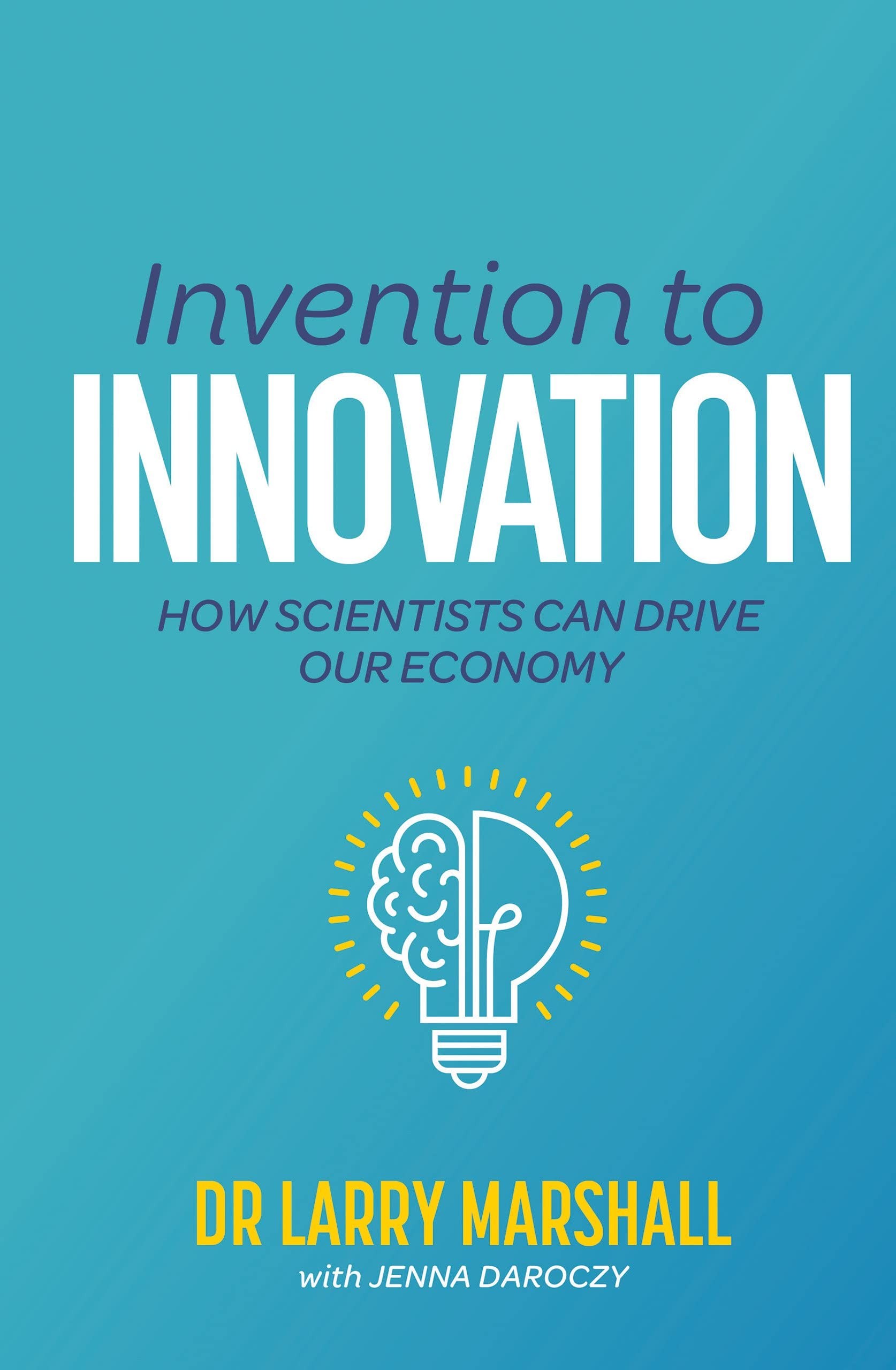
Invention to Innovation (English, PhD Marshall Larry | Jenna Daroczy)

Entrepreneurship
Database Management Systems by Raghu Ramakrishnan – DBMS Textbook

Entrepreneurship
Decision-making for Technology Executives by Harold A. Linstone

Entrepreneurship
The Business Innovation Audit (English, William Tate)
Related Products
View All
Economics
Political Economy from Pufendorf to Marx (English, István Hont | Lasse S. Andersen | Béla Kapossy)

Economics
Women's Entrepreneurship and Economics (English, Miguel-Angel Galindo | Domingo Ribeiro)
Economics
Trade Policy and Industrialization in Turbulent Times | by Gerry Helleiner | Routledge | by Gerry Helleiner | Routledge | by Gerry Helleiner | Routledge | by Gerry Helleiner | Routledge | by Gerry Helleiner | Routledge | by Gerry Helleiner | Routledge | by Gerry Helleiner | Routledge | by Gerry Helleiner | Routledge | by Gerry Helleiner | Routledge | by Gerry Helleiner | Routledge | by Gerry Helleiner | Routledge | by Gerry Helleiner | Routledge | by Gerry Helleiner | Routledge | by Gerry Hellei
Economics
History of Economic Analysis | by Schumpeter Joseph A. | Taylor & Francis Ltd | by Schumpeter Joseph A. | Taylor & Francis Ltd | by Schumpeter Joseph A. | Taylor & Francis Ltd | by Schumpeter Joseph A. | Taylor & Francis Ltd | by Schumpeter Joseph A. | Taylor & Francis Ltd | by Schumpeter Joseph A. | Taylor & Francis Ltd | by Schumpeter Joseph A. | Taylor & Francis Ltd | by Schumpeter Joseph A. | Taylor & Francis Ltd | by Schumpeter Joseph A. | Taylor & Franci

Economics
OECD Compendium of Productivity Indicators 2015 | by Organization for Economic Cooperation an | Organization for Economic Co-Operation & Deve | by Organization for Economic Cooperation an | Organization for Economic Co-Operation & Deve | by Organization for Economic Cooperation an | Organization for Economic Co-Operation & Deve | by Organization for Economic Cooperation an | Organization for Economic Co-Operation & Deve | by Organization for Economic Cooperation an | Organization

Economics