

Spice Science and Technology: A Comprehensive Guide to Spice Chemistry and Applications by Kenji Hirasa
Inclusive of all applicable taxes. FREE shipping on all orders.
Available Offers
- 🚚Free Delivery — Free shipping on all orders
- 💵Cash on Delivery — Pay when your order arrives
- ↩️15-Day Easy Returns — Hassle-free return policy
- 🔒Cash on Delivery — Pay safely when your order arrives
Check Delivery
Product Description
Introduction
Spices are the soul of Indian cooking, yet their science often remains unexplored beyond the kitchen. Spice Science and Technology by Kenji Hirasa is a rare and authoritative volume that bridges the gap between traditional spice knowledge and modern food technology. Published by CRC Press, this hardbound edition offers a comprehensive journey from the fundamental biology of spice plants to the advanced technological applications that define contemporary food preparation. For students, researchers, and culinary professionals in India, this book is an indispensable resource that elevates the understanding of spices from mere flavourings to complex functional ingredients.
Book Overview
This meticulously researched volume presents a holistic view of spices and herbs, covering their origin, chemistry, processing, and usage patterns. Kenji Hirasa introduces a novel patterning theory that explains why certain cuisines, especially Indian and Asian, use spices so extensively and in specific combinations. The book delves into the antimicrobial, antioxidant, and bioactive properties of spices, linking them to both traditional practices and modern industrial applications. With a strong emphasis on science, it provides readers with a solid foundation in spice chemistry, extraction methods, quality control, and product development. The content is structured to serve both academic learners and industry practitioners who seek to innovate in spice-based products.
Key Highlights
- Patterning Theory: A groundbreaking framework explaining the logic behind spice combinations in global cuisines, particularly Indian culinary traditions.
- Comprehensive Coverage: From basic botany and chemical composition to advanced processing technologies and shelf-life studies.
- Applied Focus: Practical insights into spice extraction, encapsulation, and formulation for the food and pharmaceutical industries.
- Quality and Safety: Detailed discussion on adulteration detection, standardization, and regulatory aspects relevant to the Indian spice trade.
- Global Perspective: Comparative analysis of spice use across cultures, with special attention to Indian, Southeast Asian, and Middle Eastern practices.
Inside the Book
The book is organized into logical sections that build knowledge progressively. Early chapters introduce the botanical classification and cultivation of major spices like black pepper, cardamom, turmeric, cumin, and coriander. Subsequent chapters explore the volatile oils, oleoresins, and bioactive compounds responsible for aroma, flavour, and health benefits. The middle section is dedicated to processing technologies including drying, grinding, sterilization, and extraction methods such as supercritical fluid extraction. Later chapters focus on the application of spices in food preservation, functional foods, and nutraceuticals. The concluding portion presents the patterning theory with case studies from Indian, Thai, and Mexican cuisines, demonstrating how spice blends are scientifically optimized for taste and preservation.
Key Topics
- Botany and cultivation of major Indian and global spices
- Chemical composition: volatile oils, pungent principles, and colour compounds
- Spice processing: cleaning, grinding, irradiation, and pasteurization
- Extraction technologies: steam distillation, solvent extraction, and CO2 extraction
- Quality control: ISO standards, adulteration testing, and microbiological safety
- Antimicrobial and antioxidant properties of spices
- Spice blends and formulation science
- Patterning theory of spice use in traditional and modern cuisines
- Regulatory frameworks in India and international markets
Reader Benefits
Readers will gain a deep scientific understanding of how spices work at a molecular level, enabling them to innovate in product development, quality assurance, and culinary arts. The patterning theory offers a fresh lens to appreciate the wisdom behind traditional Indian spice combinations, making it valuable for chefs and food entrepreneurs. Researchers will find detailed references and experimental data that support further studies in food science and pharmacology. For students, the clear explanations and structured content make complex topics accessible, while industry professionals can directly apply the processing and quality control techniques discussed. The book also empowers readers to make informed choices about spice sourcing and usage in both home and commercial kitchens.
Learning Outcomes
- Understand the botanical and chemical basis of spice flavour, aroma, and colour
- Analyze the functional properties of spices including antimicrobial and antioxidant effects
- Evaluate different processing and extraction methods for spice preservation
- Apply the patterning theory to design balanced spice blends for specific dishes
- Identify quality parameters and detect adulteration in commercial spices
- Develop new spice-based products with enhanced shelf life and health benefits
Who Should Read
This book is ideal for food science and technology students, culinary arts professionals, spice industry researchers, quality control managers, product developers, and nutritionists. It is also highly relevant for Indian food entrepreneurs looking to create authentic spice blends or value-added spice products. Home cooks with a keen interest in the science behind their favourite masalas will find it equally enlightening. University libraries and research institutions focusing on food technology, botany, or ethnobotany should consider this a core reference.
About the Author
Kenji Hirasa is a distinguished food scientist with extensive expertise in spice chemistry and technology. With years of research experience in both academic and industrial settings, Hirasa has contributed significantly to the understanding of spice functionality and processing. His work on the patterning theory of spice use has been recognized internationally, offering a systematic approach to a field often dominated by tradition. His writing reflects a rare combination of rigorous scientific methodology and a deep appreciation for culinary heritage.
About the Publisher
CRC Press is a globally respected publisher of scientific and technical books, known for its high-quality content in engineering, life sciences, and food technology. With a legacy spanning decades, CRC Press ensures that each title undergoes rigorous peer review and editorial oversight. This hardcover edition of Spice Science and Technology maintains the publisher's commitment to excellence, featuring durable binding, clear typography, and well-organized illustrations. For Indian readers, CRC Press books serve as reliable academic and professional resources.
Conclusion
Spice Science and Technology is more than a textbook; it is a gateway to mastering the science behind one of India's most treasured culinary assets. Kenji Hirasa's work empowers readers to move beyond recipes and understand the principles that make spices indispensable. Whether you are a student, a chef, or a food industry professional, this book will transform your perspective on spices and open new avenues for innovation. Add this essential volume to your library and discover the science that makes every pinch of spice remarkable.
Quick Summary
Spice Science and Technology by Kenji Hirasa is an authoritative reference that bridges the gap between basic spice science and modern applications. The book delves into the chemical composition, functional properties, and processing of spices, while introducing a pioneering patterning theory that explains why certain spices are used extensively in specific food preparations. Ideal for Indian food science students, professional chefs, and industry researchers, this volume provides practical knowledge on spice preservation, flavor chemistry, quality control, and health benefits. Readers will gain a deep understanding of how spices work at a molecular level and how to apply this knowledge in product development and culinary arts. Published by CRC Press, this hardcover edition is a valuable addition to any food science library. By purchasing from Bookshops.in, customers receive a genuine copy with reliable delivery and service across India.
Book Highlights
Book Specifications
| ISBN-13 | 9780824701444 |
| ISBN-10 | 0824701445 |
| Publisher | CRC Pr I Llc |
| Language | English |
| Dimensions | 15.24 x 1.91 x 23.5 cm |
| Weight | 522 g |
| Category | Administration & Policy › Hospital Administration & Care |
| Genre | Food Science |
| Original Language | English |
Frequently Asked Questions
What is Spice Science and Technology about?
Who is the author of Spice Science and Technology?
Is this book suitable for Indian students?
What is the ISBN of this book?
Does the book cover spice health benefits?
Is this book a hardcover?
Can chefs benefit from this book?
Does the book include spice processing techniques?
Is the book technical or beginner-friendly?
What is the price of the book?
Does the book discuss Indian spices?
Is this book used in university courses?
What is the language of the book?
Readers Also Search For
Customers Also Bought

Anatomy
Ultrastructure of the Digestive Tract: 4 (Electron Microscopy in Biology and Medicine)

Anatomy
Ultrastructure of the Connective Tissue Matrix: 3 (Electron Microscopy in Biology and Medicine)

Anatomy
Reproductive Genetics (Royal College of Obstetricians and Gynaecologists Study Group)

Anatomy
Human Gross Anatomy: An Outline Text by Robert J. Leonard – Medical Anatomy

Pharmacology
Mathematical Modeling and Simulation in Enteric Neurobiology

Anatomy
Nature’s Patterns and the Fractional Calculus: 2 (Fractional Calculus in Applied Sciences and Engineering, 2)
Related Products
View All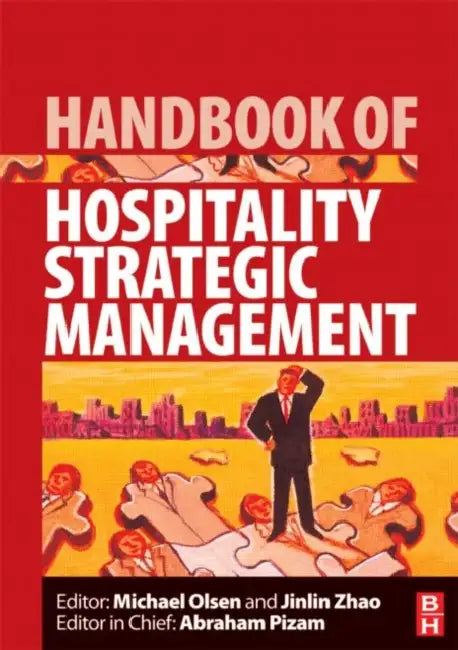
Medicine & Health Sciences
Handbook of Hospitality Strategic Management | by Olsen Michael | Taylor & Francis Ltd | by Olsen Michael | Taylor & Francis Ltd | by Olsen Michael | Taylor & Francis Ltd | by Olsen Michael | Taylor & Francis Ltd | by Olsen Michael | Taylor & Francis Ltd | by Olsen Michael | Taylor & Francis Ltd | by Olsen Michael | Taylor & Francis Ltd | by Olsen Michael | Taylor & Francis Ltd | by Olsen Michael | Taylor & Francis Ltd | by Olsen Michael | Taylor & Francis

Medicine & Health Sciences
Pediatrics on Call | by Charles A. Pohl | Kathleen Bradford | Clara Callahan | McGraw Hill / Medical | by Charles A. Pohl | Kathleen Bradford | Clara Callahan | McGraw Hill / Medical | by Charles A. Pohl | Kathleen Bradford | Clara Callahan | McGraw Hill / Medical | by Charles A. Pohl | Kathleen Bradford | Clara Callahan | McGraw Hill / Medical | by Charles A. Pohl | Kathleen Bradford | Clara Callahan | McGraw Hill / Medical | by Charles A. Pohl | Kathleen Bradford | Clara Callahan | McGraw Hill

Medicine & Health Sciences
The Physician's Guide to Depression and Bipolar Disorders | by Dwight L. Evans | Dennis S. Charney | Lydia Lewis | McGraw Hill / Medical | by Dwight L. Evans | Dennis S. Charney | Lydia Lewis | McGraw Hill / Medical | by Dwight L. Evans | Dennis S. Charney | Lydia Lewis | McGraw Hill / Medical | by Dwight L. Evans | Dennis S. Charney | Lydia Lewis | McGraw Hill / Medical | by Dwight L. Evans | Dennis S. Charney | Lydia Lewis | McGraw Hill / Medical | by Dwight L. Evans | Dennis S. Charney | Lydi
Medicine & Health Sciences
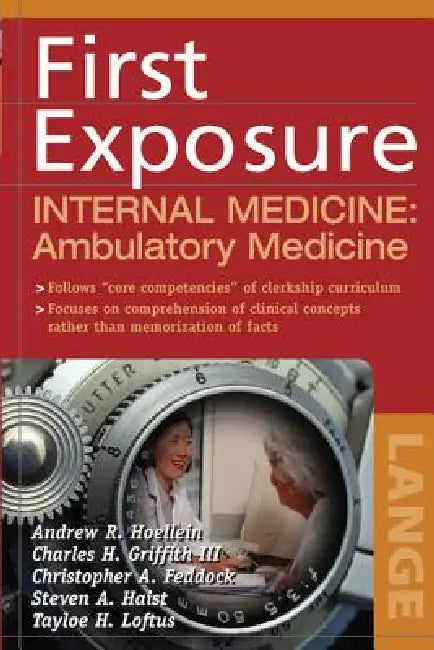
First Exposure to Internal Medicine | by Andrew R. Hoellein | Charles H. Griffith | McGraw Hill / Medical | by Andrew R. Hoellein | Charles H. Griffith | McGraw Hill / Medical | by Andrew R. Hoellein | Charles H. Griffith | McGraw Hill / Medical | by Andrew R. Hoellein | Charles H. Griffith | McGraw Hill / Medical | by Andrew R. Hoellein | Charles H. Griffith | McGraw Hill / Medical | by Andrew R. Hoellein | Charles H. Griffith | McGraw Hill / Medical | by Andrew R. Hoellein | Charles H. Griffit
Medicine & Health Sciences
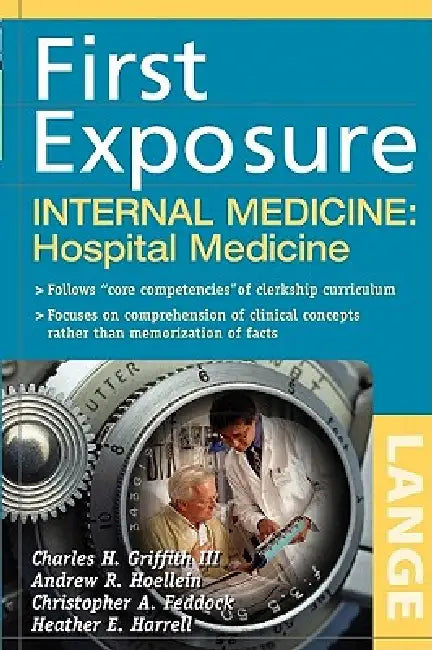
First Exposure to Internal Medicine | by Charles H. Griffith | Andrew R. Hoellein | McGraw Hill / Medical | by Charles H. Griffith | Andrew R. Hoellein | McGraw Hill / Medical | by Charles H. Griffith | Andrew R. Hoellein | McGraw Hill / Medical | by Charles H. Griffith | Andrew R. Hoellein | McGraw Hill / Medical | by Charles H. Griffith | Andrew R. Hoellein | McGraw Hill / Medical | by Charles H. Griffith | Andrew R. Hoellein | McGraw Hill / Medical | by Charles H. Griffith | Andrew R. Hoellei
Medicine & Health Sciences