

Post-Quantum Cryptography: 4th International Workshop, PQCrypto 2011, Taipei, Taiwan, Proceedings
Inclusive of all applicable taxes. FREE shipping on all orders.
Available Offers
- 🚚Free Delivery — Free shipping on all orders
- 💵Cash on Delivery — Pay when your order arrives
- ↩️15-Day Easy Returns — Hassle-free return policy
- 🔒Cash on Delivery — Pay safely when your order arrives
Check Delivery
Product Description
Introduction
As the world moves toward an era of quantum computing, traditional cryptographic systems face unprecedented threats. Post-Quantum Cryptography: 4th International Workshop, PQCrypto 2011, edited by Bo-Yin Yang, captures the pioneering research presented at the 2011 workshop in Taipei. This hardbound volume from Springer is an essential resource for cybersecurity professionals, researchers, and students in India who wish to understand the cryptographic algorithms designed to withstand quantum attacks.
Book Overview
This proceedings volume compiles 18 rigorously peer-reviewed papers selected from 38 submissions, representing the cutting edge of post-quantum cryptography. The workshop focused on public-key cryptosystems that could resist the computational power of future quantum computers. The book explores classical and quantum attacks, new security models, and practical implementations, making it a vital reference for anyone working in cybersecurity and quantum-safe technologies.
Key Highlights
- Peer-Reviewed Excellence: Only 18 papers were accepted from 38 submissions, ensuring high-quality, groundbreaking content.
- Timely Relevance: Published in 2011, the research remains foundational for current quantum-safe cryptography efforts.
- Diverse Approaches: Covers lattice-based, code-based, multivariate, and hash-based cryptosystems.
- Global Perspective: Contributions from leading researchers worldwide, offering a comprehensive view of the field.
Inside the Book
The volume delves into the mathematical underpinnings of post-quantum cryptosystems, including hardness assumptions, security proofs, and efficiency analyses. Readers will find detailed discussions on cryptographic primitives such as signatures, encryption, and key exchange, all designed to resist quantum adversaries. The book also examines side-channel attacks and countermeasures, providing a holistic understanding of real-world security.
Key Topics
- Lattice-based cryptography and the Learning With Errors (LWE) problem
- Code-based cryptography, including McEliece and Niederreiter systems
- Multivariate quadratic equation-based cryptosystems
- Hash-based digital signatures and Merkle tree constructions
- Quantum algorithms for cryptanalysis, including Shor's and Grover's algorithms
- Security models for the post-quantum era
- Implementation challenges and hardware efficiency
Reader Benefits
Readers will gain a deep understanding of why current RSA and elliptic-curve systems are vulnerable to quantum computers. The book equips you with knowledge of alternative cryptographic primitives that are believed to be quantum-resistant. It also provides insights into the trade-offs between security, performance, and key sizes, helping you make informed decisions for future-proof systems.
Learning Outcomes
- Understand the fundamental threats posed by quantum computing to classical cryptography
- Analyze the mathematical foundations of post-quantum cryptosystems
- Evaluate the strengths and weaknesses of different post-quantum approaches
- Apply security models specific to the quantum era
- Identify practical implementation considerations for quantum-safe protocols
Who Should Read
This book is ideal for cybersecurity researchers, cryptographers, PhD students, and advanced undergraduate students in computer science or mathematics. Professionals working in IT security, government agencies, and financial institutions in India will also find it invaluable for understanding the future of secure communications. Anyone interested in the intersection of quantum physics and computer security should add this to their library.
About the Author
Bo-Yin Yang is a distinguished researcher in cryptography and a professor at Academia Sinica, Taiwan. His work spans post-quantum cryptography, efficient implementations, and algebraic cryptanalysis. As the editor of this proceedings, he has curated a collection that reflects the most significant advances presented at the 2011 workshop.
About the Publisher
Springer is a globally renowned academic publisher, known for its high-quality scientific and technical books. With a legacy of over 175 years, Springer's Lecture Notes in Computer Science (LNCS) series is a trusted source for cutting-edge research. This volume continues that tradition, offering rigorous peer-reviewed content to the global research community.
Conclusion
Post-Quantum Cryptography: 4th International Workshop, PQCrypto 2011 is an indispensable resource for anyone serious about the future of cybersecurity. As quantum computing edges closer to reality, this book provides the foundational knowledge needed to build resilient cryptographic systems. Order your copy today from Bookshops.in and stay ahead in the race to secure the digital world of tomorrow.
Quick Summary
Post-Quantum Cryptography: 4th International Workshop, PQCrypto 2011, Taipei, Taiwan, November 29 - December 2, 2011, Proceedings, edited by Bo-Yin Yang, is a collection of 18 peer-reviewed papers that explore cryptographic systems designed to resist attacks from both classical and quantum computers. This volume covers a wide range of topics including lattice-based, code-based, multivariate, and hash-based cryptosystems, along with detailed analyses of classical and quantum attack methods and security models for the post-quantum era. The workshop, held in Taipei, brought together leading researchers to address the urgent challenge of securing digital communications against the eventual emergence of quantum computers. This book is ideal for cryptography researchers, cybersecurity professionals, and advanced students in computer science or mathematics who want to understand the foundational research that shapes today's post-quantum standardization efforts. By reading this book, you will gain deep insights into the strengths and weaknesses of various post-quantum proposals, learn about cryptanalysis techniques, and appreciate the security models that underpin quantum-resistant infrastructure. Purchasing from Bookshops.in ensures you receive a genuine hardcover edition from a trusted Indian bookstore with reliable delivery and customer support.
Book Highlights
Book Specifications
| ISBN-13 | 9783642254048 |
| ISBN-10 | 3642254047 |
| Publisher | Springer-Verlag Berlin and Heidelberg GmbH & Co. K |
| Language | English |
| Dimensions | 15.24 x 1.27 x 23.5 cm |
| Weight | 476 g |
| Category | Programming & Software Development › Algorithms |
| Series | Lecture Notes in Computer Science |
| Genre | Non-fiction |
| Original Language | English |
Frequently Asked Questions
What is post-quantum cryptography?
Who edited this book?
When was PQCrypto 2011 held?
How many papers are included in this volume?
What topics are covered in the proceedings?
Is this book suitable for beginners?
What is the binding of this book?
What is the ISBN-13 of this book?
Why is post-quantum cryptography important?
Does this book include quantum attack analysis?
Can Indian students benefit from this book?
Is this book part of a series?
What language is the book in?
Where can I buy this book in India?
Readers Also Search For
Customers Also Bought
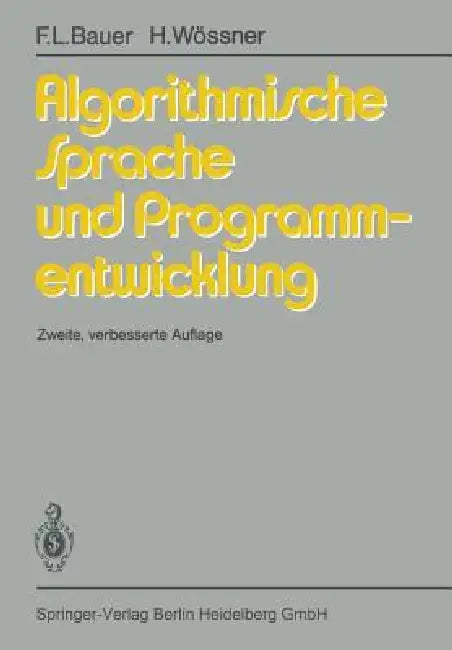
Programming
Algorithmische Sprache Und Programmentwicklung | by H. Partsch | F. L. Bauer | P. Pepper | Springer | by H. Partsch | F. L. Bauer | P. Pepper | Springer | by H. Partsch | F. L. Bauer | P. Pepper | Springer | by H. Partsch | F. L. Bauer | P. Pepper | Springer | by H. Partsch | F. L. Bauer | P. Pepper | Springer | by H. Partsch | F. L. Bauer | P. Pepper | Springer | by H. Partsch | F. L. Bauer | P. Pepper | Springer | by H. Partsch | F. L. Bauer | P. Pepper | Springer | by H. Partsch | F. L. Bauer
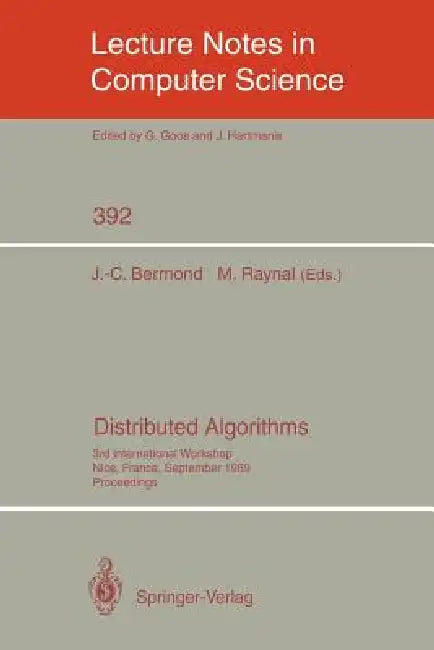
Programming
Distributed Algorithms | by Jean-Claude Bermond | Michel Raynal | Springer | by Jean-Claude Bermond | Michel Raynal | Springer | by Jean-Claude Bermond | Michel Raynal | Springer | by Jean-Claude Bermond | Michel Raynal | Springer | by Jean-Claude Bermond | Michel Raynal | Springer | by Jean-Claude Bermond | Michel Raynal | Springer | by Jean-Claude Bermond | Michel Raynal | Springer | by Jean-Claude Bermond | Michel Raynal | Springer | by Jean-Claude Bermond | Michel Raynal | Springer | by Jean
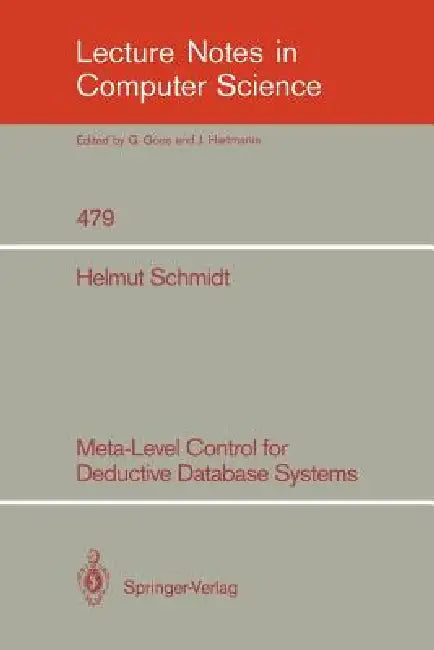
Programming
Meta-Level Control for Deductive Database Systems | by Helmut Schmidt | Springer | by Helmut Schmidt | Springer | by Helmut Schmidt | Springer | by Helmut Schmidt | Springer | by Helmut Schmidt | Springer | by Helmut Schmidt | Springer | by Helmut Schmidt | Springer | by Helmut Schmidt | Springer | by Helmut Schmidt | Springer | by Helmut Schmidt | Springer | by Helmut Schmidt | Springer | by Helmut Schmidt | Springer | by Helmut Schmidt | Springer | by Helmut Schmidt | Springer | by Helmut Schm

Programming
Java Web Services | by David A. Chappell | Tyler Jewell | O'Reilly Media | by David A. Chappell | Tyler Jewell | O'Reilly Media | by David A. Chappell | Tyler Jewell | O'Reilly Media | by David A. Chappell | Tyler Jewell | O'Reilly Media | by David A. Chappell | Tyler Jewell | O'Reilly Media | by David A. Chappell | Tyler Jewell | O'Reilly Media | by David A. Chappell | Tyler Jewell | O'Reilly Media | by David A. Chappell | Tyler Jewell | O'Reilly Media | by David A. Chappell | Tyler Jewell | O'
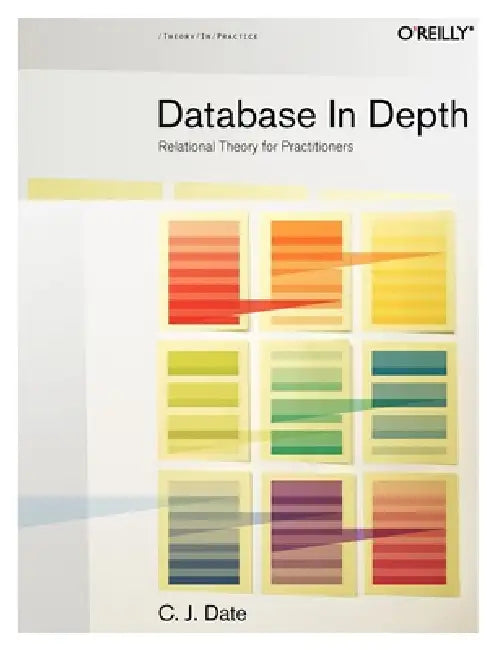
Programming
Database in Depth | by Chris J. Date | O'Reilly Media | by Chris J. Date | O'Reilly Media | by Chris J. Date | O'Reilly Media | by Chris J. Date | O'Reilly Media | by Chris J. Date | O'Reilly Media | by Chris J. Date | O'Reilly Media | by Chris J. Date | O'Reilly Media | by Chris J. Date | O'Reilly Media | by Chris J. Date | O'Reilly Media | by Chris J. Date | O'Reilly Media | by Chris J. Date | O'Reilly Media | by Chris J. Date | O'Reilly Media | by Chris J. Date | O'Reilly Media | by Chris J.
Programming
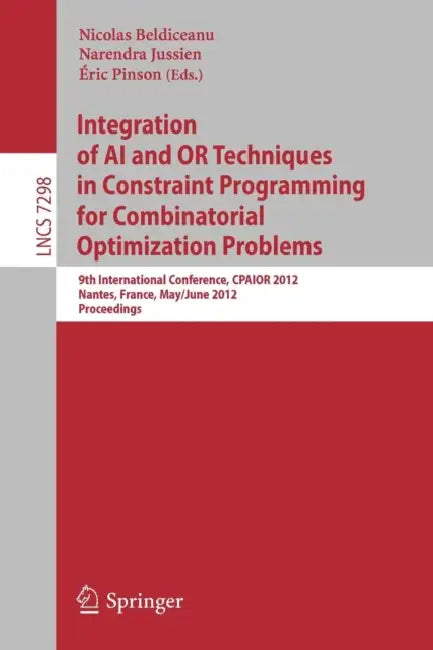
Integration of AI and OR Techniques in Constraint Programming for Combinatorial Optimization Problem | by Nicolas Beldiceanu | Narendra Jussien | Eric Pinson | Springer | by Nicolas Beldiceanu | Narendra Jussien | Eric Pinson | Springer | by Nicolas Beldiceanu | Narendra Jussien | Eric Pinson | Springer | by Nicolas Beldiceanu | Narendra Jussien | Eric Pinson | Springer | by Nicolas Beldiceanu | Narendra Jussien | Eric Pinson | Springer | by Nicolas Beldiceanu | Narendra Jussien | Eric Pinson |
Related Products
View All
Computers & Internet
Modern Full-Stack React Projects by Daniel Bugl
Computers & Internet
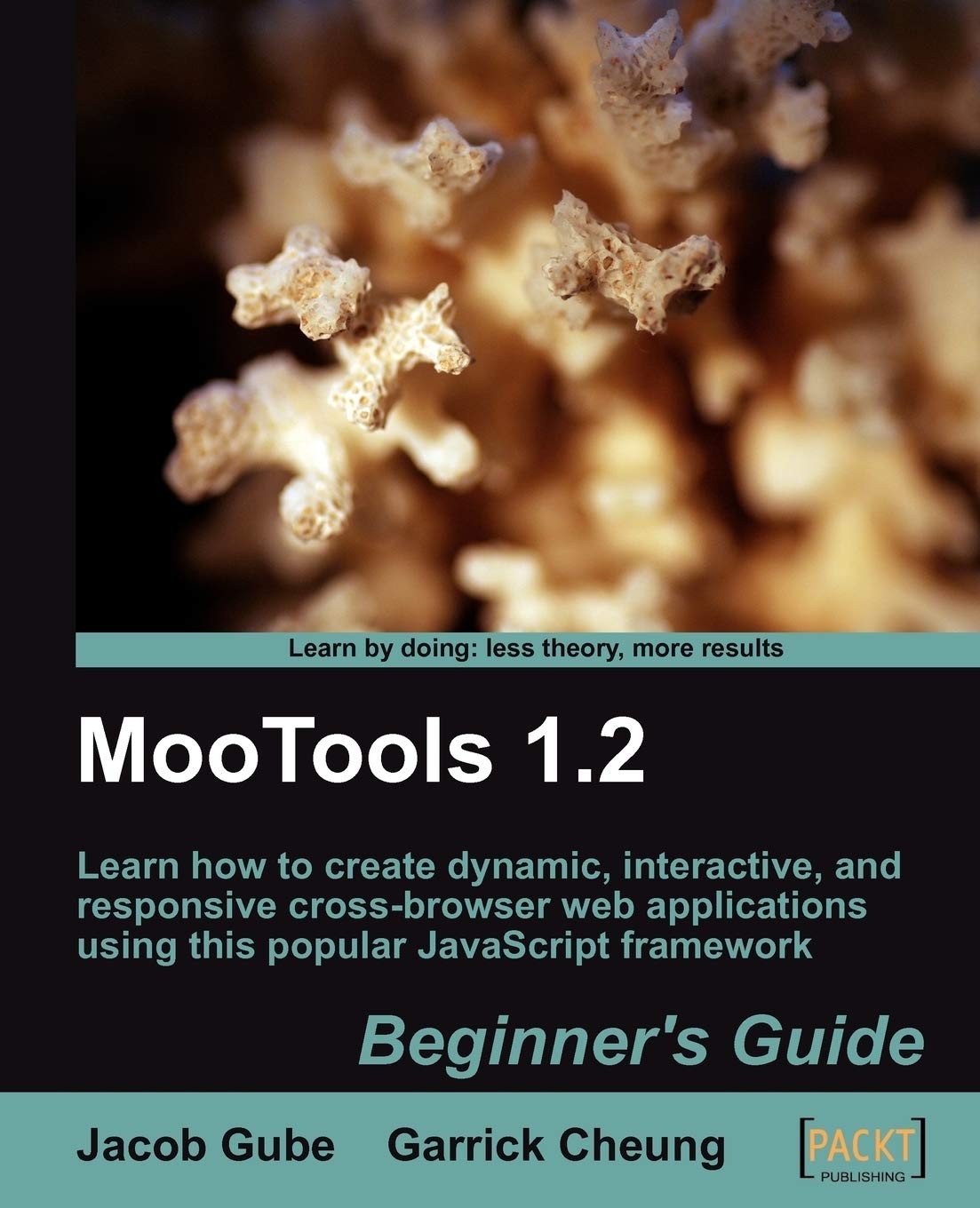
Mootools 1.2 Beginner's Guide (English, Jacob Gube)
Computers & Internet
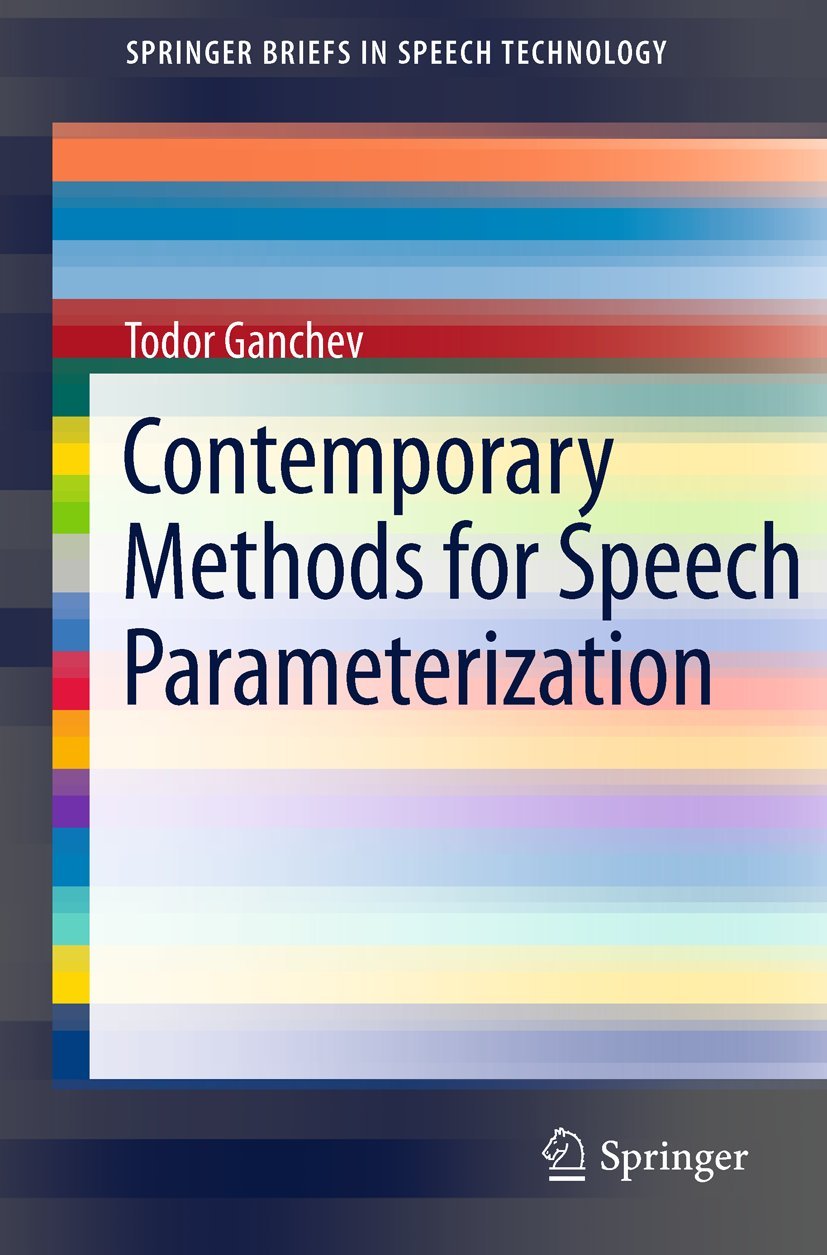
Contemporary Methods for Speech Parameterization (Springerbriefs in Electrical and Computer Engineering / Springerbriefs in Speech Technology)

Computers & Internet
Information Technology and Lawyers | by Arno R. Lodder | Anja Oskamp | Springer | by Arno R. Lodder | Anja Oskamp | Springer | by Arno R. Lodder | Anja Oskamp | Springer | by Arno R. Lodder | Anja Oskamp | Springer | by Arno R. Lodder | Anja Oskamp | Springer | by Arno R. Lodder | Anja Oskamp | Springer | by Arno R. Lodder | Anja Oskamp | Springer | by Arno R. Lodder | Anja Oskamp | Springer | by Arno R. Lodder | Anja Oskamp | Springer | by Arno R. Lodder | Anja Oskamp | Springer | by Arno R. Lo

Computers & Internet
Digital Analysis of Remotely Sensed Imagery | by Jay Gao | McGraw-Hill Companies | by Jay Gao | McGraw-Hill Companies | by Jay Gao | McGraw-Hill Companies | by Jay Gao | McGraw-Hill Companies | by Jay Gao | McGraw-Hill Companies | by Jay Gao | McGraw-Hill Companies | by Jay Gao | McGraw-Hill Companies | by Jay Gao | McGraw-Hill Companies | by Jay Gao | McGraw-Hill Companies | by Jay Gao | McGraw-Hill Companies | by Jay Gao | McGraw-Hill Companies | by Jay Gao | McGraw-Hill Companies | by Jay Gao

Computers & Internet