
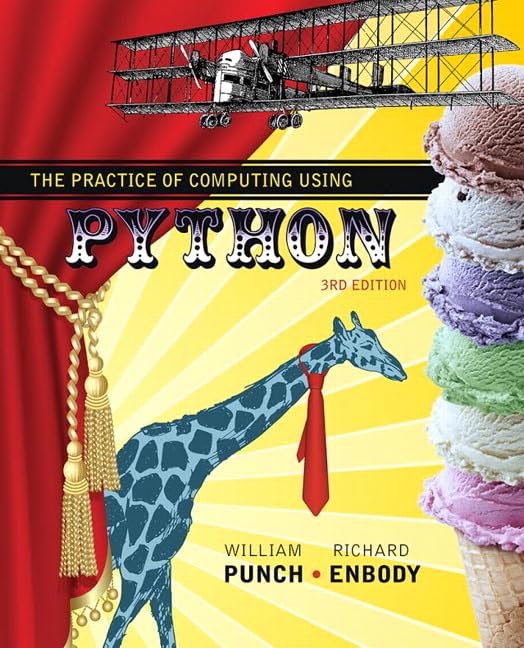
Practice of Computing Using Python
Inclusive of all applicable taxes. FREE shipping on all orders.
Available Offers
- 🚚Free Delivery — Free shipping on all orders
- 💵Cash on Delivery — Pay when your order arrives
- ↩️15-Day Easy Returns — Hassle-free return policy
- 🔒Cash on Delivery — Pay safely when your order arrives
Check Delivery
Product Description
Introduction
Python has emerged as one of the most accessible and powerful programming languages for students and professionals alike. The Practice of Computing Using Python, Third Edition, by William Punch, is a thoughtfully crafted textbook that introduces computer science and programming through the lens of computational thinking. Designed specifically for Indian students and educators, this hardcover edition from Pearson offers a robust foundation in Python programming, emphasizing real-world problem-solving and data manipulation. Whether you are a beginner in engineering, science, or the humanities, this book provides a practical and engaging path to mastering coding concepts from the ground up.
Book Overview
This third edition of The Practice of Computing Using Python is built entirely around Python, rather than being a translation from another language like Java or C++. The author, William Punch, focuses on developing computational thinking skills—breaking down complex problems into manageable steps and implementing solutions using Python’s powerful yet simple syntax. The book uses data analysis and manipulation as a central theme, allowing readers to work with real, internet-sourced datasets that reflect their own interests. It is structured to support learners with diverse backgrounds, making it ideal for classroom use in Indian universities and self-study alike.
Key Highlights
- Python-First Approach: The text is written exclusively for Python, leveraging its clean syntax, built-in data structures, and advanced control constructs.
- Problem-Solving Focus: Every chapter reinforces computational thinking, teaching you how to approach problems systematically.
- Data-Driven Learning: Real-world datasets from the internet or self-generated sources make learning relevant and engaging.
- Updated for Modern Tools: The Third Edition incorporates the Anaconda distribution, simplifying package management and environment setup.
- Strong Pedagogy: Includes numerous examples, exercises, and projects designed to build confidence and competence.
Inside the Book
The book is organized to take you from fundamental concepts to more advanced topics. Early chapters cover variables, expressions, loops, and conditionals, gradually introducing functions, modules, and file handling. Later sections dive into data structures like lists, dictionaries, and tuples, along with recursion, object-oriented programming, and algorithm design. Each chapter includes carefully chosen examples that illustrate how Python can be used to solve practical problems, from analyzing survey data to processing text files. The author also emphasizes program development and debugging, ensuring you learn not just to write code, but to write clean, efficient, and maintainable programs.
Key Topics
- Computational thinking and problem decomposition
- Python basics: variables, data types, operators, and expressions
- Control flow: conditionals, loops, and iteration
- Functions, scope, and modular programming
- Strings, lists, tuples, dictionaries, and sets
- File input/output and exception handling
- Recursion and algorithm design
- Object-oriented programming concepts
- Data analysis and visualization with Python
Reader Benefits
By working through this book, you will gain a deep understanding of how to think like a computer scientist. You will learn to write Python code that is not only correct but also efficient and readable. The hands-on approach means you will build a portfolio of projects that demonstrate your ability to manipulate and analyze data—a skill highly valued in today’s job market. The book’s clear explanations and structured exercises reduce the learning curve, making it suitable for students with no prior programming experience. Additionally, the focus on real data ensures that your learning is immediately applicable to fields like data science, engineering, business analytics, and academic research.
Learning Outcomes
- Develop a strong foundation in Python programming and computational thinking.
- Write programs that solve real-world problems using data from various sources.
- Understand and apply key data structures such as lists, dictionaries, and sets.
- Design and implement functions and modules for reusable code.
- Analyze datasets, draw insights, and present results using Python.
- Prepare for advanced courses in computer science, data science, or software development.
Who Should Read
This book is ideal for undergraduate students in Indian colleges and universities taking introductory programming courses, especially those in computer science, engineering, mathematics, statistics, or any field that requires data analysis. It is also well-suited for self-learners who want a structured, textbook-based approach to Python. Teachers and instructors will find the pedagogical design helpful for classroom delivery, with ample exercises and project ideas. No prior programming experience is assumed, making it accessible to absolute beginners who are ready to embrace computational thinking.
About the Author
William Punch is an experienced educator and computer scientist with a deep passion for teaching programming concepts. With years of classroom experience, he understands the challenges that beginners face and has designed this book to address them directly. His writing style is clear, approachable, and focused on building understanding step by step. He has also contributed to the development of Python-based curricula and computational thinking initiatives, making him a trusted voice in computer science education.
About the Publisher
Pearson is one of the world’s leading educational publishers, known for producing high-quality textbooks that empower learners globally. With a strong presence in India, Pearson provides resources that align with academic standards and industry needs. This hardcover edition reflects Pearson’s commitment to durable, long-lasting books that students can refer to throughout their academic journey and beyond.
Conclusion
The Practice of Computing Using Python, Third Edition, is more than just a programming textbook—it is a gateway to computational thinking and data-driven problem solving. Whether you are starting your coding journey or looking to strengthen your foundation, this book offers the clarity, depth, and practical focus you need. Order your copy from Bookshops.in today and take the first step toward mastering Python with confidence.
Quick Summary
Practice of Computing Using Python by William Punch is a comprehensive textbook designed to teach Python programming with a strong emphasis on problem-solving and computational thinking. Unlike many Python books that simply translate content from other languages, this book is built from the ground up for Python, leveraging its simplicity, powerful data structures, and advanced control constructs. The book is ideal for Indian undergraduate students, self-learners, and professionals who want to develop practical coding skills through real-world data sets and exercises. Readers will learn to design algorithms, manipulate data, debug code, and develop complete programs. The book focuses on data manipulation and analysis as a central theme, allowing learners to work on problems that mirror real-life scenarios. By choosing Bookshops.in, you get a genuine Pearson edition delivered to your doorstep in India, with reliable service and competitive pricing. This hardcover edition is durable for years of reference and study, making it a valuable addition to any programmer's library.
Book Highlights
Book Specifications
| ISBN-13 | 9780134379760 |
| ISBN-10 | 0134379764 |
| Publisher | Pearson |
| Language | English |
| Dimensions | 22.86 x 18.54 x 2.79 cm |
| Weight | 1 kg 250 g |
| Category | Languages › C & C++ |
| Genre | Programming |
| Original Language | English |
Frequently Asked Questions
Is this book suitable for complete beginners in programming?
Does the book cover Python 3?
What makes this book different from other Python books?
Can I use this book for self-study?
Does the book include exercises and projects?
Is this book used in Indian universities?
What topics are covered in the book?
Who is the author?
Is the book available in India?
Does the book cover object-oriented programming?
Can I use this book for data science learning?
Is there a digital version available?
How do I purchase this book?
Readers Also Search For
Customers Also Bought
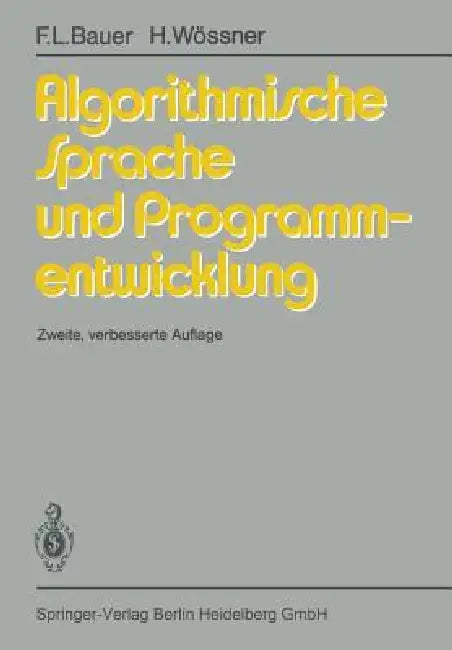
Programming
Algorithmische Sprache Und Programmentwicklung | by H. Partsch | F. L. Bauer | P. Pepper | Springer | by H. Partsch | F. L. Bauer | P. Pepper | Springer | by H. Partsch | F. L. Bauer | P. Pepper | Springer | by H. Partsch | F. L. Bauer | P. Pepper | Springer | by H. Partsch | F. L. Bauer | P. Pepper | Springer | by H. Partsch | F. L. Bauer | P. Pepper | Springer | by H. Partsch | F. L. Bauer | P. Pepper | Springer | by H. Partsch | F. L. Bauer | P. Pepper | Springer | by H. Partsch | F. L. Bauer
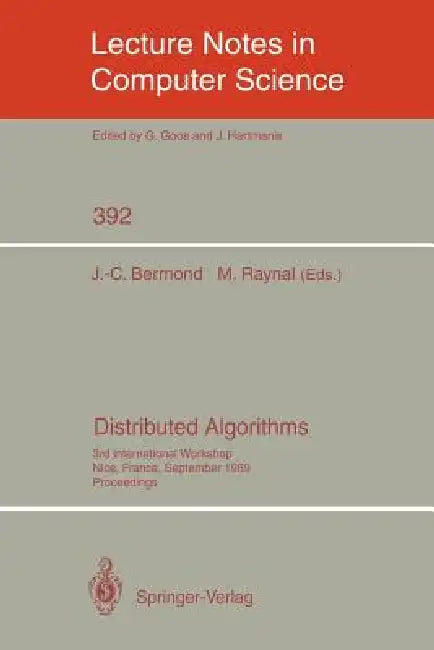
Programming
Distributed Algorithms | by Jean-Claude Bermond | Michel Raynal | Springer | by Jean-Claude Bermond | Michel Raynal | Springer | by Jean-Claude Bermond | Michel Raynal | Springer | by Jean-Claude Bermond | Michel Raynal | Springer | by Jean-Claude Bermond | Michel Raynal | Springer | by Jean-Claude Bermond | Michel Raynal | Springer | by Jean-Claude Bermond | Michel Raynal | Springer | by Jean-Claude Bermond | Michel Raynal | Springer | by Jean-Claude Bermond | Michel Raynal | Springer | by Jean
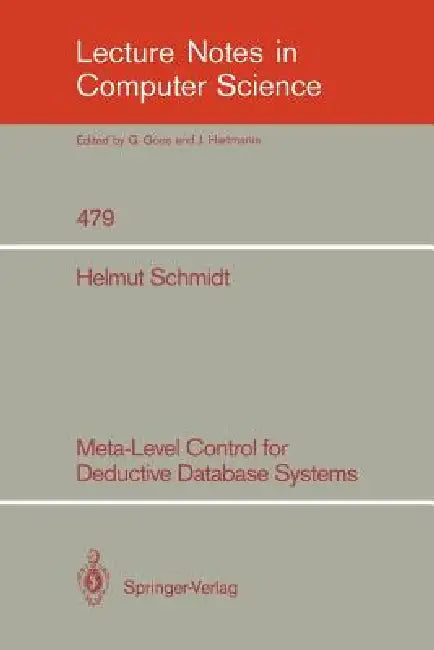
Programming
Meta-Level Control for Deductive Database Systems | by Helmut Schmidt | Springer | by Helmut Schmidt | Springer | by Helmut Schmidt | Springer | by Helmut Schmidt | Springer | by Helmut Schmidt | Springer | by Helmut Schmidt | Springer | by Helmut Schmidt | Springer | by Helmut Schmidt | Springer | by Helmut Schmidt | Springer | by Helmut Schmidt | Springer | by Helmut Schmidt | Springer | by Helmut Schmidt | Springer | by Helmut Schmidt | Springer | by Helmut Schmidt | Springer | by Helmut Schm
Programming
Java Web Services | by David A. Chappell | Tyler Jewell | O'Reilly Media | by David A. Chappell | Tyler Jewell | O'Reilly Media | by David A. Chappell | Tyler Jewell | O'Reilly Media | by David A. Chappell | Tyler Jewell | O'Reilly Media | by David A. Chappell | Tyler Jewell | O'Reilly Media | by David A. Chappell | Tyler Jewell | O'Reilly Media | by David A. Chappell | Tyler Jewell | O'Reilly Media | by David A. Chappell | Tyler Jewell | O'Reilly Media | by David A. Chappell | Tyler Jewell | O'
Programming
Database in Depth | by Chris J. Date | O'Reilly Media | by Chris J. Date | O'Reilly Media | by Chris J. Date | O'Reilly Media | by Chris J. Date | O'Reilly Media | by Chris J. Date | O'Reilly Media | by Chris J. Date | O'Reilly Media | by Chris J. Date | O'Reilly Media | by Chris J. Date | O'Reilly Media | by Chris J. Date | O'Reilly Media | by Chris J. Date | O'Reilly Media | by Chris J. Date | O'Reilly Media | by Chris J. Date | O'Reilly Media | by Chris J. Date | O'Reilly Media | by Chris J.
Programming
Integration of AI and OR Techniques in Constraint Programming for Combinatorial Optimization Problem | by Nicolas Beldiceanu | Narendra Jussien | Eric Pinson | Springer | by Nicolas Beldiceanu | Narendra Jussien | Eric Pinson | Springer | by Nicolas Beldiceanu | Narendra Jussien | Eric Pinson | Springer | by Nicolas Beldiceanu | Narendra Jussien | Eric Pinson | Springer | by Nicolas Beldiceanu | Narendra Jussien | Eric Pinson | Springer | by Nicolas Beldiceanu | Narendra Jussien | Eric Pinson |
Related Products
View All
Computers & Internet
Modern Full-Stack React Projects by Daniel Bugl
Computers & Internet
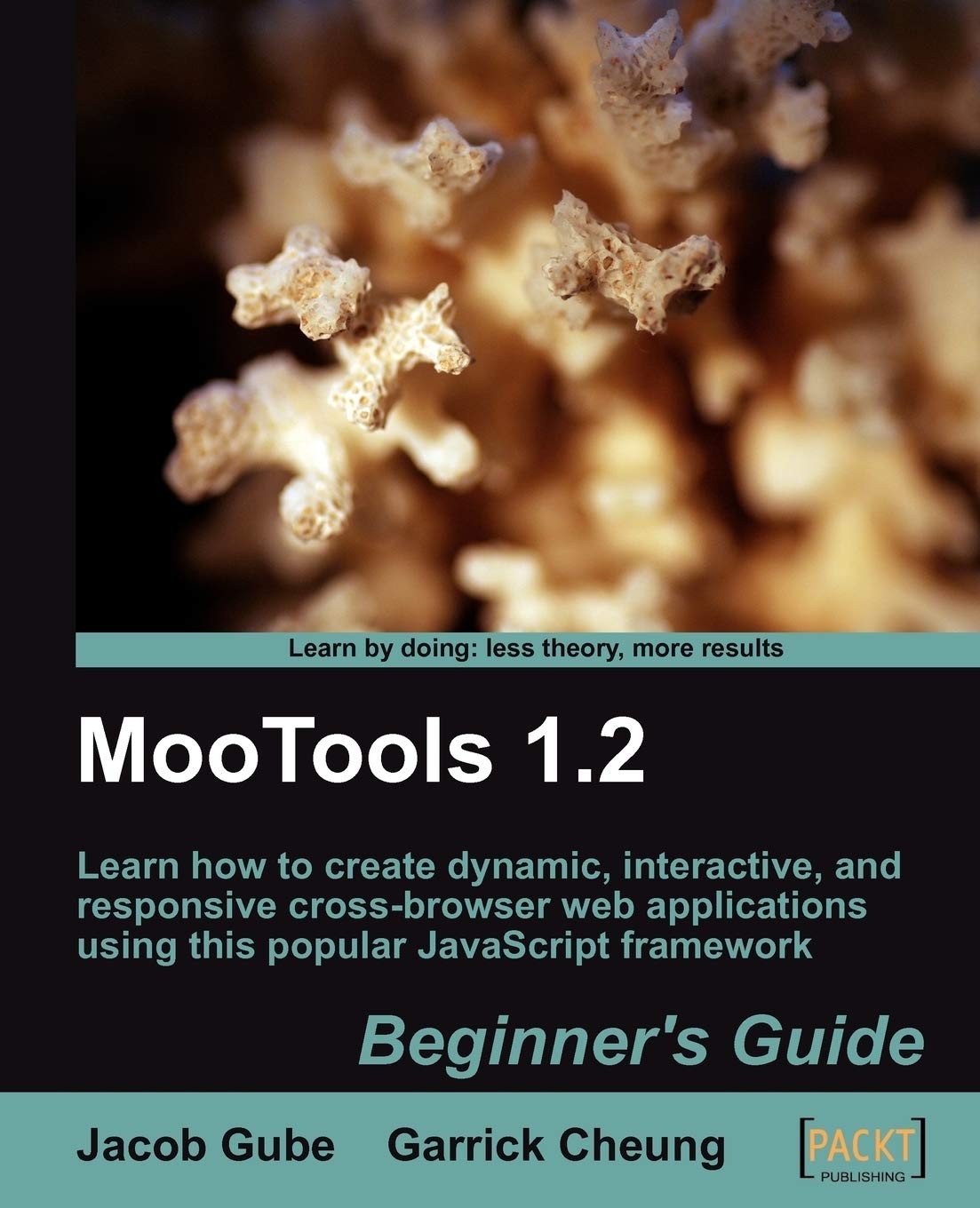
Mootools 1.2 Beginner's Guide (English, Jacob Gube)
Computers & Internet
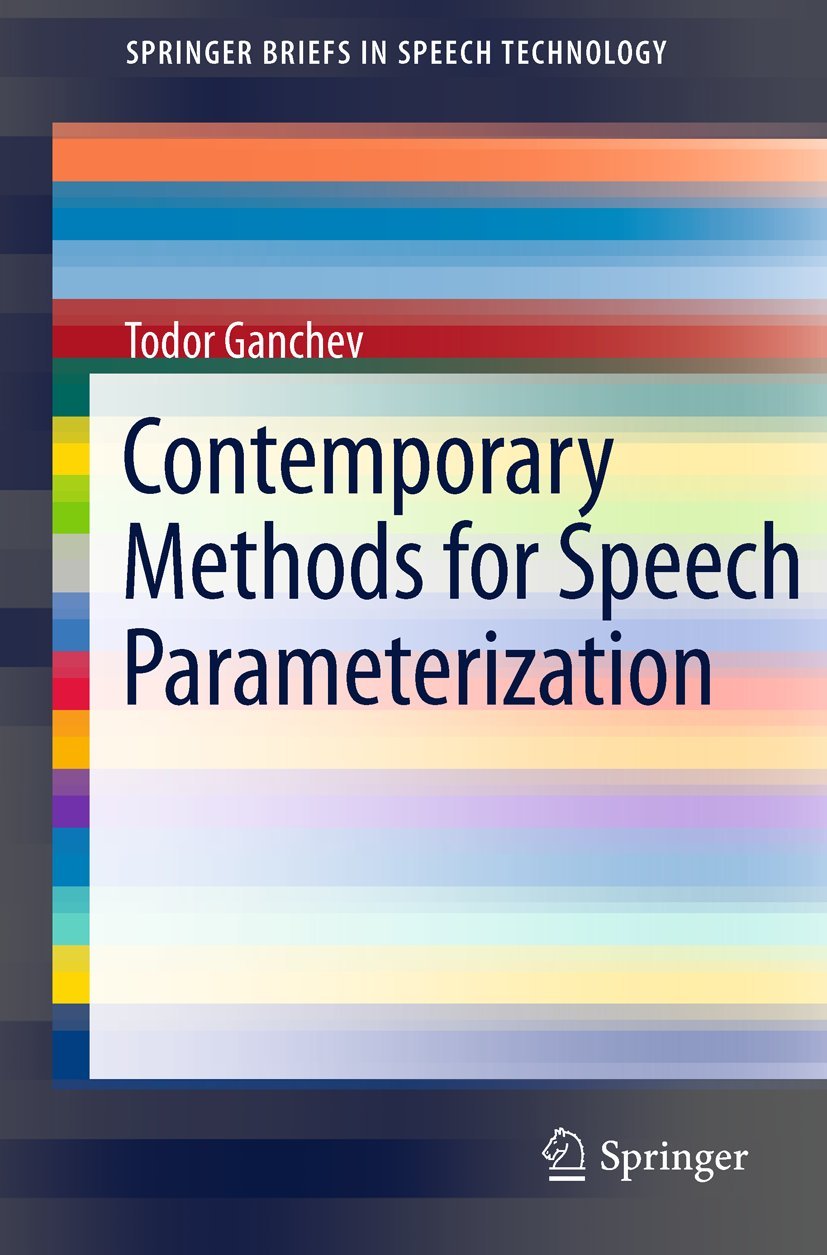
Contemporary Methods for Speech Parameterization (Springerbriefs in Electrical and Computer Engineering / Springerbriefs in Speech Technology)

Computers & Internet
Information Technology and Lawyers | by Arno R. Lodder | Anja Oskamp | Springer | by Arno R. Lodder | Anja Oskamp | Springer | by Arno R. Lodder | Anja Oskamp | Springer | by Arno R. Lodder | Anja Oskamp | Springer | by Arno R. Lodder | Anja Oskamp | Springer | by Arno R. Lodder | Anja Oskamp | Springer | by Arno R. Lodder | Anja Oskamp | Springer | by Arno R. Lodder | Anja Oskamp | Springer | by Arno R. Lodder | Anja Oskamp | Springer | by Arno R. Lodder | Anja Oskamp | Springer | by Arno R. Lo

Computers & Internet
Digital Analysis of Remotely Sensed Imagery | by Jay Gao | McGraw-Hill Companies | by Jay Gao | McGraw-Hill Companies | by Jay Gao | McGraw-Hill Companies | by Jay Gao | McGraw-Hill Companies | by Jay Gao | McGraw-Hill Companies | by Jay Gao | McGraw-Hill Companies | by Jay Gao | McGraw-Hill Companies | by Jay Gao | McGraw-Hill Companies | by Jay Gao | McGraw-Hill Companies | by Jay Gao | McGraw-Hill Companies | by Jay Gao | McGraw-Hill Companies | by Jay Gao | McGraw-Hill Companies | by Jay Gao

Computers & Internet