
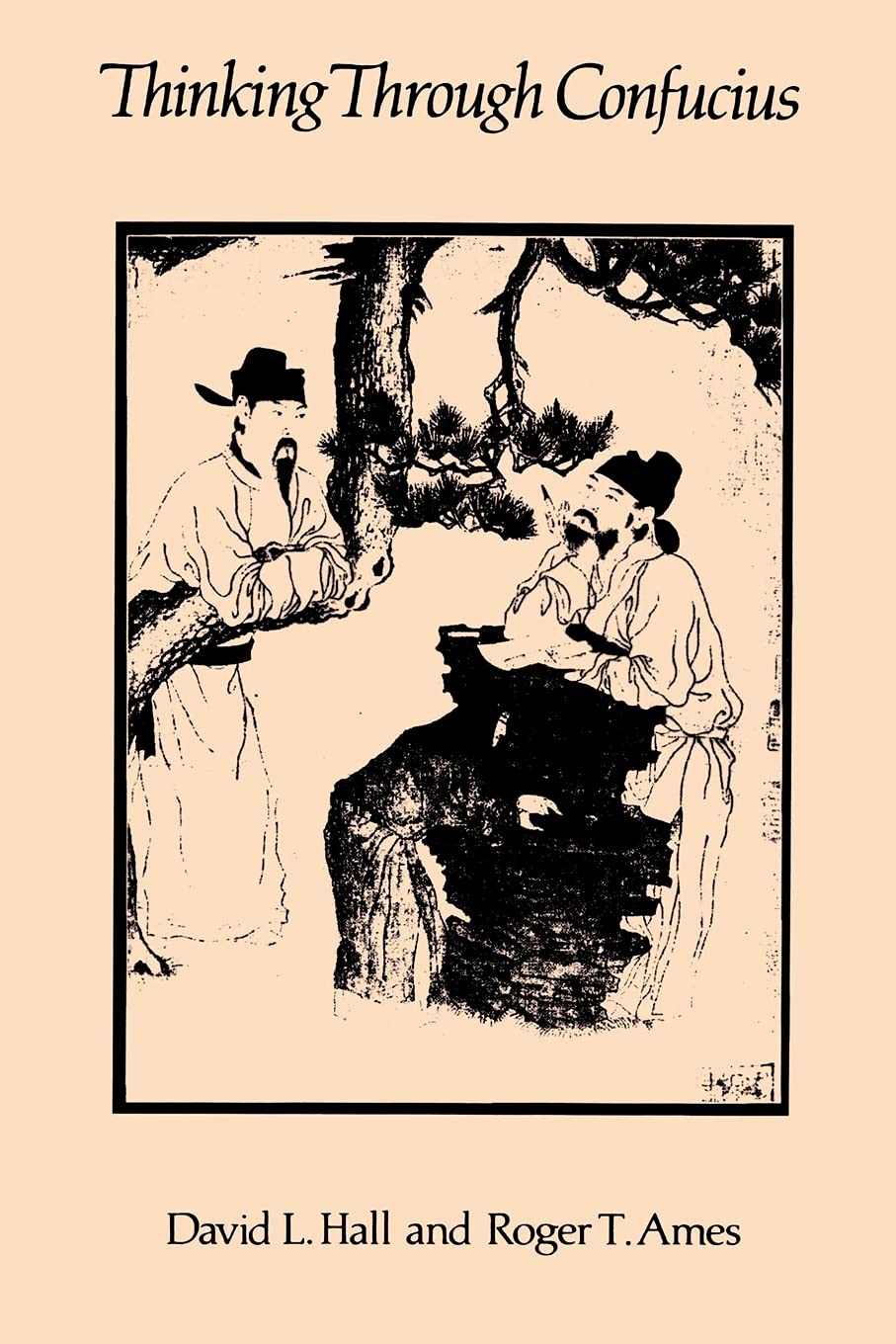
Thinking Through Confucius: A Philosophical Interpretation of Confucian Thought by David L. Hall and Roger T. Ames
Inclusive of all applicable taxes. FREE shipping on all orders.
Available Offers
- 🚚Free Delivery — Free shipping on all orders
- 💵Cash on Delivery — Pay when your order arrives
- ↩️15-Day Easy Returns — Hassle-free return policy
- 🔒Cash on Delivery — Pay safely when your order arrives
Check Delivery
Product Description
Introduction
Thinking Through Confucius is a profound philosophical exploration that invites readers to engage with the conceptual framework of one of China’s most influential thinkers. Written by David L. Hall, this hardcover edition from State University of New York Press offers a rigorous yet accessible analysis of Confucius’ reflections. Unlike typical introductions to Eastern philosophy, this book challenges Western readers to reconsider the very nature of philosophy itself. For Indian students and scholars interested in comparative philosophy, cultural studies, or the foundations of ethical thought, this volume serves as a bridge between traditions. It does not merely describe Confucius but thinks through his ideas, encouraging a dialogue that reshapes our understanding of wisdom, morality, and human flourishing.
Book Overview
Thinking Through Confucius is a critical interpretation of the conceptual structure underlying Confucius’ philosophical reflections. The authors, David L. Hall and Roger T. Ames, argue that the pressing philosophical question of our time is ‘what is philosophy?’ By examining Chinese thought, they propose an alternative definition that can address issues within the Western intellectual tradition. The book develops a language for interpreting traditional Chinese philosophy that is free from Western biases. It delves into key Confucian concepts such as ren (humaneness), li (ritual propriety), and junzi (exemplary person), showing how these ideas form a coherent worldview. This is not a historical survey but a philosophical engagement that treats Confucius as a living thinker whose insights remain relevant today.
Key Highlights
- Original Framework: Presents Confucius’ philosophy as a dynamic, process-oriented system rather than a static set of doctrines.
- Cross-Cultural Dialogue: Compares Confucian thought with Western philosophical traditions, including pragmatism, process philosophy, and hermeneutics.
- Conceptual Clarity: Offers clear definitions of key terms like dao (way), de (virtue), and tian (heaven) within their cultural context.
- Critical Approach: Avoids oversimplification by addressing tensions and ambiguities in Confucius’ teachings.
- Relevance to Modern Issues: Connects ancient wisdom to contemporary problems in ethics, politics, and education.
Inside the Book
The book is structured around major themes that emerge from the Analects of Confucius. Each chapter unpacks a core concept, tracing its implications for personal cultivation, social harmony, and cosmic order. The authors employ a method they call ‘ars contextualis’—a focus on the contextual and relational nature of meaning. They argue that Confucius’ philosophy is not about fixed truths but about dynamic patterns of interaction. Readers will encounter detailed discussions of zhongyong (the doctrine of the mean), zhengming (rectification of names), and the role of shu (reciprocity). The text also examines how Confucius’ thought differs from later Neo-Confucian interpretations, offering a fresh perspective on the original sources.
Key Topics
- Philosophy as a Way of Life: How Confucius integrates theory and practice, thinking and acting.
- Relational Selfhood: The idea that personal identity is constituted through relationships, not individualism.
- Ritual and Social Order: The function of li in creating harmony without authoritarianism.
- Language and Meaning: How Confucius uses language not to describe reality but to shape it.
- Comparative Philosophy: A critique of Western assumptions about logic, truth, and metaphysics.
Reader Benefits
This book offers Indian readers a unique opportunity to engage with a non-Western philosophical tradition that shares certain affinities with Indian thought—such as an emphasis on dharma (duty), karma (action), and the relational nature of self. It helps develop critical thinking skills by challenging ethnocentric biases. Students of philosophy will gain a richer vocabulary for discussing ethics and metaphysics. For educators, it provides a model for teaching comparative philosophy without reducing one tradition to another. The hardcover edition ensures durability for repeated reference, making it a valuable addition to any academic library.
Learning Outcomes
- Understand the core concepts of Confucian philosophy in their original context.
- Critically evaluate the differences between Eastern and Western approaches to ethics and metaphysics.
- Apply Confucian ideas to contemporary issues such as community building, leadership, and education.
- Develop a nuanced appreciation for how language and culture shape philosophical inquiry.
- Gain tools for reading classical Chinese texts with philosophical sensitivity.
Who Should Read
This book is ideal for advanced undergraduate and graduate students in philosophy, religious studies, East Asian studies, and comparative literature. It is also suited for scholars of Indian philosophy who wish to explore parallels with Chinese thought. General readers with a strong interest in cross-cultural philosophy or the history of ideas will find it rewarding. The text assumes some familiarity with Western philosophy but explains Chinese concepts thoroughly. It is not a beginner’s introduction but a deep dive for those ready to rethink their assumptions about what philosophy can be.
About the Author
David L. Hall (1937–2001) was a distinguished professor of philosophy at the University of Texas at El Paso. He specialized in comparative philosophy, particularly between Chinese and Western traditions. Hall co-authored several influential works with Roger T. Ames, including Anticipating China and Thinking from the Han. His scholarship is known for its rigor and creativity, challenging readers to move beyond cultural stereotypes. Hall’s work has been widely cited in the fields of Sinology, philosophy, and cultural studies. His collaboration with Ames produced a series of books that have become essential reading for anyone serious about understanding Chinese thought on its own terms.
About the Publisher
State University of New York Press (SUNY Press) is a leading academic publisher known for its contributions to philosophy, Asian studies, and the humanities. Founded in 1966, SUNY Press has a strong reputation for publishing innovative and scholarly works. Their catalog includes many titles in comparative philosophy, making them a trusted source for rigorous academic texts. This hardcover edition reflects SUNY Press’s commitment to quality production and lasting value. For Indian readers, SUNY Press books are available through Bookshops.in, ensuring authentic editions and reliable delivery.
Conclusion
Thinking Through Confucius is more than a book—it is an invitation to rethink the boundaries of philosophy. By engaging with Confucius on his own terms, readers will discover a tradition that values harmony, relationship, and practical wisdom. For Indian students and scholars, this volume offers a rare chance to see how another ancient culture addressed questions of ethics, society, and the self. Whether you are a philosopher, a student of comparative religion, or a curious reader, this book will challenge and enrich your understanding. Order your copy from Bookshops.in today and begin a journey of cross-cultural discovery.
Quick Summary
Thinking Through Confucius is a seminal philosophical work by David L. Hall and Roger T. Ames that critically interprets the conceptual structure underlying Confucius' reflections. The book addresses the fundamental question 'what is philosophy' by examining it from a Chinese perspective, offering an alternative definition that challenges Western cultural presuppositions. It develops a language for interpreting traditional Chinese thought that is relatively free from Western bias, making it an essential text for students of comparative philosophy, ethics, and cultural studies. Indian readers will benefit from its cross-cultural insights, which help bridge Eastern and Western intellectual traditions. This hardcover edition from State University of New York Press is a durable reference for academic research. By purchasing from Bookshops.in, you get a genuine copy with reliable delivery across India.
Book Highlights
Book Specifications
| ISBN-13 | 9780887063770 |
| ISBN-10 | 0887063772 |
| Publisher | State Univ of New York Pr |
| Language | English |
| Dimensions | 15.24 x 2.39 x 22.86 cm |
| Weight | 544 g |
| Country | India |
| Category | Humanities › Philosophy |
| Genre | Philosophy |
| Reading Age | Adult |
| Original Language | English |
Frequently Asked Questions
What is Thinking Through Confucius about?
Who are the authors of this book?
What makes this book unique?
Is this book suitable for Indian students?
What is the ISBN-13?
What format is this book available in?
What language is the book in?
Is this book part of a series?
What is the price in INR?
What topics does the book cover?
Can I use this book for academic research?
Where can I buy this book in India?
Readers Also Search For
Customers Also Bought

Islam
Spiritual Economies (English, Daromir Rudnyckyj)

Islam
Who Is Allah? (English, Bruce B. Lawrence)

Islam
Islam and Liberal Citizenship: The Search for an Overlapping Consensus by Andrew F. March

Islam
Fiqh Us-Sunnah: Funerals and Diggers by Al-Sayyid Sabiq – Islamic Funeral Guide

Christianity
Genetics (English, Thomas a. Shannon | Mark P. Aulisio | Françoise Baylis)

Hinduism
Karma and Creativity by Christopher Key Chapple – Indian Philosophy
Related Products
View All
Philosophy
Latin American Philosophy: Currents, Issues, Debates by Eduardo Mendieta
Philosophy
Al-Farabi's Short Commentary on Aristotle's Prior Analytics by Nicholas Rescher – Philosophy

Philosophy
Poetics of Imagining: Modern to Post-modern by Richard Kearney

Philosophy
The Metaphysics of Extrinsic Properties: 11 (Metaphysical Research, 11)
Philosophy
Dialogues on Metaphysics and on Religion by Nicolas Malebranche – Philosophy
Philosophy